
Silver Earrings Styles — Studs, Hoops, Drops, Dangles
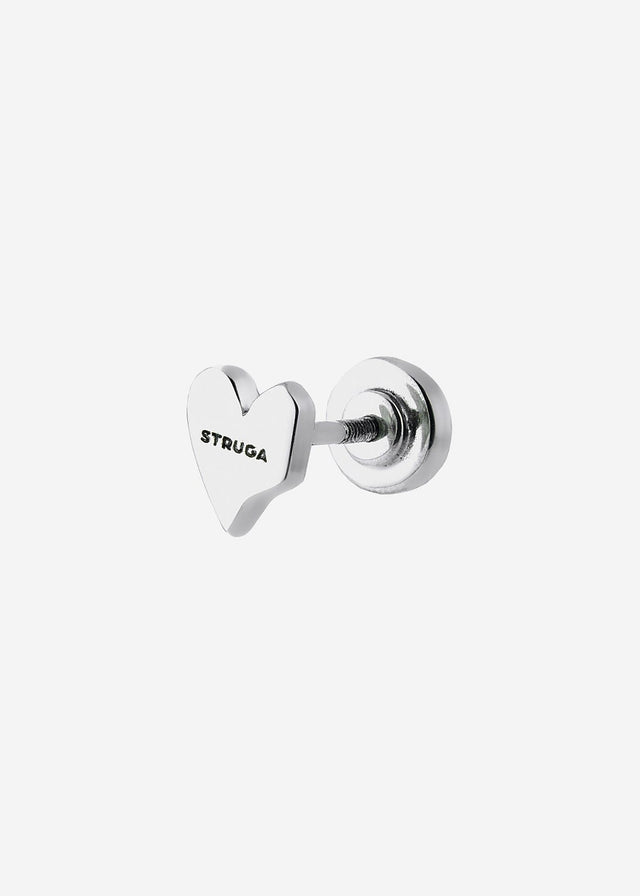
Earrings are the smallest piece of jewellery most people own and the loudest signal they wear. A pair sits two inches from the face, frames the jaw, catches every light source in the room. The shape decides the message, and studs whisper. Hoops declare, drops elongate. Dangles move with you. After fifteen years of designing for clients who arrive with one stretched lobe and three healed piercings, I have learned that style is the wrong word for what we are actually choosing. We are choosing a silhouette.
This guide is the silhouette atlas. Eight families of silver earrings, what each one does to a face, the technical names you will see on tags, the metal and finish choices that change everything, and a shortlist of mistakes to avoid. By the end you will be able to walk into any silver section in any city and know within seconds whether a pair belongs on you.
The eight earring silhouettes that actually exist
The jewellery industry uses a handful of overlapping terms — studs, hoops, huggies, drops, dangles, threaders, climbers, ear cuffs — and most retail descriptions blur them. Here is the working taxonomy I use in the studio.
1. Studs
A stud is a single small element fixed flush to the lobe by a post and butterfly back, screw back, or push-on omega. Diameter is usually 3 to 12 millimetres, and the point of a stud is that it does not move. It anchors the face the way a watch anchors a wrist. Sterling silver studs in matte, brushed, oxidised, or high-polish finish each read differently — a 6 mm matte ball reads as quiet everyday wear, the same diameter polished reads as evening.
Use studs as the base layer of a stack. They sit closest to the lobe and never compete with whatever you hang above or below them.
2. Hoops
Circular wire that passes through the piercing and clicks shut, with inner diameter from 8 mm (huggie) up to 70 mm (statement). Wire thickness runs from 1 mm (delicate) to 4 mm (sculptural). The hoop is the most versatile silhouette ever made: it works on every age, every face shape, every dress code, and the only thing that changes is scale.
If your earring collection contains exactly one pair, it should be a 25 to 30 mm sterling silver hoop in 2 mm wire. That single piece covers nine out of ten outfits.
3. Huggies
A subset of hoops sized to hug the lobe — inner diameter 8 to 12 mm, often in heavier wire so they sit forward of the ear rather than against the cheek. Huggies are studs in disguise: same low-maintenance behaviour, slightly more visual weight, and excellent for sleeping in.
4. Drops
A drop hangs below the lobe but does not swing. The structure is rigid: a top element joined to a fixed lower element by a connector that holds shape. Length is typically 15 to 45 mm. Drops elongate the neck, suit oval and round faces, and photograph beautifully because they hold position.
5. Dangles
A dangle hangs and moves: chain, jump rings, articulated links — anything that swings when you walk. Length is 30 to 100 mm, and dangles draw the eye downward and add motion to a still outfit. They are the opposite of studs: maximum movement, maximum presence.
6. Threaders
A fine chain (40 to 90 mm) that you thread through the piercing and let hang front and back. Visual minimalism, mechanical complexity. Threaders demand a healed, well-aligned piercing — they will not work in a lobe that closes quickly.
7. Climbers (also called crawlers)
A long element that follows the curve of the lobe upward toward the helix, anchored by a single piercing at the bottom. Climbers create the illusion of three or four piercings from one. They are the cheat code for people who want a constellation look without committing to new holes.
8. Ear cuffs
The only silhouette in this list that needs no piercing at all. A cuff slips onto the rim of the upper ear and holds by tension. We have a full ear cuffs guide covering sizing and pairing — short version: cuffs were the gateway for an entire generation of clients who wanted multi-pierced visuals without the needle.
Picking by face shape — the rule that almost works
Stylists love the face-shape rule: round faces want length, long faces want width, square faces want curves, heart-shaped faces want bottom-weight. The rule is not wrong, but it is incomplete. Earring choice depends as much on hair length, neckline, and what your earlobe actually looks like as on the abstract category of your face.
The version I give clients in the studio is shorter. Match what your face does not have. A jawline that is already strong does not need an earring that adds more angle — it needs a circle to soften it. Cheekbones that disappear in profile benefit from a drop that creates a vertical line beside them. Ears that sit close to the head can carry larger volumes than ears that protrude.
The honest answer is that the mirror is more useful than any chart. Stand at the bathroom sink, hold the candidate earring up to your lobe without putting it through, and watch what happens to the rest of your face for three seconds. If your eye keeps coming back to the earring, the size is wrong. If your eye goes to your eyes, the size is right.
Sterling silver vs. silver-plated vs. fine silver
The metal stamped inside the earring decides how it ages, how it weighs, and whether it will leave a green mark on your lobe in three weeks.
925 sterling silver is 92.5% pure silver alloyed with 7.5% copper. It is the workhorse of the global jewellery industry because it is hard enough to hold a sharp edge yet soft enough to forge by hand. Sterling will tarnish — that is the copper reacting with sulphur in the air — and a stamped 925 mark inside the post or the hinge is the minimum proof of authenticity. If you want to verify what you own, read how to tell if silver is real.
Fine silver (99.9%) is nearly pure: softer, brighter, slower to tarnish, but too malleable for posts and hinges. You will see fine silver in pendant blanks and casting grain, almost never in a wearable earring back.
Silver-plated means a microns-thin layer of silver bonded to a base metal — usually brass, copper, or zinc alloy. Plating wears off. On earrings, where the post is in constant contact with skin and lymph fluid, plating peels in months. Avoid.
Sterling silver with rhodium plating is a different proposition. Rhodium is a platinum-group metal applied as an ultra-thin top layer over a sterling base. It blocks tarnish, brightens the colour, and on earrings can last several years before re-plating becomes necessary. The base is authentic silver — the rhodium is the finish.
Finishes change the entire piece
The same earring shape in five different finishes reads as five different earrings. This is the lever most shoppers underuse.
High polish is the mirror finish, maximum light return. Reads as formal, evening, statement.
Matte (also called satin or stone finish) absorbs light and reads as quiet, modern, daytime. Matte sterling is what I recommend for first-pair-of-good-earrings buyers because it photographs gently and forgives small surface marks.
Brushed shows visible parallel grain from a fine wire wheel and reads as architectural, masculine-leaning, deliberate.
Hammered carries a textured surface from a planishing hammer or chasing tool, and each peak catches light independently — you get sparkle without polish.
Oxidised means the silver has been chemically darkened to grey, charcoal, or near-black with liver of sulphur or a similar reagent. Oxidised sterling reads as antique, edgy, or modernist depending on the form — browse oxidized silver earrings for what the finish does at scale.
Backings — the engineering choice no one notices
The mechanism that holds the earring on your ear is more important than the front of the earring. A loose backing means a lost piece, and a poorly designed backing means a torn lobe or a chronic infection.
Butterfly back is the standard friction back: a small wing-shaped clutch that slides onto a straight post. Inexpensive, secure enough for studs under 5 grams, can loosen over years.
Screw back threads onto a post with cut spirals — the most secure backing for studs. Required for any stud over a quarter carat of stone or 4 grams of metal.
La pousette (also called locking butterfly or alpha back) has a spring-loaded mechanism that grips the post. The premium upgrade — twice the security of a butterfly, half the awkwardness of a screw.
Lever back is a hinged fitting that closes with a small lever — the standard for drops and dangles in fine jewellery. Comfortable, secure, slightly heavier than wire.
French wire (fish-wire style) is the simplest backing — an open ear wire that the earring hangs from. Easy on, easy off, easy to lose: use it only for under-4-gram dangles, and remove before sleep.
Click back hoop is a one-piece hoop that opens at a hinge and clicks closed — dominant in modern hoop design because it eliminates the pin-and-clutch failure mode.
Sensitive ears and what to do about them
Roughly one in eight adults reacts to nickel, which appears in almost every base-metal earring and in some lower-grade sterling. The reaction looks like redness, weeping, and itching at the piercing site within hours. The fix is not avoiding earrings — it is choosing the right backing post material.
For confirmed nickel sensitivity, look for nickel-free 925 (the alloy is silver plus copper plus a non-nickel third metal), surgical stainless steel posts, titanium, niobium, or solid 18k gold. Our breakdown of hypoallergenic silver earrings for sensitive ears goes through each material and what to ask the seller before purchasing.
One mistake to avoid: silver-plated earrings are nickel hazards by default. The base metal under the plating is usually a nickel alloy, and once the plating wears, the nickel meets your skin directly.
Sizing — the millimetre conversation
Earring size is reported in millimetres of the dominant axis: outer diameter for hoops, total length for drops and dangles, ball diameter for studs. Small numbers feel large in person because the lobe is small.
For studs: 4 mm is barely-there, 6 mm is the everyday default, 8 mm is statement-but-tasteful, 10+ mm is a confident party piece.
For hoops: 12 to 18 mm is huggie territory, 20 to 30 mm is the universal medium hoop, 35 to 50 mm is the medium-large that suits most face widths, 60+ mm is editorial.
For drops and dangles: 25 to 35 mm is a polite drop, 40 to 60 mm crosses the jaw and pulls focus, 70+ mm enters costume territory and reads as statement only.
If you are unsure, go one size smaller than your instinct says: earrings always look larger on the body than in the photograph.
Mixing styles — the asymmetric stack
The cleanest modern look is asymmetric: a different earring on each side, often a different scale, sometimes a different family entirely. A 6 mm stud on one ear paired with a 30 mm hoop on the other is the most-photographed combination in the studio over the last three years.
The rule for asymmetry is that the two pieces must share one element — either metal colour, finish, or a single design motif. A polished sterling stud pairs with a polished sterling hoop, and a matte oxidised drop pairs with a matte oxidised cuff. Mix everything and you read as accidental; share one thing and you read as intentional.
For multi-piercing wearers, the constellation builds upward from the lobe. Place your largest piece in the lower lobe, your second-largest at the upper lobe or first piercing, and let everything above thin out into studs and small hoops. Heavy at the bottom, light at the top — the same compositional rule painters use.
What to look for when buying — the five-second checklist
- 925 stamp. Inside the post, on the hinge, on the back of a stud. No stamp, no purchase.
- Closure feel. Click it open and shut: the mechanism should snap with a clean stop, not drift.
- Backing material. If the seller cannot tell you what the post alloy is, walk away.
- Surface check. Run a fingernail across any solder joint — it should be invisible to touch.
- Weight in the palm. Real sterling has density; plated zinc feels like nothing.
If you want to take this further, our piece on real gold vs silver earrings — how to tell covers metal identification at the level of stamps, magnet tests, and acid tests.
Care basics in two paragraphs
Sterling silver tarnishes because copper reacts with airborne sulphur, and the chemistry is unavoidable — see why sterling silver tarnishes — the chemistry of oxidation. The fix is two-part. First, reduce exposure: keep earrings in a sealed pouch with an anti-tarnish strip when not worn, and remove them before showers, perfume, and chlorinated pools. Second, polish gently: a microfibre or impregnated polishing cloth, two minutes per pair, monthly. Avoid abrasive pastes — they wear plating and round soft edges.
For complete prevention strategies, how to prevent silver from tarnishing covers storage, layering order with skincare, and the small habit changes that double the life of every pair.
The single piece worth investing in
One sterling silver hoop: 2 mm round wire, 28 mm inner diameter, click closure, matte finish. It dresses up. It dresses down, and it survives sleeping. It works at weddings, the gym, video calls, and grandparents' birthdays. Three pairs in a wardrobe is generous; one pair, well-made, is enough.
The shape decides the message. Once you know the eight silhouettes and how each one behaves, the rest is simply a question of which message you want to send today.
About STRUGA. STRUGA is a dark silver jewelry brand founded by Dmitry Strugovshchikov and Ekaterina Strugovshchikova, handcrafted with Balinese and international silversmiths. Every piece is 925 sterling silver, naturally oxidized or hand-patinated, and the darkening is part of the design. It is a brutalist object that reacts and transforms through contact with the environment and the wearer.