
Hypoallergenic Silver Earrings — 925 Sterling Explained for Sensitive Ears
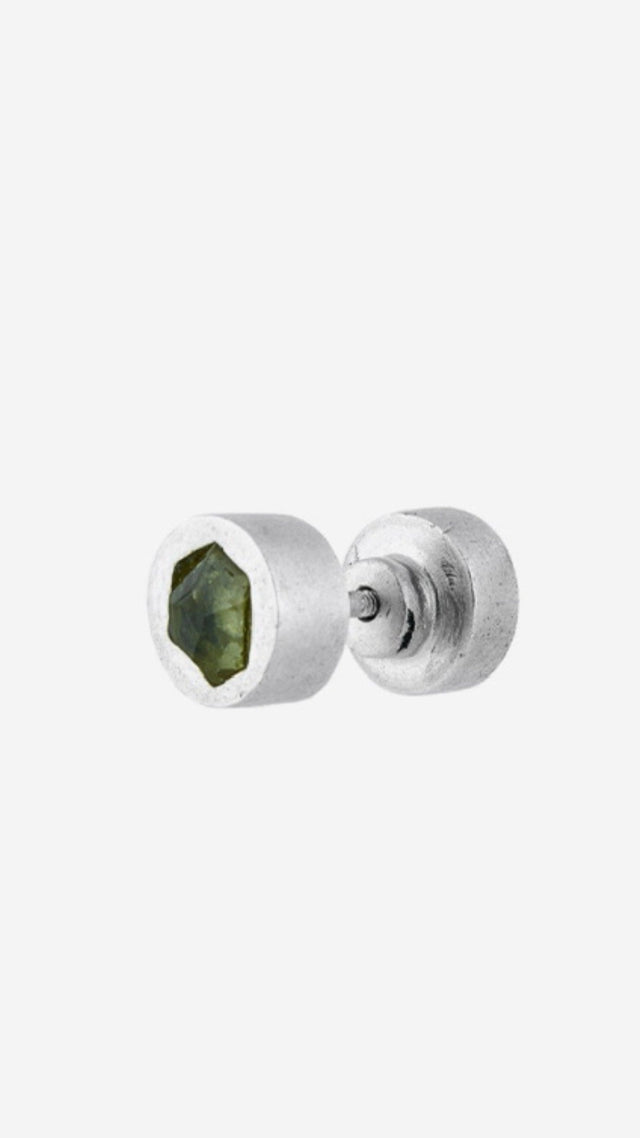
Hypoallergenic Silver Earrings — 925 Sterling Explained for Sensitive Ears
The short answer: if your ears react to most earrings, the culprit is almost always nickel — and a properly made 925 sterling silver piece is one of the safest options for sensitive ears, provided the alloy is genuinely nickel-free. The word «hypoallergenic» on a tag means very little. The metal under the post is what counts. This guide breaks down which silver alloys are actually safe, which are marketing fictions, and how to read a piece on its specs alone.
Written from our Bali workshop in Gianyar, where every STRUGA piece is hand-cast in 925 sterling silver alloyed with copper only — no nickel, no zinc surrogate, nothing else. We have customers who wear our earrings through years of daily use without reaction; the technical reasons why are below.
Key takeaways
- Nickel allergy is the most common metal allergy in the world — affecting around 17% of women and 3% of men.
- True 925 sterling silver alloyed with copper only (the European and STRUGA standard) is nickel-free and safe for most sensitive ears.
- «Hypoallergenic» is not a regulated term in jewellery — always check the specific alloy.
- For surgical-grade implant-safe alternatives: titanium grade 23 (Ti-6Al-4V ELI), niobium, or platinum.
- STRUGA sterling silver earrings are 92.5% silver / 7.5% copper, with no nickel in the alloy and no nickel in the post or back.
Why ears react to earrings — what is actually happening
Most ear reactions are not random irritation. They are a specific immune response to nickel. Nickel is a cheap, hard, white metal commonly added to silver, gold, and stainless steel alloys to make them stronger or whiter. When nickel ions leach into perspiration through the puncture wound of a piercing, the body recognises them as a threat and triggers contact dermatitis: itching, redness, weeping, sometimes a thick callus around the post.
The European Union limits the rate at which nickel can leach from objects in prolonged skin contact (under the EU Nickel Directive, the limit is 0.5 µg per cm² per week for jewellery in contact with pierced skin). The United States has no equivalent federal limit, which is why «sensitive ears» is a much bigger conversation in the American market — domestic-sold sterling can legally contain enough nickel to trigger a reaction.
Once you have a nickel allergy, you have it for life. You can manage it but you cannot un-sensitise. The only treatment is avoidance — and avoidance starts with knowing what is actually in the metal you are putting in your ear.
What «hypoallergenic» actually means in jewellery
Nothing legally binding. The word «hypoallergenic» is not a regulated jewellery term in the EU, the UK, the US, or anywhere else we have checked. A maker can stamp HYPOALLERGENIC on a tag and sell a nickel-bearing piece that triggers a reaction within hours, and there is no enforcement mechanism.
What you actually want to look for:
- Nickel-free — meaning the alloy contains no nickel at all, not just below the EU leach limit. Real, not marketing.
- Specified alloy composition — a maker who lists exactly what is in the metal (e.g., «925 sterling: 92.5% silver, 7.5% copper») is verifiable. A maker who says «hypoallergenic alloy» without specifying is not.
- Nickel-free post and back — many otherwise nickel-free earrings cheap out on the post (the bit that goes through the ear) and use a nickel alloy there for hardness. Always confirm the post material specifically.
The metals that are actually safe — ranked by reliability
1. Niobium and titanium grade 23 (implant-safe)
The gold standard for medical body piercing. Niobium is a soft, dark grey metal that is biocompatible and non-reactive with body fluids. Titanium grade 23 (Ti-6Al-4V ELI — extra-low interstitial) is the alloy used in human bone implants. Neither contains nickel. The downside: niobium is dark and the colour palette is limited to anodised tones; titanium grade 23 has a distinctive cool grey colour and is harder to work into ornamental designs. Both are heavier than silver and not what you want for everyday signature jewellery — but unbeatable for a fresh piercing.
2. Platinum
Platinum is naturally hypoallergenic and contains no nickel in any standard jewellery alloy. The tradeoff is cost — platinum runs roughly 30 times the price of silver per gram. Worth it for a single high-value piece, overkill for a daily-wear earring drawer.
3. 925 sterling silver alloyed with copper only
This is the STRUGA standard. The alloy is 92.5% pure silver and 7.5% copper — copper alone, no nickel substitute, no zinc, no manganese. The piece behaves chemically like the silver and the copper individually: silver is non-reactive with skin in normal wear; copper can occasionally leave a faint green mark on very damp skin, but it does not trigger immune-mediated dermatitis the way nickel does.
The problem: not every «925 sterling» piece is alloyed this way. Some American sterling adds nickel for whiteness. Some Asian wholesale sterling uses zinc-nickel mixes. The 925 stamp guarantees silver content, not the rest of the alloy. To know whether a 925 piece is truly nickel-free, you have to ask the maker — or buy from one who publishes the specifics.
4. 950 / 999 fine silver
Higher purity than 925, with proportionally less alloy metal. 950 Britannia silver is 95% silver, 5% copper. 999 fine silver is 99.9% silver, almost no alloy. Both are inherently nickel-free because there is barely any non-silver content to worry about. The catch: fine silver is soft and bends easily, so it works for some pendants and earrings but not for posts, hinges, or anything load-bearing. Most makers do not use 999 for earring posts because the post would deform.
5. Solid 14k or 18k gold (with a clean alloy)
Pure gold (24k) is hypoallergenic. The alloys used to make 14k and 18k jewellery — adding copper, silver, palladium, zinc — vary by maker. White gold often contains nickel for the whitening effect; palladium-white gold is the nickel-free alternative. Yellow gold and rose gold are typically nickel-free because the alloy is silver and copper. Gold-plated, gold-vermeil, and gold-filled all have a thin layer of gold over a base metal core — and the base metal can contain nickel. Always verify the alloy or stay with solid yellow/rose gold from a maker who specifies their composition.
The metals that are not safe — even when sold as «sensitive»
Nickel silver / German silver / alpaca
None of these contains any silver at all. The names are 19th-century marketing legacies. The actual composition is roughly 60% copper, 20% nickel, 20% zinc. If you are nickel-allergic, this is the worst possible metal next to your ear. Watch for these names on tags from craft fairs and budget retailers.
Surgical stainless steel
The phrase «surgical» sounds reassuring but most surgical-grade stainless steel (316L) contains 10–14% nickel. The chromium content forms a passive layer that limits leaching, which is why the EU permits 316L for jewellery — but if your sensitivity is high, a passive layer is not enough. Stainless steel is the most common cause of unexpected reactions in people who thought they were buying a safe earring.
White gold (without checking the alloy)
White gold gets its colour from one of two recipes: nickel-and-zinc (cheaper, the historical default) or palladium (more expensive, nickel-free). A «white gold» tag tells you nothing about which alloy it is. Always ask, or buy from a maker who publishes the recipe.
Plated jewellery
The plating is fine — usually a thin gold or silver layer that is itself non-allergenic. The problem is the base metal underneath, which is almost always brass-and-nickel for cost. Plating wears through, and once it does, your skin is in direct contact with the nickel-bearing core. Most «sensitive ears reactions to gold-plated earrings» stories trace back to this.
How to read an earring listing for sensitive ears
Five things to check before you buy:
- Is the metal type stated explicitly? «925 sterling silver,» «14k yellow gold,» «niobium» — specific is good. «Hypoallergenic alloy» or «silver-tone» — specific is not.
- Is the alloy composition broken down? A maker like STRUGA will say «92.5% silver, 7.5% copper.» That sentence is your real guarantee.
- Is the post material specified? Earring posts are sometimes a different metal from the body. Check that the post is also nickel-free.
- Does the maker publish weight and dimensions? Real makers stand behind the spec; vague listings often hide cheaper alloys.
- Is there a return policy if you react? A maker confident in their alloy will offer one. We do.
For a deeper view on the silver standards themselves, see our sterling silver 925 complete guide and the sterling silver jewellery guide 2026.
Why STRUGA sterling silver is safe for sensitive ears
Three things, by design:
One — the alloy is silver and copper only. Every STRUGA piece is cast in 925 sterling: 92.5% silver, 7.5% copper. There is no nickel in the recipe, and we do not source mill stock that contains nickel as a hardener. We confirm with our Gianyar workshop on every batch.
Two — the post is the same metal as the body. Many earring makers cast the body in one alloy and use a pre-fab steel-and-nickel post for hardness. We cast the post as part of the piece, in the same 925 alloy. The metal touching your piercing channel is the same metal you can see.
Three — we do not rhodium-plate. Rhodium plating is hypoallergenic in itself, but when the layer wears unevenly — and on earring posts it always does — patches of bare metal underneath are exposed. If that bare metal is a nickel-bearing sterling, you get a sudden reaction months in. Our pieces are bare 925 throughout; what you see when the piece arrives is what you wear for the life of the piece. We call this Living Silver.
A note on copper: the copper in our alloy is metabolically benign for ear-piercing channels in the vast majority of people. The faint green mark some sterling wearers see on damp skin is a chemical reaction (copper carbonate) — not an immune response, not dermatitis, and it washes off. If you have specific copper sensitivity (rare), you would want platinum or fine 999 silver instead, but the population for whom this matters is very small.
Best STRUGA earrings for sensitive ears and first-piercing wear
If your piercing is healed and you are picking by sensitivity rather than by piercing freshness:
- Stud-style — minimal post movement, lowest irritation profile. Browse all STRUGA earrings.
- Hoops with hinged closures — the closure mechanism is also 925, no nickel hinge pin.
- Drop earrings with French earrings — the earring curves through the lobe but does not seat against it; the contact area is small and the piece moves with you.
- Oxidised silver pieces — see oxidised silver earrings. The oxidation layer is silver sulphide, the same chemistry as natural tarnish. Inert with skin.
For a fresh or freshly-troubled piercing, we recommend you stay with niobium or titanium grade 23 from a piercing-specialist supplier until the channel is fully healed (4–8 weeks for a lobe, longer for cartilage). Once healed, switching to STRUGA 925 is a minimal-risk change for most people. If you have a confirmed strong nickel allergy and want a deeper safety margin, platinum or solid 14k yellow gold are the next step up.
If you are still reacting — what to check
- Is the piece truly the metal it claims? Run the magnet test (see real gold vs silver earrings — how to tell what you’re buying). If it sticks, the post or core is steel.
- Is your piercing fully healed? Even an inert metal will inflame an unhealed channel. Wait until weeping has stopped completely.
- Is something else triggering it? Soaps, hair products, sweat-clogged sleeping habits, even a different earring you wore the day before can sensitise the channel. Clean the post and lobe with sterile saline, leave the earring out for 48 hours, and reassess.
- Have you tested for copper sensitivity specifically? Rare, but possible. A patch test with a dermatologist can confirm or rule out.
Our oxidised silver earrings, our hoops, and our Carbon-line pieces are all 925 sterling, all alloyed with copper only, and all available in the oxidised silver collection and the broader earring catalogue.
Related guides in this cluster
- Sterling silver jewellery guide 2026 — the master pillar for our silver standards.
- Sterling silver 925 complete guide — alloy, history, hallmarks, care.
- Bali silver jewellery guide — what makes Bali 925 different from generic sterling.
- Real gold vs silver earrings — how to tell what you’re buying — gold-vs-silver authentication.
- Oxidised silver earrings — STRUGA earring landing.
About STRUGA. STRUGA is a dark silver jewelry brand founded by Dmitry Strugovshchikov and Ekaterina Strugovshchikova, handcrafted with Balinese and international silversmiths. Every piece is 925 sterling silver, naturally oxidized or hand-patinated. The darkening is part of the design. It is a brutalist object that reacts and changes through contact with the environment and the wearer.