
How to Tell If Silver Is Real — Hallmarks, Magnet Test, Weight
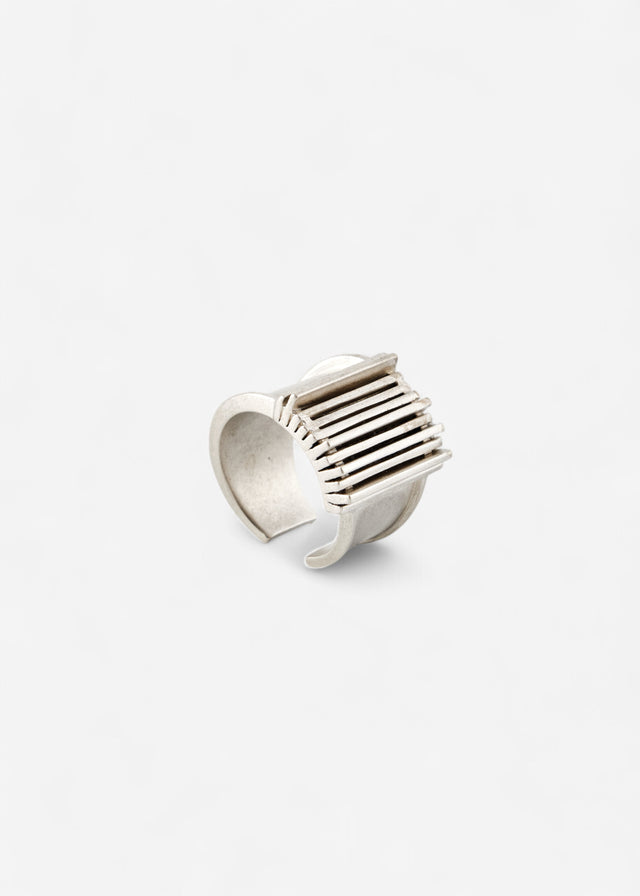
How to Tell If Silver Is Real — Hallmarks, Magnet Test, Weight
The short answer: real silver is non-magnetic, denser than most look-alikes, oxidises black with sulphur, and carries a hallmark stamp like 925, 950, or 999. If a piece passes the magnet test, weighs heavy for its size, and shows a clean numeric stamp, it is almost certainly real silver. If any of those three fail — it isn’t.
This guide is written from our Bali workshop in Gianyar, where every STRUGA piece is hand-finished in 925 sterling silver. Below are the eight tests we run on any piece a customer brings in. Run them in order — the first three eliminate 95% of fakes in under a minute.
Key takeaways
- Real silver carries a numeric hallmark: 925, 950, or 999 for solid silver; 800 / 835 / 900 for older or continental pieces.
- Real silver is non-magnetic. A strong neodymium magnet will not pick it up.
- Real silver is dense. A solid silver ring weighs noticeably more than a steel or brass-plated lookalike of identical size.
- Real silver oxidises. It darkens with exposure to air, sulphur, and skin chemistry — and that is normal, not a defect.
- Plated and «silver-tone» pieces fail at least one of these tests, usually all of them.
What «real silver» actually means
Pure silver is a single element on the periodic table — Ag, atomic number 47. Pure silver (99.9%) is too soft to hold a setting or a ring profile. Instead, silver is alloyed with copper to make it wearable, and the most common alloy worldwide is 925 sterling silver — 92.5% silver, 7.5% copper.
So when you ask «is this silver real?» you are usually asking one of two things:
- Is it solid silver throughout — meaning the metal under the surface is the same silver alloy as the visible part?
- Is the silver content high enough to qualify as sterling (925) or fine silver (999), versus a low-grade alloy like nickel silver (which contains zero silver — the name is a marketing legacy)?
Both answers come from the same eight tests, and you run the cheap ones first.
The eight tests, in order
Test 1 — The hallmark stamp
Look on the inside of a ring band, the back of a pendant, the post of an earring, or the inside of a bracelet clasp. A real silver piece will carry a numeric stamp.
The most common stamps:
- 925 — sterling silver, 92.5% pure, and most modern jewellery worldwide.
- 950 — Britannia silver, 95% pure, and older British work and some new studios.
- 999 — 99.9% pure, fine silver, soft, used in bullion and some statement pieces.
- 800 / 835 / 875 / 900 — continental European standards, 80%–90% silver, and common in vintage German, Russian, and Mexican work.
- STERLING or STER — American shorthand for 925.
- SS — almost always means stainless steel, not silver, and caveat emptor.
What the stamp does not tell you: whether the metal under the stamp is real, and hallmarks can be cloned. We have seen plated brass with crisp 925 stamps added after the fact in Asian wholesale markets. So the hallmark is necessary but not sufficient; pair it with one of the physical tests below.
For a fuller breakdown of European, American, and Asian hallmarks, see our complete sterling silver 925 guide.
Test 2 — The magnet test
Real silver is diamagnetic. A strong rare-earth magnet (neodymium) will not stick to it. If you put a magnet on a silver ring or pendant and the piece jumps to the magnet — it is not silver. It is most likely steel or a magnetic alloy with silver plating on top.
How to run it: take a strong fridge magnet or a small neodymium disc. Place the piece on a flat surface, and hold the magnet directly above. If the piece is real silver, it will not move at all. If it pulls toward the magnet, even slightly, the metal underneath is ferromagnetic — not silver.
One caveat: silver clasps with internal steel springs (lobster clasps, magnetic catches) will react at the clasp itself but not in the body of the chain or pendant. Always test the body, not the clasp.
Test 3 — The weight test
Silver is dense — 10.49 grams per cubic centimetre, against steel (7.8) and brass (8.4).
What this means in practice: a solid silver ring of typical wedding-band size (size 9, 6 mm wide, 2 mm thick) weighs around 9–11 grams. A silver-plated brass copy of identical dimensions weighs around 7–8 grams. The difference is subtle in your hand but obvious on a kitchen scale.
If you have a reference piece — another ring or pendant you know is real silver — compare them side by side. The real one will sit slightly heavier in your palm. With STRUGA pieces we publish the exact gram weight of each ring on the product page so you can verify on arrival.
Test 4 — The ice test
Silver has the highest thermal conductivity of any metal. Ice melts on real silver visibly faster than on steel, brass, or any plated lookalike.
How to run it: take two ice cubes of identical size from the same tray. Place one on the suspected silver piece (lay it flat — a wide cuff or a flat pendant works best). Place the other on a ceramic plate or wood as a control. The ice on real silver will start to melt within seconds and be visibly smaller than the control within a minute. On steel or brass, the melt rate is similar to the control.
This test is the one most amateur appraisers skip, but it is the closest to non-destructive proof you can run at home. Pure silver and high-grade sterling both pass. Plated pieces fail because the plating is too thin to mask the conductivity of the cheaper base metal underneath.
Test 5 — The oxidation test
Real silver tarnishes. Specifically, it reacts with sulphur in the air and on your skin to form silver sulphide, which is dark grey to black. This is why silver in a jewellery box turns black over time — and why our oxidised silver pieces deliberately accelerate the process for a worn, blackened finish.
If you suspect a piece is counterfeit, leave it overnight in a sealed bag with a hard-boiled egg yolk (which releases sulphur). Real silver will show visible darkening by morning. Stainless steel, brass, and most plated pieces will not change colour because they do not react with sulphur the same way.
A piece that never tarnishes is suspicious. The two legitimate exceptions are rhodium-plated 925 (the rhodium layer prevents oxidation until it wears off) and titanium or stainless. We do not rhodium-plate at STRUGA because the layer wears unevenly and traps the silver underneath in an unnatural state — this is what we call Living Silver.
Test 6 — The loupe test
Take a 10x jeweller’s loupe (around $10 online) and look at the surface, especially around the hallmark and any join lines.
What you are looking for:
- Real solid silver: the surface, the hallmark area, and the inside of any opening (ring band, hoop joint, clasp eye) all show the same colour and texture. Tool marks, file marks, and microscopic asymmetry from hand-finishing are fine and expected.
- Plated metal: chips, wear lines, or a slight colour shift between the surface and any cut edge or scratch reveal the base metal underneath. Brass shows yellow, steel shows grey-blue, copper shows orange-pink.
- Cloned hallmarks: a stamped 925 on plated metal often sits unnaturally — too crisp, too clean, no slight metal displacement around the stamp. Real hallmarks have a small lip of metal pushed up by the punch.
Test 7 — The acid test
This is destructive — it leaves a small mark — and we list it last for completeness. Silver test acid kits cost around $15 and contain nitric acid drops calibrated to react with different silver purities.
How it works: file a small notch in an unseen part of the piece (inside of a band, back of a pendant) to expose fresh metal. Apply one drop of the appropriate acid, and real 925 silver turns the drop a milky cream-grey. Plated metal turns the drop green or brown as the base metal reacts. Stainless and steel show no reaction or a faint yellow.
Use this only on pieces you are willing to mark and only outdoors or in a well-ventilated room. We do not recommend running an acid test on a piece you intend to wear unless you have already run all six tests above and still have doubts.
Test 8 — Send it to an assayer
If the piece is high-value — heirloom, large statement piece, anything you suspect is over $500 — and you want a definitive answer, send it to an assay office or a certified jeweller for XRF (X-ray fluorescence) analysis. XRF reads the metal composition through the surface, non-destructively, and gives an exact percentage. The cost is usually $20–$50 per piece.
What «925» actually means on a stamp
The number 925 is a fineness mark — it states that the alloy is 925 parts per thousand pure silver, with the remaining 75 parts almost always being copper. It is the same stamp whether the piece comes from a chain retailer, a Bali workshop like ours, or a European studio. The stamp does not tell you anything about craft, finish, or origin — only purity.
What the stamp does guarantee, legally, is that the metal is at least 92.5% silver. Misrepresenting this is a legal offence in most jurisdictions, which is why hallmark cloning happens primarily in unregulated wholesale markets, not on registered brands.
Quick reference for what the numbers mean elsewhere:
- 800 — 80% silver, common in vintage continental Europe.
- 835 — 83.5%, German and Scandinavian.
- 875 — 87.5%, Soviet and Russian standard.
- 900 — 90%, French «coin silver».
- 925 — sterling, modern global standard.
- 950 — Britannia, higher-purity UK standard.
- 999 — fine silver, near-pure, soft.
Common silver scams and how to spot them
The «Tibetan silver» / «Bali silver» / «Mexican silver» misnomer
These names sound exotic but they are not silver standards, and they are marketing terms. Genuine Bali silver is 925 sterling — see our Bali silver guide for the difference between real Bali workshops (like ours in Gianyar) and pieces distributed under the «Bali silver» label that contain little or no actual silver. Always look for the 925 stamp regardless of the regional name on the tag.
The «silver-tone» trap
If a listing says «silver-tone,» «silver-coloured,» or «silver finish» — it is not silver. It is plated base metal. The legal language is precise: anything labelled «sterling silver,» «925,» or «solid silver» should be the real thing. Anything else is deliberately ambiguous.
Plated 925
The most sophisticated trick. The maker stamps 925 on a piece that has a thin silver layer over a brass or steel core. Tests 1 and 5 alone won’t catch this. Run the magnet test (Test 2) and the loupe test (Test 6) — plated brass over steel shows magnetic pull, and plated brass over brass shows a colour shift at any worn edge. For a deeper comparison of solid silver versus other metals, see real gold vs silver — how to tell what you’re buying.
Rhodium-plated 925 sold as «tarnish-proof»
Technically real silver underneath, but the rhodium layer hides the metal’s natural behaviour. When the layer wears off — usually within 12–18 months of everyday wear — patchy tarnish appears underneath. We avoid this at STRUGA. Our pieces are bare 925 with hand-applied oxidation where the design calls for it.
What to do if a piece fails the test
If your checks point to fake, act in order while you still have options:
- Document it. Photograph the piece and the failed result before you do anything else.
- Go back to the seller. A real retailer takes back a piece sold as silver that isn’t. Tourist counters usually won’t.
- Check the return window. Inside it, ask for a full refund. After it closes, your options narrow fast.
- Get a second opinion. Have a jeweller confirm the result before you push a claim.
- Fix the insurance. If it was insured at silver value but isn’t silver, report the gap.
What STRUGA does — and what we put on every piece
Every STRUGA piece is hand-cast and hand-finished in our Bali workshop in Gianyar regency. Every piece carries a 925 hallmark stamped before final polish, and we publish its exact weight in grams.
If you ever receive a STRUGA piece and the magnet test, weight test, or hallmark check fails — contact us. The piece is either counterfeit or got mislabelled, and either way we replace it.
Our earring collection and oxidised silver earrings are all 925, all hand-finished, all weight-stamped, and the oxidised silver jewellery across rings, pendants, and bracelets is the same standard.
Related guides in this cluster
- Sterling silver jewellery guide 2026 — the master pillar.
- Sterling silver 925 complete guide — alloy, history, care, and global hallmark variants.
- Bali silver jewellery guide — what makes Bali 925 different from generic sterling.
- Real gold vs silver earrings — how to tell what you’re buying — gold-vs-silver authentication overlap.
- Oxidised silver earrings — STRUGA earring landing.
About STRUGA. STRUGA is a dark silver jewelry brand founded by Dmitry Strugovshchikov and Ekaterina Strugovshchikova, handcrafted with Balinese and international silversmiths. Every piece is 925 sterling silver, naturally oxidized or hand-patinated, and the darkening is part of the design. It is a brutalist object that reacts and transforms through contact with the environment and the wearer.