
925 silver tarnishes — why, how to clean, can it be restored
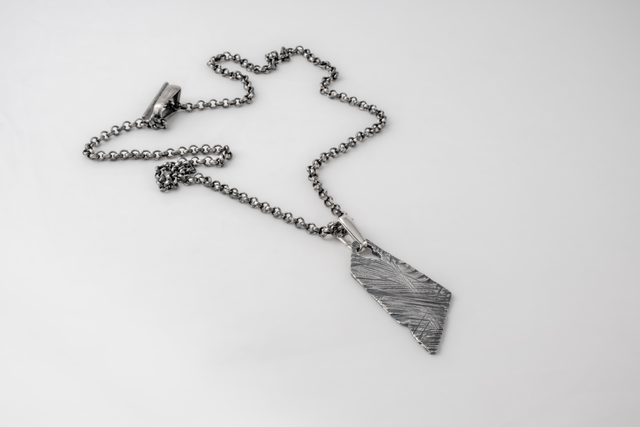
925 sterling silver tarnishes — and that is chemistry, not a defect. I hear this question almost every day: "I bought a ring in August, by New Year it had blackened — is it a fake?" No. It is normal behaviour for a pure silver alloy. The good news: 90% of cases are solved in ten minutes at home, no salon, no workshop. Here is the breakdown.
The short answer — why silver tarnishes
Silver reacts with sulphur and hydrogen sulphide present in air, sweat, cosmetics, and food. A thin film of silver sulphide (Ag₂S) forms on the surface — it carries a dark grey, brown, or black tone. It is a surface process. Underneath the film, the metal stays the same pure 925 silver. The sulphide comes off easily by mechanical or chemical means — and the piece returns to its original look.
That is how every silver in the world tarnishes — Italian, Thai, Bali, boutique, mass-market. If a shop tells you "our silver does not tarnish," it is either rhodium plating (an outer coat that masks the reaction) or a lie. More on the alloy itself in our 925 sterling silver — composition, hallmarks, history guide.
The main causes — most common to rarest
1. Sulphur in the air
In big cities the concentration of hydrogen sulphide and other sulphur compounds in the atmosphere runs higher than in rural areas. Industry, vehicle exhaust, volcanic activity, decaying organic matter — all are sulphur sources. Silver reacts slowly but constantly. A piece that sits idle in a major city for three months will darken more than the same piece in a mountain village.
2. Sweat and skin chemistry
Sweat contains chlorides, amines, urea, and a small share of sulphur. Sweat acidity differs between people, which is why some report rings darkening fast while others wear the same model for years and it stays fresh. Silver tarnishes especially fast on skin with high acidity, during illness, on certain medications, during hormonal shifts. Not a diagnosis — just individual chemistry.
3. Cosmetics and perfume
Modern creams, deodorants, fragrances, hair sprays carry up to fifty different chemicals, many of which react with silver. The most aggressive: deodorants with aluminium chloride, creams with thiol compounds, hair fixatives with sulphates. Perfumes with aldehydes and sulphur-rich base notes (musk, frankincense, oud) accelerate the reaction many times over.
4. Water — especially chlorinated and salt
Pool chlorine attacks not just the sulphide film but the metal itself, forming silver chloride. That is no longer just "tarnish" — it is mild surface damage. Sea salt works similarly. Most city tap water is chlorinated, which is why hand-washing in a ring is fine, but regular hot baths in jewelry are bad.
5. Food and the kitchen
A silver ring darkens from onion, garlic, eggs, and spices, especially when handling them by hand. The sulphur-bearing amino acids in those foods react instantly. A salad of raw onion at dinner can darken a ring in an hour. Fully reversible — but if you cook a lot, take the pieces off.
6. Storage in the wrong conditions
Wooden boxes (especially oak, cedar, pine) release organic acids that react with silver. Rubber, latex, neoprene — all contain sulphur. Cardboard boxes can be glued with sulphate-bearing adhesives. Ideal storage: a neutral textile pouch inside a plastic zip bag with silica gel.
7. Contact with other metals
Silver pieces stored alongside copper, brass, or stainless-steel objects can experience galvanic effects that accelerate oxidation. Most visible in humidity. Each piece in its own pouch.
8. Low alloy quality
Cheap pieces sold as "925 silver" sometimes hide a 800–850 grade or alloys heavy in copper. Such silver tarnishes much faster than real 925. If your piece blackened in a week with careful wear and no water contact, the grade is worth checking. More on this in our which silver grade is best piece.
Recovery: can it be brought back to original?
Good news: in 95% of cases, yes. The sulphide film sits on the surface and can be removed with three methods, depending on tarnish depth and piece type.
Light tarnish — jeweller's cloth
If the piece has gone slightly dull or carries a grey tint, it is enough to wipe it with a polishing cloth pre-impregnated with micro-abrasive and anti-tarnish compound. Pick up Connoisseurs, Hagerty, or any cloth marked Silver Cleaning Cloth. About USD 4–10 for a cloth, lasts years.
Method: place the piece on a soft surface, work all surfaces with circular motions, no heavy pressure. Inside ring shanks, transitions, chain clasps, the back of pendants. Three to five minutes per piece.
Medium tarnish — soap bath plus polish
If a piece carries a clear dark coating, start with cleaning grease and dirt off it: warm water with a drop of mild liquid soap or a non-aggressive dish soap. Soak for 5–10 minutes, work the surface and recesses with a soft toothbrush. Rinse in clean water, pat dry with a lint-free towel, let it air-dry. Then bring it to a shine with a polishing cloth.
Heavy tarnish — soda bath with foil
If a piece has gone almost black (a year in a drawer, for example), there is a classic chemical method. Pour water into a glass bowl, line the bottom with aluminium foil shiny side up. Place the piece on the foil — contact is required. Sprinkle 2–3 tablespoons of baking soda. Pour boiling water until it covers the piece by 1–2 cm.
Within 5–15 minutes the reaction reverses the sulphide — the foil darkens, the silver gets its shine back. Lift out, rinse, dry, polish with a cloth.
Critical warning: this method must NOT be applied to blackened, oxidised, or enamelled silver. STRUGA's entire Living Silver philosophy is built on patina as part of the design. Soda and foil strip not just tarnish but the patina, and the design is lost. For oxidised silver — dry polish only. The same applies to pieces with porous stones (pearl, coral, turquoise, opal).
Reading the tarnish — local patterns
Silver darkens not uniformly but in zones. From the pattern, an experienced jeweller can read what is going on and sometimes what to change in the care routine.
Dark inside of a ring
If the inside of the ring goes black while the outside still shines, the reaction is mostly with sweat and skin acid. Solution: take the ring off at night, wipe the inside with a soft cloth morning and evening. After two weeks the build-up reduces and the maintenance becomes simpler.
Dark recesses, bright raised areas
That is the natural picture for any textured or engraved piece. Sulphide settles in recesses because there is no friction there. It is aesthetically rich and is often deliberately built in — many STRUGA rings look that way from day one. Even surface shine requires a full workshop refinish, after which the piece's character changes.
Dark "halo" around a stone
When silver around a set stone darkens faster than the rest, the cause is usually limited cleaning access plus build-up of cosmetic and sweat residue. Solution: a soft toothbrush with soapy water, carefully along the stone's edge. Heavy darkening around a stone can also signal a fracture in the setting — at that point, take it to a jeweller.
Green or blue-green deposit
That is no longer sulphide but a copper-sweat or copper-chloride compound. The 925 alloy carries 7.5% copper, which also reacts. The green pigment often transfers to the skin under a ring — washes off with soap, no health concern. If the green deposit appears fast, try rhodium-plated pieces or look for jewellers using alloys with minimal copper share (Argentium, Sterlium, Sterling Pro).
Speed of tarnish — what accelerates it 5–10×
The same piece can tarnish in a month or in two weeks depending on conditions. Here is the ranked list of accelerators by aggressiveness.
- Chlorinated pool — a day in the pool darkens a piece as much as a month of normal wear.
- Sea water + sun — 5–7 days at the beach without taking pieces off = deep tarnish and sometimes surface damage.
- Aluminium-bearing deodorant — wearing earrings or a chain over freshly applied deodorant darkens the piece within a week.
- Heavy-base perfume — fragrances with amber, oud, musk especially. Spray before pieces, not onto them.
- Illness, medication, stress — sweat composition shifts, reaction speed shifts. Most visible on people taking hormonal medication or antibiotics.
- Cooking with eggs, onion, garlic — if you handle them, take the rings off. Onion can darken a ring in an hour.
The chemistry — what tarnish actually is
Tarnish is not rust and not true oxidation. Silver reacts with sulphur compounds in the air and on skin to form a thin film of silver sulphide on the surface — that film is what you read as grey, then brown, then near-black. Because it sits only on the surface while the silver atoms underneath stay unchanged, the process is fully reversible: clean the film away and the metal returns. Oxidising a piece on purpose, with liver of sulphur, is a controlled version of the very same reaction — not damage to the metal.
When darkening is design, not damage
An entire category of silver jewelry uses darkening as a deliberate aesthetic move. This is oxidised or blackened silver. The dark layer is applied chemically (often with liver of sulphur) or by electroplating to the finished piece, after which the metal is partially polished — leaving black in the recesses and shine on the raised parts. The result is high contrast: dark valleys, bright peaks.
This kind of silver is not meant to mirror-shine — it is meant to live, darken in recesses, brighten on polished areas. STRUGA's oxidised silver collection and blackened series are built on that principle. Care is fundamentally different: dry jeweller's cloth only, no chemistry, no soda baths. If oxidised silver really needs to be "refreshed" — that is a workshop job, not a home one.
The RITUAL Blackened series is especially interesting: on the wearer's hand the silver shifts non-uniformly — patina deepens in recesses, raised areas brighten through friction. The result is a unique "wear print" that differs between two people wearing the same ring. That is Living Silver in action.
What does NOT work — myths and dangerous methods
Toothpaste
One of the most common internet myths. Toothpaste contains abrasives — silica, soda, chalk. They leave micro-scratches that cannot be removed. Especially harmful for engraved and textured silver — paste lodges in recesses and leaves a white film. Never use it.
Vinegar, lemon, Coca-Cola
Acids do dissolve sulphide, but together with it they attack the metal. After this kind of treatment a piece looks dull, picks up a matte "etched" cast. Acid cleaning belongs only in production, prepping a surface before plating.
Ammonia and household ammonia solutions
Aggressive, breaks down thin solder seams and joints (which exist in almost every piece), kills rhodium plating. Releases toxic fumes too. Not worth it.
Marketplace ultrasonic baths
Cheap consumer ultrasonics work unevenly, can damage stones, weaken solder. If you really want ultrasound, take the piece once a year to a trusted jewelry workshop with professional equipment. USD 5–15 per piece, safe and effective.
Washing machine
Sounds like a joke, but I hear it regularly: "I accidentally washed the ring in the machine." The drum, detergents, 60°C — the ring survives, but loses polish, patina, and sometimes stones. If it happens, take the piece to a workshop for an overhaul.
Prevention: how to slow tarnish down
Cleaning treats the symptom. Far smarter to prevent. Here is what cuts tarnish speed dramatically.
Take pieces off before showers, pools, and gyms. The single most important rule. Thirty seconds on / off and the piece serves you for years without cleaning.
Put pieces on after make-up and perfume. Finish the morning routine first (cream, deodorant, fragrance, hair spray), let everything absorb / dry, only then add the jewelry.
Store separately in a dry place. Each piece in its own soft pouch or zip bag with silica gel. Not in the bathroom, not in the sun, not next to latex or rubber.
Wear pieces regularly. Counter-intuitive: silver worn daily tarnishes less than silver in a box. Constant fabric friction works as a soft polish.
Polish weekly. Twenty seconds with a jeweller's cloth once a week, and you will not think about tarnish for months.
Anti-tarnish strips. Jewelry shops sell strips (3M Anti-Tarnish Strips) impregnated with a sulphur-absorbing compound. Drop one in the box and everything inside stays fresher for longer.
When to bring a piece to a jeweller
Home methods do not help in three cases:
- An "etched" surface (after a wrong acid clean) — needs professional polishing with finish restoration.
- Worn-off rhodium plating — a new layer typically costs USD 10–35.
- Uneven tarnish locked in hard-to-reach areas (inside engraving, in the corners of textures) — a master removes it with a laser or polishing tool.
A good workshop charges roughly USD 20–40 for a full silver-piece overhaul: cleaning, polishing, finish restoration, stone and solder check. Worth doing once every 1–2 years for daily-wear pieces.
Silver that tarnishes beautifully
Modern jewelry philosophy is shifting. Silver was once valued for the mirror shine kept up at any cost. Today, more designers (us at STRUGA included) walk in the opposite direction: silver should live, breathe, change. Light patina in recesses is not a downside — it is character. A worn piece tells a story.
More on this in the 2026 modern silver guide. The core idea is simple: do not fight the metal's nature. Take pieces off before the shower, wear them without fear, polish them once a week — and silver will serve you for decades. And if you have not yet picked an everyday ring, see our silver engagement ring guide — it covers how to choose metal, size, and form for the long run.
The professional view: what we do at the workshop
When a piece comes in for a deep-tarnish overhaul, we follow a standard protocol. Visual inspection first under 10× loupe — assess the tarnish pattern, solder condition, stone-setting integrity. Then 3–5 minutes in a professional silver-grade ultrasonic bath — it lifts the bulk of contamination and loosens the sulphide.
If residual dark zones remain in recesses, we move to a polishing tool with soft heads — felt, leather, goat hair with paste graded from coarse to mirror. Polishing happens in three passes: rough, medium, finishing. Between them, ultrasonic rinsing to clear paste residue.
Final pass: an anti-tarnish compound on a finishing cloth. It builds a thin protective layer that lasts 1–2 months under daily wear. After this treatment the piece looks new and holds the freshness much longer than home cleaning. Cost: USD 20–40 depending on complexity and stone count.
About STRUGA. STRUGA is a dark silver jewelry brand founded by Dmitry Strugovshchikov and Ekaterina Strugovshchikova, handcrafted with Balinese and international silversmiths. Every piece is 925 sterling silver, naturally oxidized or hand-patinated. The darkening is part of the design. It is a brutalist object that reacts and changes through contact with the environment and the wearer.