
Non-Diamond Engagement Rings 2026 — Dark Silver Guide
Key takeaways
- A non-diamond engagement ring is any commitment ring not centered on a diamond.
- The engagement tradition predates the diamond default by ~4,800 years.
- Tourmalines, sapphires, moonstones, plain dark silver bands all qualify.
- Dark silver bands and signets read as architectural statements rather than sparkle.
- Tourmaline: hardness 7–7.5 — daily-wear safe; comes in green, pink, watermelon, black.
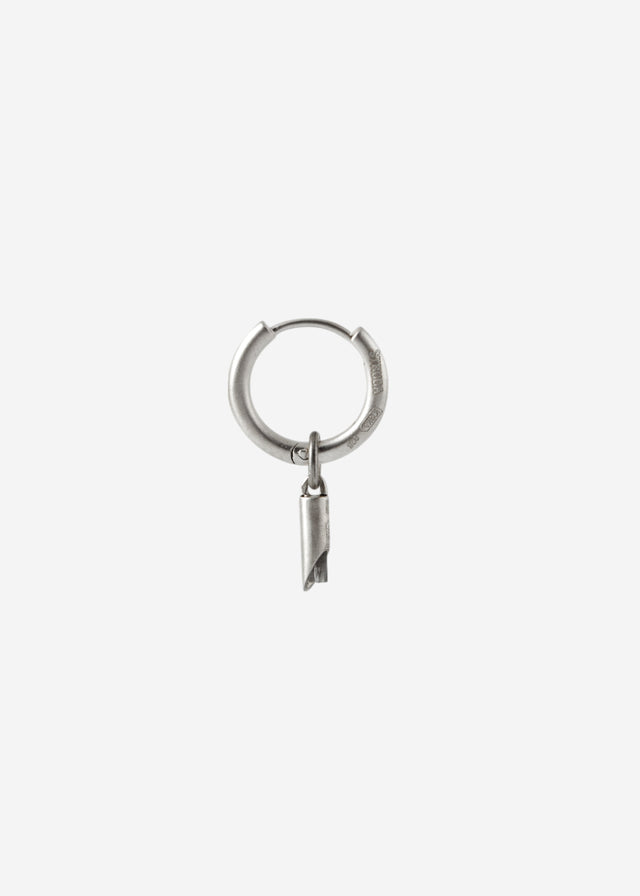
- STRUGA Dark Union line uses 925 silver, oxidized finish, hand-set tourmaline or moonstone.
- Sizing matters more than size — a 30 g architectural band needs precise fit, not "close".
A non-diamond engagement ring is any commitment ring not built around a diamond as its centre — tourmalines, sapphires, moonstones, plain dark silver bands, signets, and architectural amulets all qualify. The engagement ring tradition predates the diamond default by 4,800 years; skipping the diamond returns the ring to a worn object of commitment, not a financial product. STRUGA approaches the category through tourmaline amulets, Signature Asymmetric bands, and architectural silver rings.
- The diamond engagement ring is a 20th-century marketing construct. Coloured stones and plain bands carried the same meaning for the previous two thousand years.
- Tourmaline (Mohs 7–7.5, specific gravity 3.06) is the most colour-rich engagement stone available — pink, green, blue (Indicolite), watermelon, and red (Rubellite) all from one mineral family.
- A plain dark silver band is a complete engagement ring in itself. The architecture is the statement; no stone required.
- Sapphire (Mohs 9), moissanite (Mohs 9.5) and lab-grown diamond (Mohs 10) are harder; tourmaline trades hardness for colour range no other stone matches.
- STRUGA's Amulet family uses raw tourmalines as natural crystals, not faceted gems — the closest thing to a stone preserved exactly as it grew.
Why couples are skipping diamonds in 2026
The diamond engagement ring is not an ancient tradition. It is a marketing project that turned ninety this decade. The phrase "a diamond is forever" was written in 1947 by N.W. Ayer copywriter Frances Gerety for De Beers. Before that campaign, fewer than ten percent of American engagement rings contained a diamond. The Victorian and Edwardian engagement ring was usually a coloured stone — sapphire, ruby, emerald, opal, garnet, sometimes pearl — set in a band the bride would wear for the rest of her life.
What shifted in 2026 is that buyers can finally read that history without it being filtered through industry advertising. Younger couples search for "non-diamond engagement ring" at a rate that has roughly doubled across the last five years; coloured-stone listings on the major platforms are growing faster than any other category in fine jewellery; and the resale market has begun to price diamonds against the wholesale truth that an industrial diamond produced in a Chinese reactor in three days is chemically identical to a stone mined in Botswana over three billion years. Both are pure carbon. The price difference between them is a story, not a property of the material.
The cultural reasons line up with the financial ones. Couples in their twenties and thirties tend to prioritise meaning over hierarchy. Where their parents were taught that a two-month-salary diamond marked a man's seriousness, the current generation reads a 0.4-carat lab diamond against a hand-finished tourmaline ring and sees the second piece as the more committed object — a hand-built thing chosen for its individual character rather than its grading certificate. The ring becomes evidence of the choosing rather than evidence of spend.
The third pressure is ecological. Mined diamonds carry a documented chain of human and environmental cost that buyers can read in twenty seconds online. Lab diamonds remove the human-rights question but introduce a heavy carbon footprint at the reactor stage. A naturally occurring tourmaline pulled from a small Brazilian or Sri Lankan mine and set in recycled silver sits below either of them on the harm ledger — and a plain silver band with no stone at all sits below that. Many couples now treat the harm calculus as a primary filter before they look at form.
None of this disparages the diamond as a material. Diamond is the hardest naturally occurring substance on the Mohs scale, refracts light in a way no other transparent stone matches, and has a legitimate place in jewellery history that long predates the De Beers cartel. The argument is narrower: diamond is one option, not the default. The rest of this guide treats it as one option among five and lays out the alternatives in detail.
Five non-diamond engagement ring categories
Buyers searching for "non-diamond engagement ring" are usually looking for one of five different objects. Naming them separately makes the decision faster:
- Coloured-gemstone ring. A faceted or cabochon stone — tourmaline, sapphire, ruby, moonstone, opal, aquamarine, emerald — set on a metal band. The stone carries the symbolism. Colour and cut are the variables.
- Plain band. No stone. The ring's architecture is the statement. Often dark silver, oxidised, asymmetric, or sculpturally heavy. The metal itself is the gesture.
- Signet ring. A flat or domed face engraved with a monogram, family crest, date, or pattern. Historically used for sealing wax letters; in 2026 used as identity marker.
- Amulet ring. A worn protective object — abstract, often with a raw crystal or single embedded stone. Talismanic intent rather than display.
- Mixed-material ring. Silver with carbon fibre, meteorite, wood, or copper inlay; or two-metal pieces. The combination itself reads as a statement of unconventional commitment.
STRUGA produces objects in categories two and four directly. The rings collection contains plain Signature Asymmetric bands and architectural BRUTALISM rings; the Amulet family embeds raw tourmalines and aquamarines as natural crystals (in earrings and necklaces) and the same logic carries to ring commissions through Custom Order. For category one with deeper colour discussion, see our guide to tourmaline colours and meanings. For category two as a full engagement option, see our overview of alternative engagement rings.
Tourmaline as the new engagement stone
Tourmaline is the most colour-rich gemstone in the trade. The mineral group covers a chemical span from sodium-rich elbaite to iron-rich schorl, and that chemistry produces the widest spectrum of any single gem family — every visible colour, plus colourless, plus bicoloured stones grown in vertical bands.
The hard data first:
- Mohs hardness: 7 to 7.5. Hard enough for daily wear; one notch below sapphire, two below diamond.
- Specific gravity: approximately 3.06. Slightly heavier than quartz, lighter than topaz.
- Crystal system: trigonal, growing in long hexagonal prisms with striated faces — the reason a raw tourmaline crystal is immediately identifiable to the eye.
- Optical: uniaxial, strongly pleochroic — the same stone shows different colours along different crystal axes. Cut affects perceived colour as much as the rough material does.
- Pyroelectricity and piezoelectricity. Tourmaline generates an electrical charge when heated or compressed. The 18th-century Dutch traders who first imported it to Europe nicknamed it the Ceylonese magnet because it attracted ash from open hearths.
Five colour varieties dominate the engagement market. Each has a different name, mineral signature, and cultural association:
| Variety | Trade name | Colour cause | Symbolic reading |
|---|---|---|---|
| Pink tourmaline | Rubellite (deep red-pink) | Manganese | Heart-opening, romantic commitment, female lineage |
| Green tourmaline | Verdelite | Iron and sometimes chromium | Growth, vitality, abundance |
| Blue tourmaline | Indicolite | Iron and titanium | Calm, communication, trust between partners |
| Watermelon tourmaline | Bicolour pink-green | Manganese core, iron rim, grown in zoned bands | Union of opposites, balance, partnership |
| Colourless tourmaline | Achroite | Absence of chromophores | Clarity, simplicity, intentional restraint |
The watermelon variety is the most overtly engagement-coded of the five. The stone literally reads as two complementary forces grown into a single crystal — a piece of geological luck that no synthetic process can fake. It is the closest object in the gem trade to a wedding metaphor.
Rubellite is the pinkest material the mineral kingdom routinely produces in transparent gem-quality form. Indicolite is rare enough that fine specimens command sapphire-tier prices despite tourmaline's softer reputation. Verdelite carries the same colour vocabulary as the older European emerald engagement tradition without the inclusion problems — gem-quality verdelite is typically cleaner and more durable than mid-grade emerald, at a fraction of the cost.
STRUGA's tourmaline pieces use the rough material differently from a mainstream jeweller. Where a conventional setting cuts the stone into a calibrated faceted gem and isolates it inside prongs, our Amulet earrings and necklaces preserve raw crystal terminations — the natural pyramidal end where the crystal stopped growing. The piece reads less like a setting and more like a fossil: a stone preserved exactly as it came out of the ground, framed by silver that does not pretend it is an industrial gem. For full colour-by-colour reading, see tourmaline jewellery colours and meanings. For a Custom Order ring with a tourmaline of your chosen colour, the same logic carries to a ring band — see the custom engagement ring process.
Plain bands as engagement: when the ring is the statement
A plain band — no stone, no facet, no setting — is the oldest engagement object in European history. Ancient Roman betrothal rings were iron bands with no decoration; the engagement act itself was the meaning, and the metal carried it without ornament. Medieval European engagement rings were often plain gold or silver, sometimes inscribed inside the shank with a personal phrase only the wearer would read.
The contemporary case for a plain dark silver engagement ring rests on three points:
- The ring is the stone. An architectural band — heavy, asymmetric, oxidised, or with a clearly hand-finished surface — performs the same visual job a stone normally does. It anchors the hand, draws attention, becomes the object the eye returns to. The band's geometry replaces the gemstone's brilliance.
- It survives forty years on the hand. A daily-worn faceted stone accumulates micro-chips on the girdle, abrades against keyboards and kitchen counters, and eventually requires reset or recut. A plain band has no fragile element. It oxidises, polishes, and dents in ways that read as wear, not damage. Insurance and maintenance costs across decades favour the plain band by a wide margin.
- It refuses display. For couples whose commitment is private, a plain dark silver band carries the meaning without announcing it. It looks, to most people who see it, like a thoughtful piece of jewellery rather than an engagement marker. That privacy is itself part of the statement.
STRUGA's Signature Asymmetric family is built on this logic. The signature silhouette is a single asymmetric volume — neither perfectly round nor perfectly flat, with a gentle architectural curve that catches light along one edge and stays dark along the other. Worn on the ring finger, it functions as engagement object without ever needing a stone. The Signature Links V.1 ring and Signature Links V.2 ring are both plain-band variants with the family's link motif rendered architecturally rather than as charm.
For the heavier register, the STRUGA Brutalism series includes Brutalism V.1 and Brutalism V.3 — sculptural rings developed in collaboration with an architect as a tribute to the concrete public buildings of the 1960s and 1970s. Each is heavy enough that the wearer feels it on the hand throughout the day; the weight itself is the engagement signal. For broader thinking on dark architectural bands as engagement, see our gothic engagement rings guide and the dark wedding rings guide.
Black gemstones, meteorite, and carbon: alternative materials
Beyond coloured tourmaline and plain silver, three less-traditional materials enter the non-diamond conversation when buyers want something that signals a clear departure from any conventional reading.
Black spinel and black onyx. Both deliver true matte-black colour at a price below most coloured stones. Spinel (Mohs 8) is the harder and more durable choice; onyx (Mohs 6.5–7) is softer but older as a gemstone — used in Roman intaglio rings two thousand years ago. Either material set into a heavy silver band reads as a serious dark-aesthetic engagement ring without the cost of a coloured-stone of equivalent visual presence.
Meteorite — particularly Seymchan and Muonionalusta. Iron-stone meteorites cut and polished to reveal Widmanstätten patterns make engagement rings that contain literal extraterrestrial material. The metal fell to earth before any human civilisation existed; the ring is, in a literal sense, older than the institution it commemorates. STRUGA uses Seymchan meteorite — a Russian iron-stone meteorite — in select FUSED family pieces. The same material can be set into a ring through Custom Order. For broader background on the dark-aesthetic engagement market, see our dark silver alternative engagement rings overview.
Carbon fibre. A high-performance industrial material that does not corrode, does not patinate, and weighs roughly half what equivalent silver weighs. STRUGA produces six proprietary palettes — Bloody Graphite, Arctic Graphite, Winter Graphite, Fused Graphite, Toxic Graphite, and Classic Graphite — each a multi-layered matte carbon fibre with a distinctive colour signature. Used as an engagement ring inlay, carbon creates a deliberate contrast with the silver around it: a band where one half records its wearer through patina and the other half refuses to record anything at all. The visual logic is union of opposites, expressed in materials.
None of these three categories is for everyone. They suit buyers who want their engagement ring to be obviously, immediately distinct from the conventional vocabulary — pieces that read as objects first and as engagement signals second. For couples whose commitment is itself unconventional, the material match is the point.
About STRUGA. STRUGA is a dark silver jewelry brand founded by Dmitry Strugovshchikov and Ekaterina Strugovshchikova, handcrafted with Balinese and international silversmiths. Every piece is 925 sterling silver, naturally oxidized or hand-patinated. The darkening is part of the design. It is a brutalist object that reacts and changes through contact with the environment and the wearer.