
Cartilage Ear Cuff Sizing and Fit Guide — Comfort, Helix Anatomy, Men vs Women
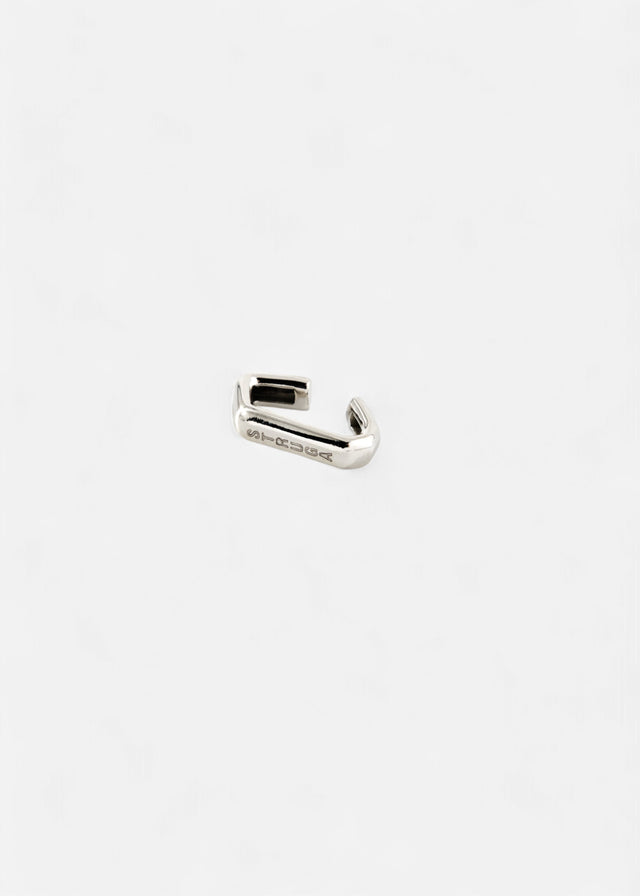
"What size ear cuff do I need?" is the most common question we get from first-time customers, and the most common reason cuffs come back. The honest answer is that ear cuffs are not sized like rings — there is no "size 7" — but they are also not truly one-size-fits-all the way most listings claim. Sizing an ear cuff is really about three measurements: the thickness of your helix cartilage, the length of the wearable section of the helix, and the gap of the cuff itself. Get those three right and the cuff disappears on the ear. Get any one wrong and the piece either falls off in an hour or pinches enough to come off in irritation.
This guide walks you through helix anatomy, why men's and women's ears tend to differ in cuff fit, the four-step at-home sizing test, and what to do if a cuff arrives slightly too loose or slightly too tight. By the end you will know how to choose your first cuff confidently online without trying it on, and how to adjust any cuff to your specific ear shape in under sixty seconds.
I am Dmitry Strugovshchikov, founder of STRUGA. We have been making cartilage ear cuffs in Bali for five years. Every adjustment in this guide comes from emails with customers who wrote to say the cuff arrived too loose, too tight, slid in the rain, or could not stay through a haircut. The patterns in those emails became the calibration we apply to every cuff we ship today.
Helix anatomy — what you are actually fitting a cuff to
Most ear-cuff guides skip the anatomy and jump to "slide it on." This is a mistake, because the fit problem is fundamentally about cartilage geometry, and you cannot get the geometry right without understanding the structure underneath.
The helix is the curved outer rim of the ear, made of elastic cartilage covered by a thin layer of skin. It runs from the top of the ear, over the crown, down the back, and ends just above the lobe. Along that run the cartilage is thinnest at the top crown (1-2 mm), thickest through the upper-middle section (2.5-3.5 mm), and thinnest again as it transitions toward the back of the ear (1-2 mm).
This thickness profile matters because an ear cuff grips by compression — the gap of the cuff is intentionally narrower than the cartilage thickness it is designed for. A cuff calibrated to a 3 mm helix sits perfectly on the upper-middle section, slides loose on the thin top crown, and pinches the thin lower transition. The "right size" is partly about the cuff and partly about where on the helix you wear it.
The wearable length of the helix — the section thick enough for a cuff to grip — is typically 20-30 mm in adult ears. Some ears have longer wearable sections (40+ mm) and can hold two stacked cuffs at different positions; particularly small ears may have only 15 mm of usable helix and need a single small cuff.
How to measure your own helix at home
You need a soft tape measure or a piece of string and a ruler. The measurement takes about a minute:
- Helix thickness. Pinch the upper-middle section of your helix between thumb and forefinger, and feel how thick it is — usually 2.5-3.5 mm. If your ears are particularly delicate, you may be closer to 2 mm; particularly robust, closer to 4 mm.
- Wearable length. With a soft tape, follow the curve of the helix from where the cartilage thickens at the top crown to where it thins out toward the back. The thick wearable zone is usually 20-30 mm long.
- Helix curvature. Hold a small object (the cap of a pen) against the side of your ear at the upper-middle helix. Note whether the curve is gentle (the pen cap matches), tight (the pen cap is too wide), or irregular (the curve changes direction). Most adults have gentle-curve helixes; some have noticeably tight curves that need narrower cuffs.
Send these three numbers to a shop with custom sizing and you will get a cuff that fits without adjustment on first wear. STRUGA can size to spec on request — write to us with your three measurements and we will calibrate the gap before shipping.
"One size fits most" — what it actually means
Almost every cuff listing says "one size fits most." This is technically true and practically misleading, and here is the honest version:
Most one-size cuffs are calibrated to a helix 2.5-3.5 mm thick, and this range covers roughly 70% of adult ears. If your helix falls outside this range — thinner at 2 mm or thicker at 4 mm — a "one size" cuff will either fall off or pinch.
The "adjustable" claim usually means the metal can be gently bent to widen or close the gap. This is true of most solid-silver cuffs (including ours) and false of plated or hollow cuffs (which crack at the gap when bent). Before you buy a cuff online, check whether the listing says "solid sterling silver" or just "sterling silver finish" / "925 silver-plated" — only the solid version is genuinely adjustable.
STRUGA cuffs are solid 925 sterling silver, cast in our Bali workshop, and the metal is alloy all the way through, no plating, no coating. This means our cuffs are fully adjustable by gentle finger pressure on the gap — see the oxidized silver explained guide for the metallurgy.
Men vs women — why the helix differs and what it means for fit
Average male and female helixes differ in three measurable ways:
Thickness. Male helixes average 0.3-0.5 mm thicker than adult female helixes (2.5-3 mm common).
Length. Male ears are on average 5-8 mm longer than female ears, which means a longer wearable helix and more positions available for cuff placement.
Curvature. Male helix curves tend to be tighter — the helix folds more sharply at the top crown — while female helix curves are typically more gradual. This affects which cuff shapes sit flush against the cartilage and which protrude awkwardly.
The practical implication: a "unisex one-size" cuff is usually calibrated to female-average dimensions because the female-average market is the larger commercial segment. Men with average ears wearing female-calibrated cuffs sometimes find them too loose; women with thinner-than-average ears find them slightly tight.
STRUGA pieces are calibrated to a slightly tight default because closing the gap is a 30-second adjustment most customers can do at home, while widening a too-loose cuff needs more skill and risks fatiguing the metal. We err on the side of grip, then offer adjustment instructions for everyone whose ear is on the smaller end of the range.
Our minimalist silver collection includes pieces designed for both segments — see the men's collection landing or the unisex pieces in all ear cuffs.
The 60-second fit test — how to know it fits
Once your cuff arrives, run the four-part fit test before declaring the size right or wrong:
- Slide-on test (10 seconds). Slide the cuff onto your upper-helix sweet spot using the technique from our how to wear ear cuffs guide. The cuff should resist slightly as it engages, but not need force. If it slides on with no resistance, the gap is too wide; if it needs real force, the gap is too narrow.
- Tap test (10 seconds). Once the cuff is on, tap your ear lightly with a finger, and the cuff should not move. If it slides up or down the helix from a tap, the gap is too wide.
- Sustained-pressure test (30 seconds). Wear the cuff for thirty seconds without moving. You should be able to feel the metal, but not feel pressure or pinching. If you feel pinching, the gap is too narrow.
- Walk-and-talk test (10 seconds). Walk a few steps, talk out loud, gently shake your head, and the cuff should stay in place through normal motion. If it shifts or slides off, close the gap by 0.5-1 mm.
Pass all four and the size is right. Fail one and adjust by half a millimeter at a time using the techniques below. Most cuffs need 0-2 adjustments to dial in perfectly.
How to adjust a cuff that is slightly too loose or too tight
The adjustment is done with thumb and forefinger pressure on the cuff itself, off the ear. The technique:
To close the gap (cuff is too loose): Hold the cuff between thumb and forefinger with the gap facing you. Apply gentle inward pressure on both sides of the gap at once, squeezing the metal closer together by half a millimeter. Test the fit, and repeat in 0.5 mm increments until it grips firmly.
To open the gap (cuff is too tight): Hold the cuff between thumb and forefinger as above, and apply gentle outward pressure, spreading the gap by half a millimeter. Test, and repeat as needed.
Three rules for both adjustments:
- Half-millimeter increments only. Larger adjustments risk overcorrecting or fatiguing the metal at the bend point.
- Pressure on the gap, not the body. Bending the body of the cuff distorts the curve; bending only at the gap preserves the shape.
- Stop when it fits. A perfectly fitted cuff is one you forget about after thirty seconds. If you feel it for longer than a few minutes, dial back the gap.
STRUGA solid sterling can be adjusted dozens of times without metal fatigue. The cuffs are designed to be tuned to the wearer, not shipped at a final dimension. You cannot break the metal with normal finger pressure.
What to do if the cuff slides off in the rain or during exercise
Three common causes:
Sweat lubrication. Heavy sweat reduces grip friction. The fix is to close the gap an extra 0.5 mm — a "summer fit" calibration that holds through sweat. We recommend customers in tropical climates run their cuffs slightly tighter than customers in temperate climates for exactly this reason.
Hair pulling. Long hair brushed past the cuff repeatedly can drag it loose. The fix is positioning — wear the cuff in the upper-third sweet spot rather than the top crown when you know hair will be moving past it.
Helix expansion in heat. The cartilage of the ear can swell slightly in heat (about 1-2% volume change between cold and hot conditions), which changes the grip. Most cuffs handle this fine; cuffs already at the upper limit of looseness can lose grip when the helix expands. The fix is the summer-fit calibration above.
If the cuff slides during exercise even after adjustment, consider switching to a smaller-diameter piece. The minimalist segment of our cuffs includes pieces designed for active wear that grip more firmly.
When to choose a custom-sized cuff vs adjusting an off-the-shelf piece
For most customers, an off-the-shelf cuff plus 0-2 adjustments is the right path. The economics are simpler, the lead time is shorter, and the cuff is just as good once dialed in.
Custom sizing is worth it in three situations:
Helix outside the standard range. Helixes thinner than 2 mm or thicker than 4 mm cannot be fitted from a standard "one size" cuff without significant metal reshaping. Custom is faster.
Specific design with a fixed gap. Some of our angular pieces have decorative elements right at the gap that cannot be adjusted without distorting the design. For these we offer a "spec your helix" option at order time.
Gift purchase. Buying for someone whose ear you cannot measure is risky, and custom sizing with a return option is the safer path. STRUGA accepts returns within 14 days for sizing exchange — the metal is solid and pieces returned in good condition can be resized for the next customer.
How long does a cartilage ear cuff last?
A solid 925 sterling silver cuff worn every day lasts effectively forever. The metal does not corrode, plate does not chip (because there is no plate), and the alloy does not develop fatigue from normal wear. The patina darkens over time, which is by design — see our silver patina guide and the Living Silver philosophy for context on why we treat patina as evolution rather than tarnish.
The points of failure on a cuff worn every day are at the gap and any thin sections of the design. The gap can develop slight metal fatigue if adjusted hundreds of times over years; thin sections under continuous compression can stress over the same timescale. In practice, neither is an issue for normal wear — we have customers who have worn their cuffs every day for the full five years we have been making them with no measurable change.
STRUGA's calibration philosophy
We make our cuffs slightly tight by default, and tell every customer how to widen them. The reasoning:
Fixable in the bathroom. A too-tight cuff is fixed in 30 seconds with finger pressure, and a too-loose cuff needs either more skill or a return shipment. We optimize for the easier fix.
Better grip across temperatures. Slightly tight at room temperature is right-sized at hot ambient temperatures (when the helix swells). Right-sized at room temperature becomes too loose in heat.
Forgiving of placement variation. A slightly-tight cuff stays put when worn on a thinner part of the helix; a right-sized cuff slides off the same position. Most customers settle into a "tucked" position that is slightly thinner than the upper-middle sweet spot, and the slightly-tight calibration handles this naturally.
This is why first-time STRUGA customers occasionally email worried that the piece is too tight. My reply is always the same: open the gap by 0.5 mm with your fingers and tell me how it feels. Eight times in ten, that single half-millimeter adjustment is the only thing the cuff needs.
The full philosophy of designing for the wearer rather than the showroom is in our Living Silver philosophy and founder story.
Related guides in this cluster
- Ear cuffs guide — pillar reference.
- Ear cuffs guide — how-to-wear placement walkthrough.
- All ear cuffs collection.
- Oxidized silver earrings collection.
- How to care for oxidized silver.
- Oxidized silver explained.
- Minimalist silver collection.
- Inside the Bali workshop.
About STRUGA. STRUGA is a dark silver jewelry brand founded by Dmitry Strugovshchikov and Ekaterina Strugovshchikova, handcrafted with Balinese and international silversmiths. Every piece is 925 sterling silver, naturally oxidized or hand-patinated, and the darkening is part of the design. It is a brutalist object that reacts and transforms through contact with the environment and the wearer.