
Ear Cuffs Guide — How to Wear Without Piercing
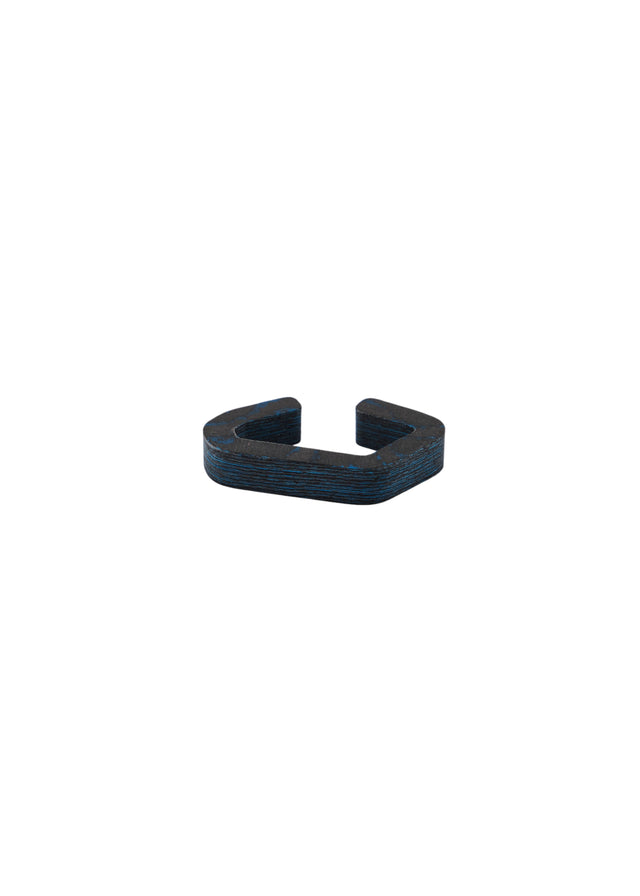
Ear cuffs are the fastest-growing jewelry category — and for good reason: no piercing, no commitment, instant style upgrade. Here's everything you need to know.
What Are Ear Cuffs?
Ear cuffs clip onto the outer edge of your ear, and they don't need piercings. They don't use screw backs — they simply grip the ear through gentle pressure. Quality ear cuffs (like ours in 925 sterling silver) stay put all day — working out, sleeping, whatever.
How to Put On an Ear Cuff
- Slide the cuff onto the thinnest part of your ear (usually the middle of the helix)
- Position it where you want it to sit.
- Gently squeeze to tighten — it should be snug but not painful.
- Check: Shake your head, and if it moves, squeeze slightly tighter.
Pro tip: If the cuff is too loose, use flat-nose pliers to slightly close the gap. Too tight, and gently open it. Silver is soft enough for minor adjustments.
Which Ear?
There are no rules anymore, and left, right, or both — it's purely aesthetic. Single ear cuff on the side visible when you face someone is the most impactful placement.
Ear Cuffs for Men
Ear cuffs are increasingly popular with men who want jewelry but don't want piercings. A single oxidized silver ear cuff is subtle, masculine, and takes exactly 2 seconds to put on. Start with a simple band cuff — it's the most understated option.
Styling Combinations
- Ear cuff + stud earring on the same ear = layered look.
- Ear cuff alone = minimal edge.
- Both ears = symmetrical, bolder statement.
- Mixed metals (silver cuff + gold stud) = currently trending, but we recommend sticking to one metal for a cleaner look.
Ear Cuffs vs Clip-On Earrings
Not the same thing: clip-ons pinch the lobe (often uncomfortable). Ear cuffs grip the ear (comfortable for hours).
Explore our ear cuff collection — handcrafted in sterling silver, designed to be worn every day.
How ear cuffs actually work
Ear cuffs are jewelry that grips the ear without piercing — usually clamping on the upper ear along the helix (outer rim) or wrapping around it. The grip is mechanical: the cuff is shaped slightly tighter than the ear thickness so it stays in place through compression. No piercing, no glue, no clip mechanism in most designs.
For wearers without ear piercings, cuffs allow the visual presence of ear jewelry without the commitment of getting pierced. For wearers with piercings, cuffs add visual layer above the piercing line — extending the jewelry territory beyond the lobe.
Types of ear cuffs
- Standard helix cuff. Wraps around the upper-outer rim of the ear (the helix). Most common type. Single-band design, stays in one position.
- Multiple-band cuffs. Two or three connected bands wrapping different parts of the ear. More visual presence; stays anchored more securely.
- Conch cuffs. Sit in the conch (inner shell) of the ear. Less common; need careful sizing.
- Industrial-style cuffs. Mimic the look of industrial barbell piercings without the piercing. Spans the ear.
- Chained cuffs. Cuff connected to a separate stud or earring with a chain — for wearers with piercings who want the visual extension.
How to wear an ear cuff comfortably
- Find the right position on the ear. Most cuffs sit on the upper-outer rim (helix). Try different positions — slightly higher, slightly lower — to find the most comfortable spot for your specific ear shape.
- Slide it on, don't force. The cuff should slide onto the ear with light pressure. If it needs significant force, the gauge is too tight; try gently widening the gap with fingers (carefully — soft silver bends).
- Test for security. Once positioned, tug the cuff lightly. It should stay; if it slides off easily, adjust the gauge tighter (squeeze it slightly).
- Wear in for the first hour. The first wear can feel unfamiliar. Most cuffs become unnoticed within an hour as the wearer's ear adapts. If the cuff still pinches after a few hours, the gauge is too tight.
- Take off at night. Side-sleeping with a cuff on can press uncomfortably. Most wearers remove cuffs before sleep.
Which cuff style suits which ear
- Small ears: Single-band helix cuffs work better. Multiple-band cuffs can overwhelm small ears.
- Large ears: Multiple-band or chained cuffs read better. Single small cuffs can get lost.
- Already pierced ears: Chained cuffs that connect to existing studs add layered presence.
- Sensitive ears: Lighter cuffs (under 3g). Heavier cuffs can press uncomfortably during long wear.
- Active wearers: Cuffs with secure mechanical grip rather than ones that rely on tightness alone.
Style — when to wear a single cuff vs. matched pair
The dark/architectural register favors asymmetric placement. A single cuff on one ear (or on a single ear plus a small stud on the other) reads as deliberate. Matched pairs of cuffs read more conventional — fine for some aesthetics, less aligned with the brutalist/architectural direction.
For everyday wear: single cuff, optionally paired with a small stud on the same ear or the opposite. For statement contexts: heavier multi-band cuff, alone. For traditional contexts: matched pair if cuffs are appropriate at all.
Care for ear cuffs
- Daily microfiber wipe after wear. Removes oils that accumulate on the contact surfaces.
- Take off for sleep, swimming, exercise. Cuffs can deform under pressure; protect them.
- Re-shape if loose. Soft silver cuffs can become loose with repeated wear. Gently squeeze closed before next wear.
- Check the bend regularly. Cuffs that have been stretched too far don't return to original shape. Replace or send to maker for re-bending.
- Store separately. Cuffs can scratch each other if stored in contact.
Frequently asked questions
Will ear cuffs hurt?
Should not, when properly sized. The first hour can feel unfamiliar; ongoing pain or pressure means the gauge is too tight. Adjust or try a different cuff style.
Can I sleep with ear cuffs on?
Usually no. Side-sleeping presses the cuff into the ear uncomfortably. Most wearers remove cuffs before sleep.
Do ear cuffs fall off?
Rarely if properly sized. The mechanical grip holds through most daily activities. Active sport and rough handling can dislodge them; remove for those contexts.
What if my ear is unusual in shape?
Some cuffs need adjustment to fit individual ear shapes. STRUGA can adjust the gauge for unusual ears as part of after-sales service.
Can men wear ear cuffs?
Yes — increasingly common. The asymmetric single cuff reads especially well in masculine contexts. Avoid ornamental or bright cuffs; choose oxidized architectural pieces.
Will the cuff damage my ear?
Properly fitted cuffs don't damage ears. Excessive tightness can cause discomfort and bruising; that's the wrong size, not the right one.
How much should an ear cuff cost?
Quality oxidized silver cuffs from established brands run $40–$200 for single cuffs, $150–$400 for multi-band designs. Below $40, materials and finish quality drop. Above $400, you're paying for brand premium or unique stone elements.
About STRUGA. STRUGA is a dark silver jewelry brand founded by Dmitry Strugovshchikov and Ekaterina Strugovshchikova, handcrafted with Balinese and international silversmiths. Every piece is 925 sterling silver, naturally oxidized or hand-patinated, and the darkening is part of the design. It is a brutalist object that reacts and transforms through contact with the environment and the wearer.