
Inside a Bali Silver Workshop — How Handmade Jewelry Is Made
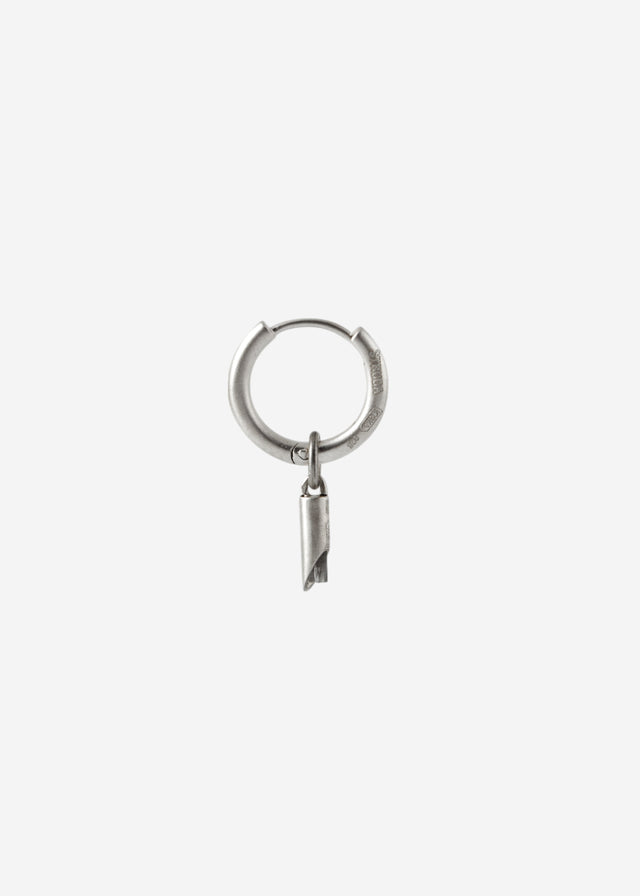
Every STRUGA piece begins as raw silver grain and ends as a wearable object with its own character. The journey between those two points takes place in a Balinese workshop, using techniques refined over centuries and combined with contemporary design. This is what actually happens between the model and the finished piece — the eight steps, the tools, the timing, and the decisions that separate a hand-built object from a stamped one.
Key takeaways
- Production runs through eight steps, with hand work at every one — even the wax model is shaped, not just printed.
- The casting itself takes minutes; the filing and finishing take hours and define the final character.
- Living Silver pieces skip the rhodium plating step entirely — the final hand-finished surface IS the final surface.
- Each artisan handles a piece end-to-end, not as part of an assembly line — which is why two pieces of the same model differ in subtle ways.
- The workshop environment — open doors, tropical climate, natural light — is part of how the metal develops character.
From raw silver to finished jewelry
Every STRUGA piece starts as 925 silver grain — small irregular pellets that look like coarse sand. By the end of the process, those grains have become a ring, a bracelet, an earring or an amulet that fits a hand or a body. The journey involves techniques that Balinese silversmiths have refined over centuries, combined with contemporary design approaches.
For background, see the Balinese craft tradition. The Bali silver region has been making silver for generations: families pass techniques from parent to child, workshop to workshop, in a continuous tradition that long predates any of the brands now built on top of it.
Step 1: Design
Each STRUGA design begins as a sketch or a 3D model. The designer considers not just how the piece looks, but how it feels on the body, how it catches light, where the weight sits, and how the silver will age over time. Some designs go through dozens of iterations before reaching the workshop floor.
Two paths converge here. Geometric, modular pieces — the blade rings and Brutalism families — start in CAD and go through digital iteration before any wax is touched. Organic, sculptural pieces — the Thorn amulets, STRUGA's ritual world stones — start with hand sketches and shift into wax earlier in the process. Both end up in the same casting flow, but the early work happens in completely different rooms.
Step 2: Wax model
For complex pieces, a wax model captures every detail that will appear in the final silver piece. This wax can be carved by hand using precision tools — files, scribers, heated probes — or it can be 3D-printed from the digital model and refined by hand. Either way, the wax is the dimensional master: every line, edge and surface texture in the final silver piece exists first in the wax.
The casting technique itself — burning the wax out of a mold and replacing it with molten silver — has been used for over five thousand years and remains the standard for jewelry that needs intricate geometry. The technical name is cire perdue in French, but the idea is simple: the wax is a sacrificial copy of the final piece. The wax is destroyed in the burnout. The silver takes its place.
Step 3: Mold and burnout
The wax model is encased in a plaster investment mold. The mold goes into a kiln and is heated slowly through several temperature stages — first to drive off moisture, then to melt the wax out (the wax flows into a catch tray), then to harden the plaster and ensure no wax residue remains.
This stage takes hours and is mostly automated, but the kiln schedule is fine-tuned for each batch. Get the temperature curve wrong and the plaster cracks or the wax leaves residue that contaminates the casting. The kiln is the unglamorous core of the process: it does its work overnight, and the next morning a hot empty mold is ready.
Step 4: Casting
Molten 925 sterling silver — heated to approximately 960°C — is poured or centrifugally forced into the hot mold. The silver fills the cavity left by the burned-out wax. After cooling, the plaster is broken away with hammer and water to reveal the raw silver casting: rough, with sprues attached, with imperfections, but carrying the exact form of the original wax model.
The casting itself takes about ninety seconds. Everything before it (mold preparation, burnout, alloy heating) takes a day. Everything after it (finishing) takes a week or more, depending on the piece.
Step 5: Filing and shaping
This is where the most time is spent. Sprues — the thin silver channels left over from how the metal flowed into the mold — are sawn off. The piece is filed by hand to remove casting imperfections, smooth surfaces, and refine edges. For STRUGA's brutalist pieces, some texture is deliberately preserved — the balance between refinement and rawness is a design decision, not an oversight.
An artisan moves through several grits of file, then sandpaper, then polishing compound. A simple ring can need four to six hours at this stage. A complex amulet with multiple textures can need fifteen or twenty. The hand fatigue is real — this is the step where the maker most directly shapes the final result.
Step 6: Soldering and assembly
Multi-component pieces — bracelets with links, earrings with findings, necklaces with clasps — are assembled by hand. Each link is connected, each pin is set, each toggle clasp is fitted. Soldering joins are made with silver solder to maintain material consistency: the joint should be the same alloy as the body, so it ages the same way.
The torch work at this stage is small-scale and precise. A few seconds of localized heat at each joint. Get the heat wrong and the silver melts the joint or oxidizes the surrounding metal. Get the angle of the flame wrong and the solder pools where it shouldn't. This is one of the steps that takes years of practice to do reliably.
Step 7: Oxidation (for blackened pieces)
Pieces designated for the blackened or oxidized finish are treated with a liver-of-sulfur solution, which chemically darkens the silver surface. The artisan then selectively removes the darkening from raised surfaces with fine abrasives, creating the dramatic contrast between light and shadow that defines STRUGA's dark aesthetic.
This is sculpture, not just chemistry. The same piece dipped in the same solution by two artisans will come out looking different — because each maker reads the surface differently, removes oxidation in different places, and stops at a different moment. The result is that even within a single design, no two oxidized pieces are identical.
Step 8: Stone setting
For tourmaline, aquamarine and other natural-stone pieces, each raw crystal is individually selected and set by hand. STRUGA uses uncut, unpolished stones — each one is unique in size, color and shape. The setter must adapt their technique to each specific crystal, sometimes filing the silver bezel back to fit, sometimes building it up. There is no «standard setting» when the stone itself is non-standard.
The result: every the ritual world piece with a stone is structurally one-of-one. The design language is consistent; the specific resolution is unique to that crystal.
Step 9: Quality check and hallmark
Every completed piece is inspected for structural integrity, finish quality, and design accuracy. The 925 hallmark is stamped (almost always inside a ring band, on the back of a pendant, or inside a clasp), and the piece is photographed and cataloged before shipping. The piece that leaves the workshop has been through every step in this article — and through the hands of, typically, three to five different artisans.
Living Silver — what changes the process
For Living Silver pieces, no rhodium coating is applied. The natural silver surface is the final finish. This is unusual: most commercial silver jewelry is rhodium-plated to prevent tarnishing. The plating sits between the metal and the air, hiding small surface flaws and producing a uniform chrome-like brightness.
STRUGA chose the opposite approach. The unplated finish is more demanding to produce — every micro-flaw will be visible, because there is no plating layer to forgive it. Polishing has to go further. Surface sanding has to be more careful. Soldering joints have to be cleaner. The trade-off is that the piece, once finished, ages with the wearer. Wear-points brighten. Recessed areas deepen. The piece becomes a record of how it has been worn.
This philosophy shapes how the workshop operates. Every step that affects surface — filing, polishing, oxidation, finishing — gets more attention than it would on a piece headed for plating. Living Silver is partly a design philosophy, partly a workshop discipline.
The workshop environment
Unlike factory production, a Bali silver workshop operates at a human scale. Each artisan handles a piece from start to finish — they don't pass it down an assembly line. This means they develop a personal relationship with each object they create, and take pride in the individual result.
The sounds of filing, the heat of the torch, the smell of flux — these are constants in a Balinese silver workshop. Air conditioning is minimal, natural light is preferred, and the tropical climate means working with open doors year-round. The metal itself behaves slightly differently in tropical humidity than it would in a sealed industrial environment: surfaces oxidize faster on the bench, finishes set more slowly, and Living Silver begins its patina conversation with the air before it ever leaves the workshop.
None of this is romantic in the marketing sense. It is just the reality of how the work gets done. The romance, if there is any, is in the fact that the same conditions have produced silver here for centuries.
Tools that have not changed
A modern Bali silver workshop combines old and new. The new: 3D printing for wax models, CAD for design, digital cataloging, electric polishing wheels. The old: hand files, charcoal and gas torches, leather buffs, hand-cut steel scribers, traditional clamping techniques. The mix matters because some operations are simply better with old tools — a hand file leaves a different surface than a powered grinder, and the difference is visible at three feet.
The most important tool, though, is the artisan's eye. The decisions about when a piece is finished, when a polish has gone far enough, when an oxidation has reached the right depth — those decisions are made by a human looking at a specific object in a specific light. No tool replaces that.
How long does a piece take?
Realistic timing for STRUGA pieces, end-to-end:
- Simple ring (Brutalism, CODEX bands): 4–8 hours of hand work spread across 3–5 days of process.
- Complex ring (Blade, Thorn signature): 10–15 hours of hand work spread across 5–7 days.
- Amulet with stone setting: 12–20 hours including stone selection.
- Bracelet (multi-link): 15–25 hours including assembly.
- Custom Order or Dark Union pair: 3–5 weeks total — including design conversation, sample fitting, and finishing.
The numbers explain why mass production exists, and why a $15 mall ring cannot be made the same way: the labor cost alone of a hand-built ring exceeds the entire retail price of a stamped one. They are not the same product wearing different prices.
Frequently asked questions
Can I visit the workshop?
Workshop visits are not part of the public-facing brand. STRUGA pieces are visible at Hedonist Store and Barefoot Aristocracy in Bali — concept-store environments where you can handle, try on and take pieces home. For online buyers, strugadesign.com ships internationally; the Russian market is served through strugadesign.ru with delivery to any Russian city.
Why hand work instead of automated production?
Three reasons. First, the design language doesn't translate to mass production — the asymmetry, surface treatment and weight require hand finishing. Second, alloy and finish quality scale poorly: stamping presses optimize for unit cost, not for the kind of surface STRUGA wants. Third, accountability — when one artisan handles a piece end-to-end, there is one person who owns the result. That accountability shows up in the finished work.
Are the wax models always carved by hand?
Not always. Geometric pieces use 3D-printed wax for dimensional precision; organic pieces use hand-shaped wax for character. Both routes converge in the same casting flow. The choice is design-led, not technology-led: each piece gets the wax route that suits the form.
Why does Bali have such a strong silver tradition?
Several thousand years of metalworking, a continuous craft transmission inside families and villages, and an ongoing role of silver in Balinese ritual life. The combination of long tradition and continuous practice is rarer than it sounds — many silver-making regions worldwide have lost the apprenticeship chain. Bali has not.
What's the difference between Bali workshops and Bangkok workshops?
Bali workshops lean smaller, more hand-finished, more individual. Bangkok has larger workshops with more division of labor and more cost-optimized production. Both produce real 925; the difference is in how each piece is made. STRUGA chose Bali because the small-workshop, individual-artisan model matches the brand's design language.
Will the silver darken because the workshop has open doors?
Slightly, yes — that is part of why we use that environment. The metal begins to acquire its character in the workshop, before it ever ships. By the time a Living Silver piece reaches the wearer, it already has the early-stage warmth that fully-sealed industrial production lacks.
What happens if a piece is damaged?
Send it back to the brand for repair. Most STRUGA pieces are fully repairable — resoldering, refinishing, partial recasting are all possible. Hand-built construction is the prerequisite for hand-built repair. A stamped piece can rarely be fixed; a hand-cast piece almost always can.
Related collections
- All STRUGA jewelry
- One-of-one pieces
- Oxidized silver
- Handmade vs mass-produced — the full breakdown
- The Living Silver philosophy
- About STRUGA
About STRUGA. STRUGA is a dark silver jewelry brand founded by Dmitry Strugovshchikov and Ekaterina Strugovshchikova, handcrafted with Balinese and international silversmiths. Every piece is 925 sterling silver, naturally oxidized or hand-patinated. The darkening is part of the design. It is a brutalist object that reacts and changes through contact with the environment and the wearer.
Continue from STRUGA catalog: