
Is Sterling Silver Valuable? Spot Price, Resale, and What 925 Silver Is Really Worth
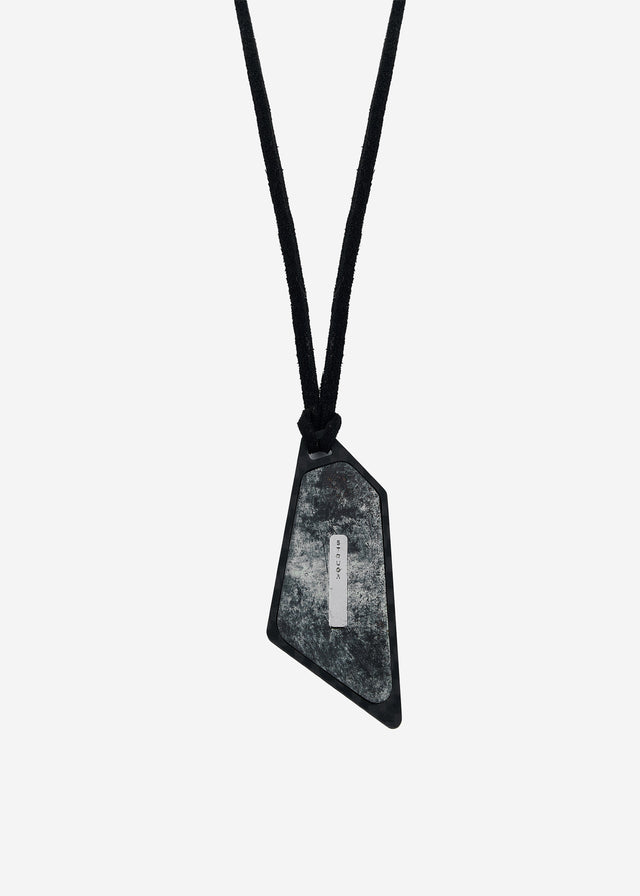
Sterling silver is valuable in three different ways, and they don't always agree. By spot-metal weight it's worth a fraction of gold. By craftsmanship — when the piece is hand-cast, designed, and finished by a working studio — it carries premium value that sits closer to the gold market than people expect. As an investment in the financial sense, sterling silver jewelry is rarely the right vehicle. As a long-term wearable asset that retains identity, story, and resale across decades, it does something gold and platinum cannot. This guide separates the three values and tells you when sterling silver is actually worth it.
Key takeaways
- Spot value is small. One gram of pure silver is worth roughly $0.80–$1.00 in 2026 raw material terms. A 15-gram sterling silver ring contains about $11–$14 of metal.
- Designer value is far higher. Hand-cast author work from a known studio sells at 10–30× spot, and resells with that markup intact when the brand has identity and aftercare.
- Pure investment? No. Sterling silver jewelry is not the right tool for hedging or financial growth. Bullion or ETFs are. Jewelry is a different category — wearable craft, not portfolio metal.
- Long-term wearable asset? Yes. A well-made sterling silver piece lasts decades, can be repolished and reset, and gains a personal patina that money cannot replicate.
- The honest comparison. Gold holds spot value better; sterling holds story and design value better. Choose based on which kind of value matters to you.
Three meanings of "valuable" — and why people argue about them
When someone asks "is sterling silver valuable?" they usually mean one of three different things. The arguments online are mostly people answering different questions at the same time.
- Spot-metal value. What is the raw silver content worth at today's market price? This is the lowest possible value of any sterling silver piece — what a refiner would pay if they melted it down.
- Market value as jewelry. What does this piece sell for as a finished, designed, branded object? This is what you pay at retail and what you might recover at resale.
- Investment value. Will the piece appreciate in dollar terms over time? This is the financial-instrument question, and it's where most "is silver worth investing in?" articles get tangled.
All three are valid. They just answer different questions, and a piece can be cheap on one scale and valuable on another. A handmade Signature Asymmetric ring contains maybe $13 of silver by weight, costs $200–400 retail because of the design and labor, and might trade for $150–250 in the secondary market — meaning it holds more value as an object than as melt.
Spot value: what the metal alone is worth
Silver as a commodity trades on global exchanges in dollars per troy ounce. As of mid-2026, silver spot prices have been moving in the $26–$32 per ounce range — high relative to the past decade but a fraction of gold's ~$2,400+ per ounce. One troy ounce equals about 31.1 grams.
That means pure silver is worth roughly $0.85–$1.00 per gram at spot. For 925 sterling silver, you multiply that by 0.925 to account for the alloy: a gram of sterling contains about $0.79–$0.93 of silver.
Practical numbers for common pieces:
- 5-gram delicate ring: ~$4 of silver content
- 15-gram everyday ring: ~$12 of silver content
- 30-gram statement ring: ~$25 of silver content
- 40-gram chain: ~$33 of silver content
- 80-gram heavy chain or large cuff: ~$65 of silver content
If you take any of these to a refiner, they pay you that minus a margin — typically you'll see 60–80% of spot value at a pawn shop or scrap dealer. So the realistic floor on a 15-gram sterling silver ring is around $7–10. This is the worst-case value: the piece has been destroyed and only the metal remains.
Anyone who tells you sterling silver "isn't valuable" is comparing this floor — the melt price — against the retail price of jewelry. They're not wrong about the gap; they're wrong about which number is the real one for a finished piece.
Market value: why hand-made silver costs ten to thirty times its weight
The retail price of a sterling silver piece reflects what's happened to the metal between the refinery and the box on your shelf. For mass-production silver — stamped chains, cookie-cutter rings — the markup over spot is small and the piece is essentially metal plus a thin margin. These pieces lose most of their value the moment they leave the store.
For author work — pieces designed by an identified maker, hand-cast in small batches or one at a time, and finished by hand — the math is different. Consider what's actually built into a single STRUGA piece:
- Design. A finished form like Signature Asymmetric or STRUGA Blade series represents weeks or months of model development by the studio.
- Lost-wax casting. Each piece is cast in 925 sterling silver in our Bali workshop in Gianyar regency, where the craft has been practiced since the 9th century.
- Hand finishing. Filing, polishing, oxidation, texture work — done piece by piece, not on a production line.
- Quality control. Every piece is checked, weighed, and signed off before it leaves the bench.
- Aftercare and story. A sterling silver piece from a working studio comes with the option to return it for repair, refinishing, resizing, or even partial recasting. Living Silver is not just a phrase — it's a contract that the maker stays available.
This is why a hand-cast 15-gram ring from a designer studio sits at $200–$400 retail rather than $15. The metal is the same. The labor, design, and ongoing relationship are what you're paying for.
Resale is where this becomes interesting. Designer sterling silver from a recognized studio holds its retail value far better than mass-production silver. Pieces from studios with strong identity and active aftercare often sell for 50–80% of their original retail in the secondary market. Mass-production silver typically sells for 20–40% of retail. The premium for design isn't just at purchase — it stays with the piece.
Sterling silver as financial investment: the honest answer
This is the question that gets the messiest answers online. The honest version:
If your goal is to grow money or hedge against inflation, jewelry is not the tool. Use bullion (one-ounce silver coins, kilo bars, vault-stored allocated silver) or a silver ETF (SLV, SIVR, PSLV). These instruments track spot silver prices closely, have low spreads, and can be sold quickly. Jewelry has none of these properties.
Why jewelry fails as a financial investment vehicle:
- Massive markup over spot. A piece sold at 10–30× spot price has to wait for spot to multiply 10–30× before you break even on metal alone — and you'd still need to find a buyer willing to pay melt-plus.
- Liquidity gap. Selling a designer ring is a project. Selling a silver ETF is a click. The friction matters when you actually need money.
- Subjective resale. Two identical pieces from the same studio can sell at different prices depending on condition, current trends, and whether the buyer happens to recognize the work.
- Storage and care. Jewelry needs cleaning, careful storage, occasional repair. Bullion needs a safe.
Anyone selling you sterling silver jewelry as "an investment" in the financial sense is either confused or selling the wrong way. We don't position STRUGA work this way. Our pieces are bought to be worn for a long time, not to appreciate in dollar terms.
What actually makes jewellery appreciate
Spot price is not the lever. When a piece gains value over time, a few real drivers are behind it:
- Scarcity. One-of-a-kind and small-batch pieces can’t be reissued. STRUGA’s RITUAL One-of-One pieces are unique by definition.
- Brand history. As a name grows, its early work climbs — 1990s Chrome Hearts pieces resell at five to ten times their original price.
- Craft that is getting rarer. Hand techniques like lost-wax casting are fading as the artisan pool shrinks worldwide.
- Material with its own trajectory. Natural tourmaline, meteorite, or carbon carry value paths of their own.
What does the opposite: mass production, rhodium plating that hides the silver, trend pieces, and anything with no known maker or provenance.
Where sterling silver actually wins as a long-term asset
Drop the financial-investment frame and ask a different question: what does sterling silver do well that other materials don't?
It lasts
A well-made sterling silver piece survives decades of daily wear with basic care. Sterling is harder than pure silver, hard enough to resist deformation in normal use, soft enough to be re-polished and re-finished as it ages. We see pieces returned for refinishing twenty years later and they go back into rotation looking new. This is not true of plated jewelry, gold-fill, or many fashion alloys.
It develops character
The case for sterling silver over higher-priced metals isn't economic — it's aesthetic. Gold ages slowly and uniformly. Platinum barely ages at all. Sterling silver lives: skin oils brighten high points, oxidation deepens recesses, edges soften where they touch other fingers. Two years in, a sterling silver piece is unmistakably yours in a way no untouched metal can be. This is the heart of the Living Silver philosophy.
It carries story across generations
Sterling silver from a working studio comes with provenance. The maker is named. The piece can be traced. If you pass it on, the next owner can return it to the same studio for repair or refinishing. We do this regularly. A piece that's been on three hands over three decades, refinished twice, is worth more in identity than any new piece — and that identity is built into the metal, not separate from it.
It's wearable money
Unlike a gold bar or a stock certificate, you can wear sterling silver every day without hiding it. The value lives in the world. This is its own form of utility — the daily presence of a well-made object in your life. Most clients don't think of their sterling silver pieces as financial assets, but as wearable capital — quality work that compounds in personal meaning even when it doesn't compound in dollars.
How to evaluate whether a sterling silver piece is worth its price
Five questions separate a piece worth buying from a piece worth skipping:
- Is it actually 925 sterling? Check for a 925 hallmark inside the band, on the inside of a clasp, or on the underside of a setting. Without this, it might be plated, silver-tone, or low-grade. Several quick tests can verify in seconds.
- Is the maker identifiable? Anonymous silver from a marketplace is closer to spot value. Silver from a named studio with a website, social presence, and aftercare carries identity premium that holds across years.
- Is it hand-cast or stamped? Lost-wax casting leaves subtle, organic surface variations. Stamped or laser-cut work is mechanically perfect and reads flatter. Both can be valid; one is meaningfully more rare.
- What does the studio offer after the sale? A maker who repairs, refinishes, and resizes their own work commits to a long-term relationship with the piece. This adds real value over decades.
- Does the price feel like 10–30× spot? For author work, this is normal. Anything below 5× spot is probably mass production. Anything above 50× spot needs to be justified by design, exceptional craft, or stones — not just brand cachet.
The two cases where sterling silver is the right answer
We tell clients sterling silver is the better choice in two specific situations:
1. When the design demands texture, oxidation, or contrast. Sterling silver takes oxidation and patina in ways gold never will. Pieces from Blade, Brutalism, and Thorn rely on the metal's specific behavior — bright high points, deep oxidized recesses, surfaces that read by texture rather than gloss. In gold, the same designs would lose half their character. In silver, they live.
2. When the piece is meant to be worn hard. A daily-wear ring or chain on a working hand will scratch, dent, and weather no matter the metal. Sterling silver's lower price point makes this easier to accept. A $300 silver ring that develops character over five years is a different proposition from a $3,000 gold ring with the same wear pattern. Most of our clients want pieces that earn their marks, and sterling silver lets that happen without economic anxiety.
FAQ
Does sterling silver hold its value over time?
Mass-production sterling silver loses most of its retail value at the point of sale and tracks spot prices afterward. Designer or hand-made sterling silver from a recognized studio holds 50–80% of retail in the secondary market, and that markup is durable because it's tied to the maker's identity rather than just the metal. Gold holds spot value better; sterling holds design value better.
Should I buy sterling silver as an investment?
Not as a financial investment. For exposure to the silver market, use bullion or a silver ETF — both track spot prices closely with minimal markup. Jewelry sells at 10–30× spot, which is a markup you can't recover by waiting for prices to rise. Buy sterling silver because you want to wear it for decades, not because you expect it to appreciate in dollar terms.
Is sterling silver worth more than plated or silver-tone jewelry?
Yes, by a wide margin. Plated jewelry is base metal (often brass or copper) under a microscopically thin silver layer that wears off in months to a few years, after which the piece looks tarnished or discolored and cannot be refinished. 925 sterling silver is solid silver alloy throughout — it can be polished, repaired, and refinished indefinitely. The price difference is real and reflects fundamentally different value over a long timeframe.
What's the difference in value between 925 and 999 silver?
999 (fine silver) is 99.9% pure and contains about 8% more silver by weight than 925 sterling. As bullion, 999 is preferred because it is closer to pure metal. As wearable jewelry, 999 is too soft — it bends, scratches, and loses shape under daily use. Sterling at 925 was developed precisely to make silver durable enough to wear. For investment metal, choose 999. For jewelry, choose 925.
Can I sell my sterling silver jewelry for more than scrap?
Yes, if it has provenance. Pieces with a recognized maker's mark, original packaging or paperwork, and hand-finished construction sell on platforms like Vestiaire Collective, 1stDibs, or specialist auction houses for 40–80% of original retail. Anonymous sterling silver typically sells at 100–150% of melt value (small premium for being a finished piece) on more general resale channels. The takeaway: buy from named makers if resale matters, and keep your documentation.
About STRUGA. STRUGA is a dark silver jewelry brand founded by Dmitry Strugovshchikov and Ekaterina Strugovshchikova, handcrafted with Balinese and international silversmiths. Every piece is 925 sterling silver, naturally oxidized or hand-patinated. The darkening is part of the design. It is a brutalist object that reacts and changes through contact with the environment and the wearer.