
Are Silver Rings Durable? Long-Term Wear, Scratches, and Lifespan
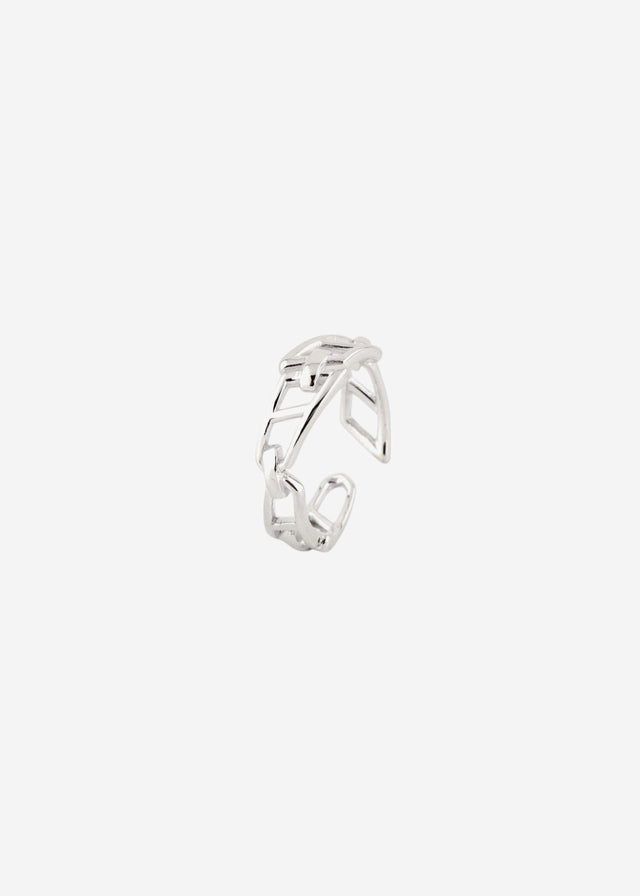
Sterling silver rings are durable enough for everyday wear over decades, but they wear differently than steel or gold. The metal is soft enough to scratch from keys and countertops, hard enough to hold its shape under normal use, and stable enough to outlive most of what you own. What kills a silver ring is not time — it is chemistry, impact, and wrong assumptions about polish.
TL;DR
- 925 sterling is soft enough to scratch but structurally stable — a properly made ring lasts decades of everyday wear.
- Scratches are inevitable. On polished silver they read as damage; on brutalist or oxidized silver they disappear into the texture.
- Real threats are chemical (chlorine, bleach, sulfur hot springs), mechanical (deformation from impact), and structural (thin shanks, hollow construction).
- Patina is not damage, and oxidized silver is made to deepen with wear — that is the Living Silver idea.
- Lifespan: a solid 925 sterling silver ring with a thick shank can last 30–50 years of everyday wear. Refinishing extends that indefinitely.
How durable is sterling silver, really?
Sterling silver is 92.5% silver and 7.5% copper. The copper is what makes it wearable — pure silver is too soft for rings, it would deform within a year. On the Mohs hardness scale sterling sits at about 2.5–3.
That puts sterling in the same hardness range as most precious metals used in jewelry. It is not as hard as steel, and it never will be, but hardness is not the same as durability. A ring made from 925 sterling at proper thickness — 2 mm minimum on the shank — survives everyday wear without structural failure for decades.
What you will see is surface change. Hairline scratches from desk edges, small dings from impact, gradual darkening as the copper oxidizes. None of this affects how the ring sits on your hand or how long it lasts. It affects how it looks, and that distinction is the whole subject of this article.
Will my silver ring scratch?
Yes. Within the first month of everyday wear, a polished silver ring will pick up its first hairline scratches. Within a year, the surface will look distinctly different from the day it left the workshop. This is not a defect, and this is silver behaving like silver.
The sources are mundane: keys in the same pocket, granite countertops, gym equipment, the inside of a leather bag, a steering wheel, sand. Most scratches are microscopic — you only see them under direct light at a particular angle. A few are deeper and stay visible.
Here is the part most buyers do not think about: the finish you choose decides whether scratches read as damage or as character. A high-polish mirror finish shows every mark, and a satin or matte finish hides shallow scratches in its existing texture. A brutalist or oxidized finish absorbs scratches almost completely — the surface was already irregular, so a new mark simply joins the conversation.
This is one of the practical arguments for the Brutalism rings collection The texture is intentional, deep, and irregular, and six months of wear does not visibly change it. If you want a ring that looks the same on day 1,000 as it did on day 1, brutalist finish is more honest than mirror polish.
What actually destroys a silver ring?
Scratches are cosmetic, and the real failure modes are different.
Chemical attack. Chlorine is the worst. Pool chlorine and bleach attack the copper in the alloy and can cause stress corrosion cracking — small cracks that propagate through the metal. A ring left in chlorinated water for hours can fail mechanically months later. Hot springs with high sulfur content blacken silver almost instantly and can pit the surface. Mercury (rare in everyday life, but found in some historical laboratories and traditional medicines) destroys silver on contact.
Impact. Silver is malleable. A heavy blow — slamming the hand in a car door, dropping a weight on it, hitting it with a hammer — will dent or bend the ring. Round bands deform into ovals, and stones can pop loose from settings. This is repairable but it is real damage.
Structural design. The thinnest part of any ring is the bottom of the shank, which sits against the palm and takes the most pressure. A thin shank will eventually wear through or crack from grip stress, and hollow construction (common in inexpensive factory rings) fails sooner. Plated rings expose base metal as the plating wears. None of this is a problem with solid 925 at proper thickness — but it is why the construction matters more than the metal name on the tag.
Heat. Silver melts at 961°C, and welding sparks, kitchen flames at close range, and forge work obviously matter. Everyday life does not. A hot shower or a sauna will not affect the metal — though sulfur in tap water can accelerate oxidation.
Is oxidation damage?
No. Oxidation is the natural reaction of silver with sulfur compounds in air, sweat, cosmetics, and water. It makes silver sulfide on the surface — a thin dark layer. Untreated, polished silver gradually turns yellow, then grey, then black over months of wear.
You can remove oxidation in five minutes with a polishing cloth, and you can also leave it. STRUGA's oxidized silver rings use this same chemistry intentionally — the dark tone is created and then partially polished off the high points, so wear gradually reveals brighter silver against dark recesses. The ring becomes more itself with use, not less.
This is what we mean by Living Silver, and read the full philosophy in the Living Silver page The short version: we do not plate our rings with rhodium to lock them in a frozen polished state. The metal stays alive. It records your habits — what you cook with, what you wash in, where you swim. A polished ring tries to deny time, and an oxidized ring takes it in.
How long does a silver ring actually last?
A solid 925 sterling silver ring with a thick shank, no plating, and no fragile stone settings can be worn everyday for 30–50 years before it shows enough wear to need restoration. With occasional refinishing — re-oxidation, re-polishing, light reshaping — the same ring can last centuries. Museums hold sterling silver pieces from the 1700s in wearable condition.
The shorter answers to the question "how long":
- Solid handcrafted 925 with 2mm+ shank: indefinite with care, and decades without any.
- Cast 925 with thinner shank (1–1.5mm): 10–20 years before the shank wears thin enough to need rebuilding.
- Plated silver (silver-plated brass or copper): 1–3 years before plating wears off, and not actually a sterling silver ring.
- Hollow construction: 5–10 years before deformation, regardless of metal.
This is why "silver ring" alone tells you nothing about durability, and the construction tells you everything. Browse the Sterling Silver Complete Guide for more on what to look for before purchasing.
Why does brutalist silver age better than polished silver?
This is the practical argument for the way we work, and a polished surface is a single, flat, reflective plane. Any deviation from that plane — a scratch, a dent, an oxidation spot — is immediately visible because it breaks the reflection.
A brutalist surface is already broken up, and it has tool traces, hammered facets, irregular peaks and valleys, intentional asymmetry. The surface tells the eye "this is what I look like" and the eye stops looking for flaws. New scratches blend into the existing visual noise; oxidation also deepens the recesses, which is where you wanted oxidation anyway.
The result is a ring that looks better at year five than at year one. Polish softens, edges round slightly, oxidation settles into the geometry, the metal develops a depth that does not exist on a freshly cast piece. This is not theory — it is what we hear from customers who have worn pieces from the Dark Minimalist Rings and CODEX Rings collections everyday for over a year.
If you want a polished mirror finish that stays new, this is not the right studio. We can build that — anything is possible through our material approach and oxidized silver care — but it is not what we do by default, and it is not what we recommend for everyday wear.
What is the right way to care for a sterling silver ring?
Care for sterling silver is mainly about avoidance, not maintenance. The fewer aggressive chemicals it sees, the longer it stays the way you want it.
Take it off for: swimming pools, hot tubs, hot springs, bleach cleaning, hair dye, heavy gym work with iron bars, and any task involving hammers or grinders. Putting on perfume and lotion before the ring (not after) reduces what the metal absorbs.
Leave it on for: showers, hand washing, normal cooking, sleeping, sex, swimming in the ocean (salt is fine, chlorine is not). Sterling silver does not need to be coddled, and it needs to not be poisoned.
Cleaning: a soft cloth, warm water, a drop of dish soap, and dry with a microfiber. For polished silver, a polishing cloth restores shine in two minutes. For oxidized silver, do not use polish or dip cleaners — they strip the dark tone. Detailed steps in the how to clean a silver ring guide.
Storage: a closed box or pouch, away from rubber bands and direct sunlight, and rubber releases sulfur. A small piece of chalk in the box absorbs moisture. If you wear the ring everyday, none of this matters — everyday wear actually slows oxidation because skin oils protect the surface.
What about scratched rings — can they be restored?
Yes, completely, and a jeweler can refinish a sterling silver ring to original condition. The process: light filing of deep scratches, sanding through finer grits, repolishing or re-texturing, re-oxidation if needed. Cost is usually $20–$60 depending on complexity.
For STRUGA pieces, we recommend not refinishing brutalist or oxidized rings, and the wear is the point. The patina is what makes the ring yours; polishing a five-year-old oxidized brutalist ring back to factory finish removes the most valuable thing about it.
For polished silver where you want the original look back, refinishing is straightforward and unlimited. Silver can be refinished hundreds of times over a lifetime — each pass removes a microscopic layer of metal, and the ring loses no meaningful mass over decades.
Does silver ring durability change with width and stacking?
Wider rings are usually more durable than thin ones — more metal, more thermal mass, more resistance to deformation. A 2mm band wears faster than an 8mm band. Stacking multiple rings on one finger accelerates wear on each ring's surface where they touch. The contact points polish each other and develop bright edges over time.
This is part of the design language for the Stacking Rings — the wear pattern between stacked pieces becomes part of the look. Two oxidized rings worn together for a year develop bright contact lines that you could not design intentionally. The metal does the work for you.
For signet-style rings — see the Silver Signet Rings page — the flat top face takes the most visible wear, and signet rings were historically worn until the engraving wore smooth, then re-engraved. Same applies today; the ring outlasts several engravings.
How does sterling silver compare to gold and platinum for durability?
Pure gold (24k) is softer than silver, and 18k gold is roughly equivalent. 14k gold is slightly harder due to higher alloy content. Platinum is harder than both and far denser, which is why platinum rings feel heavy. None of these are "more durable" in any practical sense for everyday wear — they all scratch, they all dent under impact, they all need occasional refinishing.
The real differences are chemical and economic, and gold does not oxidize. Platinum does not oxidize. Silver does — and that is either a flaw or a feature depending on what you want. We have written about the trade-off in Silver vs Gold Short version: silver gives you a metal that records life, and gold gives you a metal that resists it. Different intentions, equal durability.
For men choosing a first everyday-wear ring, sterling silver is usually the right starting point — see the Men's Silver Rings Guide and the introductory article on how to choose your first men's ring. The price-to-character ratio is unmatched.
How do I know my ring is solid sterling silver and not plated?
Two checks, and first, the 925 hallmark — stamped inside the band. No 925 stamp, no sterling. Second, visible signs of handwork: microscopic asymmetry, faint tool traces, small solder points where elements meet. Machine-plated factory rings have an unnaturally uniform surface and no solder evidence.
Weight alone is not a reliable indicator, and a heavy ring can be plated brass. A light ring can be solid sterling; check for the hallmark and the handwork. If a seller cannot show both, the ring is not what they claim.
Everything we make at STRUGA is solid 925 sterling, hand-finished in our Bali workshop and our Stavropol studio. No plating, and no hollow construction. The brutalist style is unforgiving — there is no way to counterfeit it cheaply. Read more in the Brutalist Jewelry Guide.
What about ring sizing — does fit affect durability?
Yes, and a ring that is too tight gets bent during forced removal. A ring that is too loose gets dropped, banged against doorframes, and lost. Both shorten lifespan in different ways; get sized properly — the Ring Size Guidance page covers the basics, including the fact that fingers swell during the day and in heat. Measure in the evening.
For wide bands, size up half a size from your usual — wide rings sit tighter than thin ones at the same nominal size. For oxidized pieces and brutalist forms, the texture grips skin slightly more than polished silver, so an exact numerical size will feel snug. Account for it.
About STRUGA. STRUGA is a dark silver jewelry brand founded by Dmitry Strugovshchikov and Ekaterina Strugovshchikova, handcrafted with Balinese and international silversmiths. Every piece is 925 sterling silver, naturally oxidized or hand-patinated, and the darkening is part of the design. It is a brutalist object that reacts and transforms through contact with the environment and the wearer.