
Sterling Silver vs Gold, White Gold, and Platinum — Honest Metal Comparison
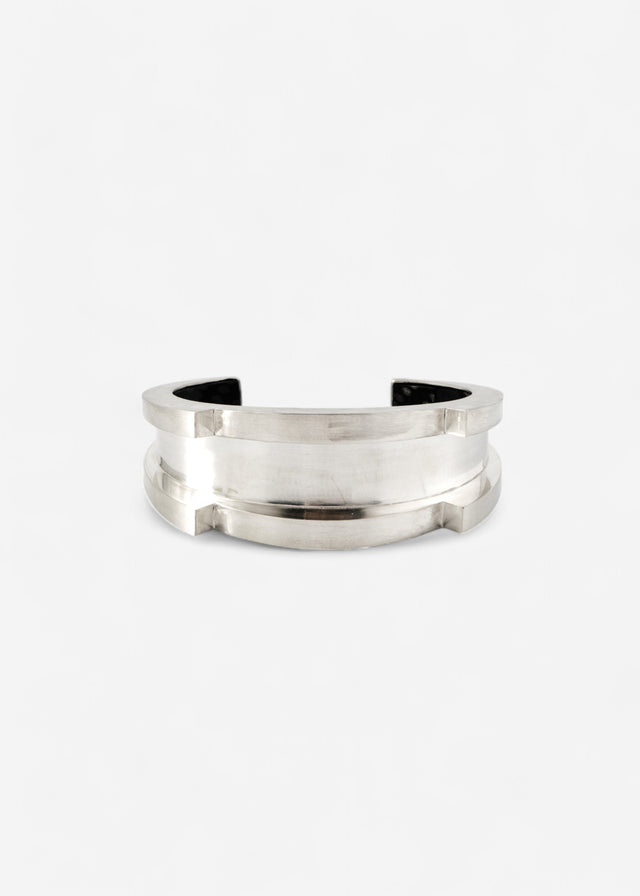
Every customer who walks into a jewelry store eventually faces the same fork in the road: silver, gold, white gold, or platinum. The decision is presented as a hierarchy — gold is "better" than silver, platinum "better" than gold — but the truth at the bench is messier. Each metal has trade-offs the marketing brochures rarely mention. This guide is the honest comparison from a jeweler who works in 925 every day, but also casts and finishes pieces in 14k, 18k, and platinum on commission. We will cover what each metal actually is, what it costs you, what it weighs, how it ages, and where each one earns its place in your jewelry box.
For broader context on precious metals overview.
Key takeaways
- Sterling silver (925) — 92.5% silver, 7.5% copper. The most affordable precious metal, the most workable for sculptural design, and the only one that develops a true patina. Everything STRUGA makes.
- White gold — gold (typically 75% for 18k or 58.5% for 14k) alloyed with palladium, nickel, or silver, then almost always rhodium-plated to look bright white. The plating wears off in 1–3 years and needs re-plating.
- Yellow gold — same gold base, alloyed with copper and silver to keep the warm tone. Doesn't tarnish, doesn't need plating, but costs 30–80× more than sterling.
- Platinum — 95% pure platinum, 5% iridium or ruthenium. The most durable jewelry metal made, and the heaviest. Costs 50–80× more per gram than sterling.
- Best value: 925 sterling silver for sculptural design, daily wear, and everything below the $1,000 budget line.
- Best for one heirloom piece: platinum — it survives generations without measurable wear.
- Worst hidden cost: rhodium-plated white gold — looks the same as silver new, costs 30× more, and needs re-plating every 1–3 years.
The four metals at a glance
Strip away the romance and these are the numbers a bench jeweler actually thinks about:
- Density — silver 10.49 g/cm³, gold 19.32 g/cm³, platinum 21.45 g/cm³. Platinum is roughly twice as heavy as silver in the same form.
- Mohs hardness (raw alloy) — sterling silver ~2.5–3, 14k gold ~3.5–4, 18k gold ~3, platinum ~4–4.5. Platinum is the hardest as worn — it dents instead of losing material.
- Spot price per gram (May 2026 reference) — silver ~$0.95, gold ~$83, platinum ~$32. Note that platinum is currently below gold; it has not always been.
- Tarnish — silver yes (slowly, the copper in the alloy reacts with sulphur), gold no (in 14k+ alloys), platinum no.
- Allergy risk — sterling: low (only the copper, rare reaction). White gold: medium (nickel-alloyed white gold is the most common cause of jewelry allergy). Yellow gold: low–medium (depends on alloy). Platinum: virtually zero — the gold standard for sensitive skin.
Already two of the comfortable assumptions break: platinum is not always more expensive than gold, and white gold is not actually white — it is plated to look white. We will return to both of these.
Sterling silver — what you get for the money
925 sterling is the most affordable precious metal in commercial jewelry, and the only one where you can buy a serious sculptural piece for under $300. The metal itself is cheap (around $1 per gram on the spot market), so almost the entire price of a finished piece is craft, not material — a $200 ring is dominated by hours of bench work, a $30 ring by definition is not.
The strengths: workability (flows well during casting, takes fine detail), colour range (polished bright, satin, or oxidised black like our oxidised collection), weight on the body (substantial without being tiring), and repair economics (resizing, re-polishing, and full re-casting are practical at silver prices, where the same operation in platinum is prohibitive). The weaknesses: tarnish (a soft sulphide film builds up over months — wipes off in seconds), and scratch hardness (silver picks up surface marks faster than platinum). For the deep dive see our sterling silver jewelry guide.
STRUGA's position: every piece we cast is in 925 sterling, and we deliberately do not rhodium-plate. We call this Living Silver — the metal earns its own surface story over years of wear instead of hiding under a plating layer.
White gold — the metal that isn't white
White gold is the most misunderstood metal in the jewelry case. The honest description: white gold is a yellow-gold-based alloy with white-toning metals added (palladium, nickel, or silver) to lighten the colour, then electroplated with a thin layer of rhodium on top to make it look bright, cold, and slightly bluish — like the platinum it is meant to imitate.
The plating is what gives white gold its showroom look. Without rhodium, the underlying alloy is a warm cream, sometimes faintly yellow or grey depending on the additives. The plating is around 0.05–0.2 microns thick. Under daily wear it disappears from high-contact surfaces — the inside of a ring shank, the underside of a clasp — within 1–3 years. Re-plating costs $40–100 at most jewelers and is a normal part of white gold ownership, but few buyers know to budget for it.
The two main alloy systems:
- Palladium white gold. 18k = 75% gold + 25% palladium and other whites. More expensive, more nickel-free, and slightly more naturally white. Modern, premium choice.
- Nickel white gold. 18k = 75% gold + 25% nickel + smaller alloy fractions. Cheaper, but a significant cause of metal allergy (the EU restricts nickel-leaching white gold). North American manufacturers still use nickel alloys widely; European manufacturers have largely shifted to palladium.
The killer comparison: a rhodium-plated 18k white-gold ring and a polished sterling silver ring look almost identical when new. The difference: the white gold cost 25–30× more, and it will need re-plating every couple of years for the rest of its life.
Yellow gold — the honest classic
Yellow gold is the traditional and structurally simplest of the gold alloys. 14k yellow gold is 58.5% gold + copper + silver; 18k is 75% gold + copper + silver. The added metals warm the colour to the familiar deep yellow.
Strengths: does not tarnish (the gold proportion shields the alloy from sulphur reactions), does not need plating (the colour is the metal's own), holds heirloom character (the warmth deepens slightly with age but never patinates the way silver does). Weaknesses: price (a 5-gram 18k ring carries roughly $310 of metal alone, before craft), and visual range (gold is gold — you cannot oxidise it dark or sandblast it grey the way you can silver).
For a head-to-head on the everyday-wear side, see our Bali silver complete guide — the section on price-per-gram covers both metals.
Platinum — the metal that lasts forever
Platinum is the densest, most chemically inert, and most genuinely durable of the four. Jewelry platinum is typically 95% pure platinum + 5% iridium, ruthenium, or cobalt for working hardness. That is much higher purity than 18k gold (75%) and dramatically higher than 14k.
The strengths the trade values: weight (platinum feels substantial in a way no other metal does — a wedding band that feels almost too heavy to ignore), tarnish resistance (does not oxidise at all in normal conditions), colour stability (no plating, no rhodium — the metal is naturally white-grey and stays that way for life), and wear behaviour (platinum dents and pushes rather than losing material — that is why a 50-year-old platinum band still has full wall thickness, while a comparable gold band has thinned).
The drawbacks: price (jewelry platinum runs roughly $80–120 per gram retail, depending on the alloy and the workshop — 30–80× the silver price for the same finished piece), weight on the body (some find a heavy platinum statement ring tiring on the hand), and repair difficulty (platinum melts at 1768 °C versus silver's 962 °C, requiring different torches, different soldering protocols, and a jeweler trained specifically on platinum).
For everyday silver readers comparing the two on the wedding-band question, our silver vs platinum comparison goes deeper into the price-per-gram and lifetime-cost math.
The rhodium plating problem — every white metal eventually faces it
Rhodium is a platinum-group metal electroplated onto white gold (and sometimes onto sterling silver) to give a bright, cold, slightly blue-white finish. It works brilliantly when new — harder than gold, resists scratching. The catch: it wears off.
Real-world wear timelines: a daily-worn white gold ring needs full re-plating every 1–3 years; an occasional-wear ring 4–6 years; pendants or earrings 5–10 years between platings. Rhodium-plated sterling silver follows the same curve, but the issue is more visible because the silver underneath is a different colour temperature than the rhodium on top.
The aesthetic problem with worn rhodium: it goes patchy, not uniform. High-contact surfaces lose the plating first, leaving a piece with two different surface tones — bright on the protected areas, warm-cream on the worn areas. This is the look that makes a five-year-old rhodium-plated white-gold ring feel old. STRUGA's approach: skip the rhodium entirely. Our 925 is unplated, and where the design calls for darkness we oxidise the surface intentionally — the controlled potassium-sulphide patination behind our oxidised silver rings. The metal ages with the wearer instead of fighting them.
Price comparison — what you actually pay
Reference prices for a comparable 5-gram band with the same level of craft, May 2026: 925 sterling handmade $120–250 (mass-market $50–120); rhodium-plated sterling $180–320 plus re-plating; 14k white gold $700–1,100 plus $40–100 every 2 years for re-plating; 14k yellow gold $650–1,000 no plating; 18k white gold $1,000–1,600 plus re-plating; 18k yellow gold $950–1,500; platinum 950 $1,400–2,400, no plating ever.
The hidden number: lifetime cost. A rhodium-plated white-gold band re-plated five times over 25 years adds $200–500 to the original purchase. A platinum band needs nothing for the same period. A sterling band needs a $5 polishing cloth and ten minutes a year. The price-per-decade math is closer than the showroom sticker suggests.
Weight comparison — what you feel on the hand
The same ring design will weigh dramatically different amounts depending on the metal. Take a standard 6 mm flat band, comfort-fit, US size 9. Approximate weights:
- 925 sterling silver — 7.0 g. Substantial without being tiring.
- 14k yellow or white gold — 9.5 g. Notably heavier; you feel it as you sleep.
- 18k yellow or white gold — 11.5 g. Heavier still — the "real wedding band" feel.
- Platinum 950 — 14.0 g. Twice the silver weight. People either love it or take it off after a week.
The variable nobody talks about: knuckle pressure on the underside of the finger. A 14-gram platinum ring puts measurably more force on the joint than a 7-gram silver ring of the same shape. People with active hands, athletes, or anyone with mild arthritis often prefer the lighter end of the scale for daily wear. People who want a "this is a serious piece of jewelry" presence go heavy. Both are valid; just know which you are buying.
Allergy and skin sensitivity
The four metals, ranked from lowest to highest allergy risk: platinum (virtually zero — used in surgical implants), sterling silver 925 (low — the 7.5% copper can occasionally produce a temporary green skin discolouration in very acidic skin, but true silver allergy is extremely rare), yellow gold (low — 18k+ is essentially hypoallergenic), white gold (medium to high — nickel-alloyed white gold is the most common cause of jewelry-related contact dermatitis; palladium-alloyed white gold is safer).
If you have ever reacted to costume jewelry, fashion earrings, or cheap belt buckles, your sensitivity is almost certainly to nickel. Both nickel-alloyed white gold and unverified "925" pieces with substituted alloys can trigger that response. STRUGA's classical 92.5% silver + 7.5% copper formula has no nickel, no chromium, and no plating to fail later.
Design freedom — what each metal lets you make
This is the variable least visible to first-time buyers but most visible to designers at the bench.
- Sterling silver — the widest design range of any precious metal. The metal flows beautifully in casting, takes fine detail, supports oxidation, sandblasting, brushing, hammering, and intentional patination. Sculptural and statement pieces are far more common in silver than in gold or platinum, simply because the material economics permit larger forms. Most of our work lives here.
- White and yellow gold — narrower range. Casting works well, but the metal is heavy and expensive, so designs trend smaller and more conservative. Engraving and stone-setting are excellent.
- Platinum — narrowest range. The high melting point makes complex casting harder, and the price discourages large-scale forms. Platinum excels at simple, dense, structurally honest pieces — the kind of statement that does not need decoration. Wedding bands and solitaire engagement rings dominate the platinum catalogue worldwide.
If your taste runs toward sculptural, dark, oxidised, asymmetric, or anything that breaks the conservative frame, silver is almost always the right metal. If you want a single, simple, honest piece that lasts a lifetime without thought, platinum is unmatched. Gold sits in between, and for most buyers ends up being the "default" rather than a deliberate choice.
Which metal should you actually choose?
The honest decision tree, in order of how often we hear the question:
- "I want one ring that feels permanent and never asks anything of me." Platinum. The lifetime-cost math is more favourable than the showroom price suggests, and the metal will outlive you.
- "I want sculptural design, oxidation, contemporary forms — and I have a budget." Sterling silver, no plating. STRUGA's living silver overview position. You get statement pieces at reasonable prices, the metal patinates honestly, and repair is practical.
- "I want a wedding band in white metal but cannot stretch to platinum." Choose between palladium-alloyed white gold (premium, low allergy risk) and 925 sterling. Avoid nickel-alloyed white gold if you have ever reacted to fashion jewelry.
- "I love warm tones and want jewelry that stays one colour forever." Yellow gold, 14k or 18k.
- "I want something that looks like white gold but does not cost like white gold." Sterling silver. Be honest with yourself: you are buying the look, not the rarity. Sterling delivers it for a fraction of the price, and the colour-stability question goes away because there is no plating to wear off.
Why STRUGA chose 925 — and why it is not a compromise
Every piece in our catalogue is cast in 925 sterling silver. The reason is design-led, not budget-led. Silver lets us build the forms our buyers want — sculptural, oxidised, asymmetric, sometimes dark — at a price band where the design itself stays the centre of attention. A platinum version of the same piece would be a sleeper showroom investment; a silver version is the piece that goes on the hand and stays there.
We deliberately skip rhodium plating. We call our finish Living Silver — the metal develops a real patina over years of contact with skin. For the dark-finish work in our oxidised collection and our oxidised silver rings, the patination is deliberate and permanent. No plating means no re-plating. For wider context see our Bali silver guide and the sterling silver jewelry guide.
FAQ
Is sterling silver as good as white gold?
For the look, yes — polished sterling silver and rhodium-plated white gold are visually almost identical when new. For durability, the difference is small in everyday wear: white gold is slightly harder, but its rhodium plating wears off in 1–3 years, leaving an uneven surface. Sterling tarnishes slightly but reverses with a polish in seconds. Sterling costs roughly 25–30× less.
Is sterling silver more expensive than gold?
No — sterling silver is the most affordable precious metal. By weight, gold runs roughly 80× the price of silver on the spot market, and finished gold jewelry runs 10–30× the price of comparable sterling pieces.
Is platinum better than silver?
For permanence and lifetime durability, yes — platinum is the most durable jewelry metal made. For sculptural design, daily wearability, and value, silver is the winner. The two metals are answering different questions, and both can be the right choice depending on what you want from the piece.
Does white gold tarnish like silver?
White gold does not tarnish in the way silver does — but the rhodium plating wears off, exposing a warm-cream alloy underneath that looks visibly different from the original showroom finish. Functionally this is the same problem as tarnish: the piece changes colour over time and needs maintenance. The fix is re-plating, not polishing.
Is white gold or sterling silver better for sensitive skin?
Sterling silver, in most cases. White gold alloyed with nickel is the most common cause of jewelry contact dermatitis. STRUGA's classical 925 (92.5% silver + 7.5% copper, no nickel) is safe for almost all skin types. If you must have white gold, choose palladium-alloyed (not nickel-alloyed) and confirm with the seller.
Why is platinum more expensive than silver?
Density and rarity. Platinum is twice as dense as silver, so the same ring contains roughly twice the mass. Platinum is also rarer in the earth's crust by an order of magnitude and costs more to refine to jewelry purity. The combination drives the per-piece price 30–80× over comparable sterling.
Can sterling silver replace white gold for a wedding band?
Yes, with two trade-offs to know about: silver tarnishes (a 30-second polish reverses it), and silver is softer than white gold (it picks up scratches faster). Many couples deliberately choose silver for the design freedom and budget; many also choose silver as a starter band and upgrade later. STRUGA designs both — see our sterling silver jewelry guide for the wedding-band families.
Does sterling silver last as long as gold?
Structurally, yes — sterling silver does not degrade or oxidise into the alloy in any meaningful way. 19th-century sterling jewelry is still in daily use today. The visible surface wears faster than gold (more scratches, more tarnish), but the metal itself lasts indefinitely with reasonable care.
Should I get rhodium-plated silver or unplated sterling?
Unplated, in most cases. Rhodium-plated silver looks brighter when new but the plating wears off in 1–3 years, leaving a patchy two-tone surface that is harder to repair than honest patina. STRUGA's living silver finish philosophy is the alternative: 925 in its natural state, ageing with the wearer.
What is the cheapest precious metal for jewelry?
Sterling silver. By spot price, raw silver is roughly 1/80th the price of gold and 1/40th the price of platinum. By finished-piece price, the gap narrows because craft becomes the dominant cost, but sterling is still the most accessible entry point into precious-metal jewelry.
About STRUGA. STRUGA is a dark silver jewelry brand founded by Dmitry Strugovshchikov and Ekaterina Strugovshchikova, handcrafted with Balinese and international silversmiths. Every piece is 925 sterling silver, naturally oxidized or hand-patinated. The darkening is part of the design. It is a brutalist object that reacts and changes through contact with the environment and the wearer.
Continue from STRUGA catalog: