
Amulet Jewelry: Meaning, History & Modern Symbolism Guide
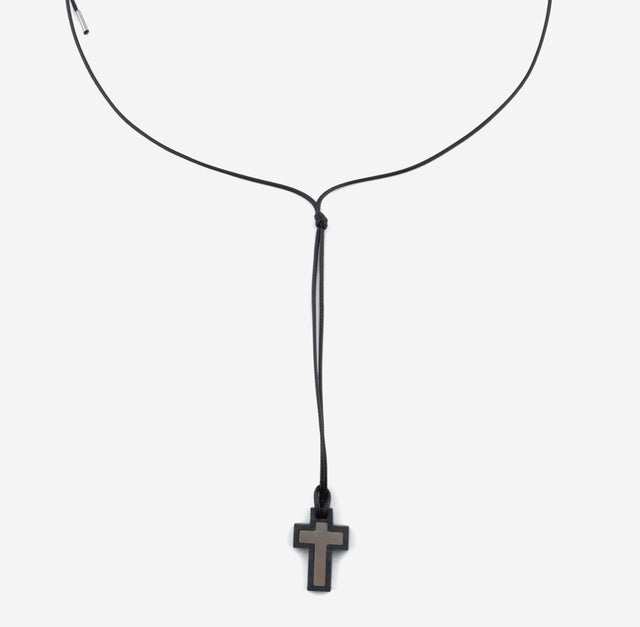
An amulet is a personal object — worn on the body or carried close to it — that holds meaning beyond its material value. A memory, a focus, a marker for a person, an idea, or a threshold the wearer wants to set down. The form is older than written history. Egyptian wedjat eyes were carved before 3000 BCE. The hamsa hand traces to roughly 1500 BCE in the ancient Near East. Norse Mjölnir hammer pendants survive from the 9th to 11th centuries; Slavic and Mesopotamian peoples wore pendants long before metallurgy could refine silver. The 2026 amulet revival is a return to objects worn for a reason rather than for fashion. STRUGA's AMULET family sits inside that older tradition: silver and raw stone, secular meaning, an object that records the years it spends with its owner.
- Amulet, talisman, and charm are three words modern English blurs together, though older sources kept them apart. The historical distinction is worth knowing: it tells you what a given piece is actually offering.
- The amulet predates writing. Egyptian wedjat eyes (3000 BCE), Mesopotamian cylinder seals (3rd millennium BCE), Roman bulla pendants for boys, Norse Mjölnir hammers (9th–11th c.) — all share one logic: a worn object that carries meaning.
- The modern amulet is secular. The wearer assigns the meaning rather than inheriting it from a religious or cultural system. The object becomes a private signal — a reminder, a threshold marker, a memory — not a public claim.
- Material is part of the meaning. Silver, raw stone, meteorite, and carbon age differently and carry different traditions. Living Silver darkens, raw stone shifts with skin contact, carbon stays stable.
- STRUGA's AMULET family is silver and raw stone in one design language: the THORN form, where the stone emerges from the metal at an angle. The brand frame is "through thousands and millions of years" — the amulet as a future artifact, not a costume reference.
What is an amulet — and how does it differ from a talisman and a charm
The three words carry different cargo in older sources, even though modern English uses them almost interchangeably. The distinction is worth keeping, because it changes how you read what a piece is doing.
An amulet was, by tradition, passive. The Latin root amuletum appears in Pliny the Elder's Natural History (1st century CE) and referred to an object whose mere presence on the body was believed to ward off harm. The function was held to require no activation, ritual, or intent — the object simply had to be there. Egyptians sewed wedjat eyes into mummy wrappings, believing they protected the body in the afterlife. Roman bulla — the gold or leather pendants worn by freeborn boys until they assumed the adult toga — were understood to guard against the evil eye.
A talisman was, by tradition, active. The word traces to the Greek telesma (a rite or a completed thing) and later to the Arabic tilsam. Unlike an amulet, a talisman was held to be charged toward a goal: drawing fortune, granting victory, pulling a particular outcome closer. The classic talisman was often inscribed with words, symbols, or astrological figures believed to operate at a specific moment or against a specific situation. The boundary between amulet and talisman is porous, but the working idea differs: an amulet, by tradition, keeps things away; a talisman pulls them toward.
A charm is the loosest of the three. The English word descends from the Latin carmen (a song or incantation) and once meant a spoken or sung formula. A charm in modern jewelry — the lucky horseshoe, the four-leaf clover, the rabbit's foot — is decoration with a residual gesture toward meaning. Most worn charms today live at the level of superstition: the wearer would not seriously defend their power, but is reluctant to part with them.
Comparison table — amulet, talisman, charm
| Aspect | Amulet | Talisman | Charm |
|---|---|---|---|
| Role in tradition | Passive sign — presence on the body | Active sign — charged toward a goal | Decoration with residual meaning |
| Etymology | Latin amuletum | Greek telesma, via Arabic tilsam | Latin carmen (song, incantation) |
| Activation | None assumed | Often via ritual, inscription, or a specific moment | Symbolic only |
| Form | Worn on the body or sewn into clothing — eye, hand, axe, animal figure | Often inscribed with text, sigils, astrological symbols | Small, light — bracelet pendants, keychain forms |
| Historical examples | Egyptian wedjat, Roman bulla, Norse Mjölnir, hamsa | Medieval agnus dei, Islamic ta'wiz, Renaissance astrological pendants | Italian cornicello, clover, horseshoe, modern charm bracelets |
| Today (2026) | Returning — secular meaning vehicle, memento mori, family pieces | Niche — esoteric communities, commission | Mainstream — closer to fashion |
Why the distinction matters now. A 2026 buyer searching "amulet" online lands in a category where all three words appear interchangeably, and most descriptions treat them as synonyms. Knowing the older distinction lets you read what a piece is actually offering. A pendant marketed as an amulet that has no recognizable form, no traditional symbol, no material weight, and no assigned meaning is — by the strict definition — closer to a charm that simply borrowed the heavier word.
A brief history: from ancient Egypt to memento mori
The amulet predates almost every other jewelry category. Beads, pendants, and worn carved objects appear at sites tens of thousands of years old, and many were almost certainly amulets in the working sense — worn for meaning before they were worn for ornament.
Egypt (from 3000 BCE). The Egyptian tradition is the best documented in the ancient world, because dry tombs preserved so many objects. The wedjat eye — the Eye of Horus — was carved from faience, gold, lapis lazuli, and carnelian and worn or sewn into mummy wrappings. The scarab beetle, sacred to the dawn-sun god Khepri, was placed as a heart-amulet on the chest of the deceased. The ankh meant life, the djed pillar meant stability, the Tyet knot was linked to Isis. The typology is enormous: the British Museum's Egyptian galleries hold thousands of catalogued examples, and the Louvre, the Metropolitan, and the Cairo museum keep large collections. The Egyptians held that material, color, form, and inscription each contributed to an amulet's force.
Mesopotamia and the Near East. Cylinder seals from Sumer, Akkad, and Babylon (from the 3rd millennium BCE) served both as a personal signature and as a worn object: rolled into wet clay they marked a document, while the cylinder worn at the neck was believed to ward off malevolent spirits. The hamsa — the open right hand with five fingers — traces in iconography to roughly 1500 BCE and spreads across the Mediterranean. It is still worn today — as the Hand of Miriam in the Jewish tradition, the Hand of Fatima in the Islamic, the Hand of Mary in the Christian. The blue evil-eye bead, the nazar, has an equally ancient lineage and remains in daily wear across Turkey, Greece, the Levant, and the Balkans.
Greece and Rome. Greek phylacteries (the word meant "guard") were inscribed metal sheets rolled into pendants. The Romans had the bulla — a hollow gold pendant carrying an inscription, worn by boys until the adult toga. Adult Roman men wore the fascinum; women wore lunula crescent pendants. Pliny the Elder devotes large passages of the Natural History to stones, plants, and animal parts — a sign of how deeply the practice ran in everyday life.
Viking-Age Scandinavia (8th–11th c.). Mjölnir, Thor's hammer, survives as a silver, bronze, and iron pendant from graves across Denmark, Sweden, Norway, and the Viking diaspora. The classic form — a stylized hammer with a short handle and a flared head — appears in burials dated to roughly the 9th–11th centuries. During the Christianization period Mjölnir was likely worn more often, as a counter to the cross. Runic pendants in bone, antler, or metal are also known, though far fewer survive. The major collections are held by the Trondheim museum, the National Museum of Denmark, and the Stockholm History Museum.
Slavic lands. Pre-Christian Slavs across what is now Russia, Ukraine, Belarus, Poland, and the Balkans wore small axe-shaped pendants linked to Perun, and lunula crescents linked to the moon and the feminine. Both forms appear in finds from the 9th to 13th centuries, especially in the Kyivan Rus' cultural area. The lunula was usually worn by women; it survived the conversion to Orthodox Christianity and often sat beside Christian iconography on the same chain. Bird-shaped pendants, especially ducks and swans, appear in the north and relate to home and fertility.
Native American traditions. Among the indigenous peoples of North America such worn objects varied enormously, but several forms recur. Small leather pouches holding personal items were worn across many Plains and Eastern Woodlands cultures. Turquoise-and-silver work among the Diné carries its own motifs. Bear-claw, eagle-feather, and animal-tooth pendants held particular meaning across many tribes. The boundary between amulet, ritual object, and personal medicine in these traditions is deliberately not drawn the way the European jewelry vocabulary draws it, and modern reproduction of these forms by non-tribal makers is a sensitive issue. STRUGA does not make Native American forms or borrow from them; the tradition is mentioned here as history, not as a source of design vocabulary.
Cultural amulet traditions — a reference table
| Tradition | Era | Key forms | Meaning in the tradition |
|---|---|---|---|
| Ancient Egypt | ~3000 BCE – 30 BCE | Wedjat, scarab, ankh, djed pillar, Tyet knot | Afterlife, life force, stability, the feminine |
| Mesopotamia / Near East | From ~3000 BCE | Cylinder seals, hamsa, blue evil-eye bead (nazar) | Signature, evil eye, the home |
| Greece & Rome | 8th c. BCE – 5th c. CE | Phylactery scrolls, bulla, fascinum, lunula, gemstone pendants | Children, the evil eye, the feminine and the moon |
| Viking-Age Scandinavia | 8th–11th c. | Mjölnir hammer, runic plates, animal-tooth pendants | Strength, the journey, allegiance to the old gods |
| Slavic lands | 9th–13th c. | Perun's axe, lunula, bird pendants, kolts | Storm, the feminine and fertility, the home |
| Italy / Mediterranean | Roman onward, living today | Cornicello (horn), coral corno, hamsa, mano fico | The evil eye, fertility, daily wear |
| Native American | Pre-Columbian – present | Leather pouches, claw / tooth / feather pendants, turquoise | Personal medicine, tribe-specific meaning — a sensitive category |
Two notes on this table. First: it covers the traditions most often referenced in modern Western jewelry, and it is not exhaustive. South Asian, Chinese, Japanese, African, and Andean traditions each have rich histories of their own and deserve their own treatment. Second: cultural specificity matters. A form drawn from a living tradition is not the same thing as a fashion reference, and the same logic applies to every row in the table.
Memento mori: the European thread Western jewelry never quite lost
Beside the protective thread runs a parallel European one: memento mori — "remember you must die." This jewelry is not about warding anything off. It is amuletic in the older sense — a worn object that keeps a meaning the wearer wants present.
The form is most fully developed in late-medieval and Renaissance Europe. Skull rings, mourning lockets, miniature coffin pendants, and inscribed wedding bands carrying the twin themes of death and marriage ("as I am, so shall you be") all surface in 16th- and 17th-century European jewelry. The Victorian period revived memento mori on an industrial scale: hair lockets, jet mourning brooches (Whitby jet from northeast England powered an entire industry after Prince Albert's death in 1861), photographic miniatures, skull-and-bones rings — in working-class and aristocratic markets alike.
The thread is alive today through skull rings, mourning rings, and the broader dark vocabulary STRUGA works in. A modern silver skull ring is a direct descendant of the 16th-century original: the meaning here is reflective rather than warding, but the function is the same — a worn object holding a particular relationship to death and time. STRUGA's skull rings guide covers the memento mori thread in depth, and the dark fashion jewelry style guide 2026 places it in the broader modern frame.
Why amulets are returning in 2026 — meaning over status
The 2026 amulet revival is neither nostalgia nor an accident of the fashion cycle. Three shifts sit underneath it.
Status-jewelry fatigue. The mid-2010s and early 2020s ran under branded jewelry whose primary function was to signal a price tier or a designer affiliation. That function is saturating. A ring that means "I bought this from this brand" reads thin at a moment when wearers want jewelry that says something about themselves rather than about a marketing budget. The amulet — an object loaded with meaning by definition — fills the gap.
A shift in how people relate to jewelry. Buyers in their twenties and thirties are returning to an older premise: jewelry is a long-term, semi-sacred class of object. Reliquary, ritual, milestone, and memorial pieces are reappearing where fast costume jewelry had displaced them. The amulet sits here naturally — it is the historical form that most strongly carries personal meaning, and it pairs well with material choices: 925 silver, raw stone, handwork.
Secular meaning. The old amulet rested on a religious or cultural system: the wedjat "worked" because the Egyptian worldview said so; Mjölnir because the Norse worldview said so. The 2026 amulet is increasingly secular: the wearer assigns the meaning. The object is chosen for its form, weight, and material, and for the threshold, memory, or quality it will mark. A silver amulet set with raw aquamarine needs no Egyptian cosmology to function as a personal marker of a particular phase, person, or commitment. The frame has moved from external — religion, tradition — to internal: personal meaning. And jewelry has moved with it.
This is the frame STRUGA's AMULET family works in. The brand does not reproduce religion-specific forms (no wedjat eyes, no Mjölnirs, no hamsas) and does not present itself as a costume reference to old magic. Instead it offers silver and raw stone as a secular meaning vehicle — an object whose meaning the wearer assigns. The form is amuletic in the strict sense: worn close to the body, carrying weight beyond the decorative, and made to be lived with rather than displayed.
Materials with weight: silver, raw stone, carbon, meteorite
The material an amulet is made from is part of its meaning. Different materials carry different traditions and behave differently on the body over years.
Silver. The 925 alloy — 92.5% silver, 7.5% copper — is the historical metal of amulets across most of the traditions above. In many worldviews silver was the metal of the moon, linked to the feminine; it was easier to work than gold and more durable than copper or bronze. Modern 925 carries one more property: patina, the surface darkening that comes from reacting with sulfur in the air, with sweat, and with skin oils. STRUGA does not rhodium-plate amulets; the brand calls this Living Silver and treats the patina as part of the piece's record. The full theory is in the complete 925 silver guide.
Raw stone. An uncut, unfaceted stone reads differently from a polished one. Aquamarine, tourmaline, heliodor, raw quartz, raw beryl — each shows its natural growth lines and crystal terminations. The trade-off is structural: a raw stone is rougher, less symmetrical, and harder to set securely than a faceted one. That is precisely why it reads as honest in an amulet — the stone does not pretend to be more refined than it is. The tourmaline color codex covers what each hue is associated with; the THORN form uses raw aquamarine, tourmaline (pink, green, purple, grey), and heliodor.
Quartz. Quartz — clear, smoky, green, brown, pink — has the longest amulet record of any single mineral. Crystal balls, spheres, and hanging crystals appear in Celtic, Roman, Asian, and Mesoamerican traditions. The current interest in quartz draws on that record while staying secular: a clear-quartz pendant on a silver chain is neither a magical object nor a random stone. At STRUGA, large pieces of quartz set in silver belong to the AMULET family as deliberately weighty, large-feeling pieces.
Carbon. Carbon fiber is a 21st-century material with no historical amulet record, but its properties — extreme lightness, strength, dimensional stability — make it meaningful beside silver. STRUGA pairs carbon palettes (Classic, Arctic, Bloody, Aged) with silver where the carbon stays optically stable while the silver around it darkens. The signal is contemporary: the piece does not hide that it was made this century.
Meteorite. Meteoritic iron has been worked since at least the Bronze Age. Tutankhamun's iron dagger (14th century BCE) was forged from meteoritic iron; the Inuit, Tibetans, and several Mesoamerican cultures prized meteorite precisely because it fell from the sky. STRUGA's Seymchan-meteorite pieces — asymmetric necklaces fusing meteoritic iron with silver — sit in that older line, where the metal carries the literal weight of an extraterrestrial origin.
Bone, antler, tooth, claw. Animal-origin amulets appear in Native American, Norse, Slavic, and many other traditions. STRUGA does not work in those materials — the brand's position is metal and stone. The category is named for completeness, not as part of the brand's vocabulary.
Cultural symbols — context, not costume
A few symbols recur in modern catalogs, often stripped of their cultural context. A brief reference to the main ones, with a clear line between informed wear and costume reference.
Hamsa. The open right hand with five fingers. It originates in the ancient Near East, traceable to roughly 1500 BCE, and is worn in the Jewish (Hand of Miriam), Islamic (Hand of Fatima), and Christian Mediterranean (Hand of Mary) traditions against the evil eye. It is one of the most widely traded symbols in the world. The form would sit comfortably in a dark vocabulary, but STRUGA does not make hamsa pieces — the brand's position is to leave established symbols to those with a real cultural connection.
The evil eye (nazar). The blue glass eye-bead from the eastern Mediterranean and Turkey. An everyday object across the region: the blue color, by belief, reflects another's ill-willed gaze back. STRUGA does not make evil-eye pieces.
The Italian cornicello (horn). A twisted pendant of red coral or gold, worn across southern Italy and the Italian diaspora against the malocchio — the evil eye. The form descends partly from Etruscan and Roman traditions and partly from the coral lore of Mediterranean fishing cultures. It is still worn daily in Naples, in Sicily, and in Italian communities across the Americas.
Norse runes. Single-rune or short-formula pendants — Algiz, Tiwaz, Ehwaz, the Vegvisir bind-rune — appear in Scandinavian finds and are undergoing a modern revival. The line between informed wear (heritage, or a documented commitment to the tradition) and costume reference is real, and the relevant communities treat it with care. STRUGA does not make runic amulets, though the brand has a separate guide to Norse rune jewelry that reads the form on its own terms.
The Egyptian trio — wedjat, scarab, ankh — stays in mass production worldwide, more often as a fashion reference than as an informed tradition. STRUGA does not make Egyptian-symbol pieces.
The brand's position is consistent: STRUGA amulets are formally minimal and carry the meaning the wearer assigns, not a meaning inherited from a specific culture. This is a deliberate choice, not a limitation. A wearer who wants a hamsa, a Mjölnir, or a wedjat should buy it from a maker with a real connection to the tradition. A wearer who wants a silver amulet with no pre-loaded symbol comes to STRUGA.
STRUGA's AMULET family: through thousands and millions of years
The frame STRUGA designs amulets within is "through thousands and millions of years." It is an oblique reference to the work of the contemporary American artist Daniel Arsham, who has built a large body of work around an imagined archaeology of the present: calcified phones, crystallized cameras, televisions sprouting geodes. His work asks: when our objects are excavated by some future civilization thousands or millions of years from now, what will the artifacts look like?
The AMULET family leans on that thought. The premise: through thousands and millions of years, deep in the earth, aquamarines, tourmalines, and other crystals will keep forming — and they will form beside and inside the silver objects of this century, exactly as ancient crystals formed beside and inside the metalwork of older civilizations. The amulet sets that future archaeology in the present. The raw stone is not set into the silver like a faceted gem — it is fused into it, as if the silver grew around it over long geological time. The form is minimal, the stone unrefined, the silver shows tool marks. The object is presented as already old.
The broader Living Silver idea supports this. Patina is not removed from STRUGA pieces, because patina is the visible record of the time a piece spends with its owner. An amulet bought today and worn for ten years will look meaningfully different at the end of those ten years: the silver darkens in the recesses, the polish wears off the high points, the stone takes on skin oils and salts. The amulet records the owner's life. By the strict historical definition, that is exactly what amulets always did: be present, carry meaning, accumulate history.
The full Living Silver theory is in the Living Silver philosophy guide; the dark-fashion frame the line sits in is in the dark fashion jewelry style guide 2026. For anyone looking at the category more broadly, including how STRUGA compares to other dark-silver brands, the brands like Chrome Hearts guide places the line in market context.
The AMULET form: silver and raw stone in one language
The THORN family began as a chain weave with sharp-angled links — the kind that catch lightly on the skin as the chain moves, so the wearer stays aware of the object on the body all day. Over time the form grew into earrings, necklaces, ear cuffs, bracelets, and a transitional ring, and became the basis of STRUGA's amulets: silver holding a raw stone that emerges from the metal at an angle.
The construction principle is one. The silver is cast in 925, finished by hand, and shaped somewhere between a thorn, a torpedo, and a vertical splinter. The raw stone — aquamarine, tourmaline (pink, green, purple, grey, clear), or heliodor — emerges from the silver at an angle, as if it grew out of the metal over long geological time. The stones are uncut; the silver shows casting marks. The object reads as found and worn, not designed and polished.
The AMULET family covers different forms in one design language: everyday earrings, larger pendants, ear cuffs, bracelets, and the Thorn Ring, through which the THORN aesthetic carries into the BRUTALISM family. Each piece is unique — because the raw stone is unique; no two are the same. Frame sizes run S, M, and L, and the wearer chooses by stone and by form. The catalog also holds larger, deliberately weighty pieces — silver set with a large piece of quartz, felt on the body continuously — and quieter minimal earrings that read discreetly at office distance while the wearer knows they carry meaning. It is one language at different scales, not separate lines.
The stone vocabulary is covered in more depth in the tourmaline color codex: what each hue is associated with in geological, decorative, and informal-meaning terms. The AMULET form deliberately covers much of that range — so a wearer can choose by stone as much as by form.
How to choose an amulet — eight questions
Buying an amulet differs from buying ordinary jewelry. The questions worth answering first are about the wearer and the role the object should play, not only about size and price. Eight questions worth talking through.
1. What threshold or memory is the amulet for? An amulet is strongest when it has a referent: a new chapter, a person, a commitment, a quality you want to keep present, a milestone, a loss. It need not be religious or supernatural — it can be entirely secular and private. But the answer to this question shapes everything else.
2. Should others see the amulet — or only you? A pendant is read by everyone you meet. An earring reads at office distance, a ring at conversational distance, a pendant under clothing only by you. Each level of visibility maps to different pieces in the catalog.
3. How much weight will you wear? Large quartz pieces are heavy, pendants are medium, minimal earrings are light. This is a real constraint, and it is worth being honest about. A piece that feels too heavy in the first week will sit in a box by the third month. A piece that lands right in the hand will be worn for years.
4. Which stone — and do you need one at all? Raw aquamarine, tourmaline (pink, green, purple, grey, clear, multicolor), heliodor, quartz (clear, green, brown, smoky) — or no stone. Each hue carries informal associations you can work with or ignore. The tourmaline color guide covers the spectrum in more detail.
5. Worn alone or in a stack? A single pendant on a chain works as a complete statement. An earring in a second piercing alongside another STRUGA earring builds a stack. A large quartz piece is usually worn alone — its weight absorbs its neighbors. The intended layering plan changes the right choice.
6. Everyday wear or specific moments? Everyday pieces have to handle showers, pillows, sleeves, and physical work — minimal earrings and smaller THORN pieces do this well. Specific-moment pieces — large quartz necklaces, a big bracelet — are put on deliberately for an event and taken off after. The use plan affects the choice.
7. How do you feel about the metal aging? STRUGA amulets are Living Silver; they darken, and the patina is part of the design. A wearer who wants the silver to stay bright and even will be unhappy after six months. A wearer who wants the piece to record its own history will find the patina part of the meaning.
8. Is it for you, or a gift? An amulet for yourself can be assigned a meaning before the first wear — choose the form to match your threshold. A gift amulet carries meaning more loosely: the giver sets one meaning, and the wearer often quietly adds another. Both are valid. A gift usually wants a more universal form — minimal earrings, THORN pieces without a stone; a piece for yourself can be more specific.
Care: how an amulet's patina deepens over years (Living Silver in practice)
STRUGA amulets are not rhodium-plated, lacquered, or chemically sealed. The silver is open, and the patina develops naturally from the first day of wear. Caring for such an amulet is simpler than caring for a polished, plated piece — but the logic is different.
Everyday wear. A STRUGA amulet can be worn daily, including normal showers (mild soap, warm water). Avoid chlorinated pool water — chlorine accelerates patina sharply and can leave a deposit in the recesses of cast silver that is hard to clean out. Seawater is fine; rinse the piece in fresh water afterward. Sweat, skin oils, and skin chemistry all contribute to the patina pattern, and that contribution is part of the design.
Cleaning. For routine care a soft cloth — dry or barely damp — is enough. For a deeper clean, a mild silver soap or warm water with a neutral soap and a soft brush removes surface grime without touching the patina. Do not use silver-polishing dips — they strip patina indiscriminately. Do not use abrasive cloths or paper towels — they scratch the silver. The stones — raw aquamarine, tourmaline, quartz — are mineral and can be cleaned in the same "warm soap and soft brush" mode; they need no special treatment.
Storage. A breathable pouch (cotton, soft leather, or unglazed silk) works well. Sealed plastic accelerates patina, because moisture is trapped against the silver. Anti-tarnish strips are not needed: the brand designs around the patina, not against it. If a piece goes unworn for a long stretch and you want to slow the patina, keep it dry and exposed to air.
What to expect over years. A daily-worn amulet picks up a clear pattern in the first two to three months: recesses and sheltered zones darken, high points and contact zones stay bright. The pattern stabilizes within the first year. By three to five years the piece reads as a worn amulet — the same form, but with a surface depth new silver cannot reproduce. This is the "wearer's map": the patina records how the piece was lived with. The full silver patina guide covers the chemistry and the timeline in full.
Where to buy STRUGA amulets
strugadesign.com — the brand's main site, with worldwide shipping. The full AMULET family is in the catalog. For anyone who knows what they want, or wants to see the whole category, the site gives the most complete picture.
Hedonist Store, Bali (Canggu) — Jl. Pantai Batu Mejan 14, Canggu. A selection of STRUGA amulets is in stock to try on and buy the same day. The range is a curated cut of the full catalog.
Barefoot Aristocracy, Bali (Canggu) — Jl. Batu Mejan, Canggu. STRUGA's main Bali partner. Amulets, including the THORN form, are shown alongside the brand's wider range.
Custom Order and Dark Union. For an amulet built around a specific stone, weight, or personal threshold — an engagement, a memory, a milestone — the Custom Order service handles individual commissions, and Dark Union handles paired and ceremonial pieces. The lead time for either is a few weeks; the result is a piece designed around a specific brief rather than chosen from the catalog.
Frequently asked questions
What is the difference between an amulet and a talisman?
By tradition the amulet is passive — its presence on the body was held to be what mattered, with no activation required. The talisman is active — it was believed to be charged toward a specific outcome (drawing luck, granting victory, pulling a result closer), often through inscription, ritual, or an astrological moment. The Latin amuletum (a passive sign) and the Greek-Arabic telesma/tilsam (an active charge) trace the distinction to classical sources. Modern catalogs use the words interchangeably, so the old distinction is worth keeping when you read about a piece — it tells you what the object was in its tradition.
Is amulet jewelry religious or superstitious?
Historically, almost always: the meaning of an amulet in the Egyptian, Roman, Norse, Slavic, and Mediterranean traditions rested on an external religious or cultural worldview. The 2026 revival is largely secular: the wearer assigns the meaning rather than inheriting it from a religious system. A modern amulet can be a personal threshold marker, a memorial piece, a milestone object, or a quiet reminder of a quality the wearer wants to keep present. The frame has moved from the external (worldview) to the internal (personal meaning) without losing the substance of a worn object.
Can I wear an amulet from a culture I have no connection to?
This is a question worth thinking through case by case. Specific symbols — Mjölnir, the hamsa, the wedjat, Native American forms — sit inside living cultural traditions, and many communities are attentive to the difference between informed wear and costume reference. STRUGA's AMULET family resolves this simply: the brand uses no inherited symbols at all. The pieces are formally minimal — silver and raw stone — so the wearer assigns the meaning rather than borrowing it. Anyone who wants a culturally specific symbol should buy it from a maker with a real connection to the tradition.
Are STRUGA amulets hypoallergenic?
STRUGA amulets are made from hallmarked 925 sterling silver — 92.5% silver, 7.5% copper — with no rhodium, lacquer, or applied coating. There is no nickel in the alloy, so the pieces are generally safe for nickel-sensitive wearers. A pure copper allergy is rare. The raw stones (aquamarine, tourmaline, heliodor, quartz) are mineral and inert against skin. Anyone with a severe metal allergy should consult a dermatologist; for the more common case of nickel sensitivity, 925 silver is one of the lowest-risk metal categories.
How do I choose an amulet so it doesn't feel arbitrary?
Start with the threshold or memory, not with the look of the object. Decide what the piece should mark — a phase, a person, a commitment, a quality you want to keep present, a milestone, a loss. Then let the form follow: visibility (whether others should see it or only you), weight (a heavy piece for specific moments or a light everyday one), stone (raw aquamarine, tourmaline, heliodor, quartz, or none), and your relationship to the patina the silver will take on. An amulet whose meaning is set before purchase holds that meaning more firmly than one chosen on looks alone.
Is a STRUGA amulet a good gift?
Yes, with one caveat. A gift amulet carries meaning more loosely than one chosen for yourself: the giver sets one meaning, and the wearer often quietly adds another, and that is fine. For gifts, more universal forms work better: minimal earrings, THORN pieces without a stone, smaller pendants. Heavy specific-moment pieces — large quartz necklaces — are usually bought for oneself rather than given, because weight and presence are a personal choice. For a commissioned gift around a specific milestone, the Custom Order service handles individual briefs.
Do amulets need to be cleansed, charged, or activated?
By the strict historical definition the amulet is passive — no activation was assumed. The meaning was held to rest on the object's presence on the body, not on any ritual performed over it. Specific traditions developed their own cleansing or charging practices, and for people inside those traditions they remain meaningful. STRUGA amulets are not sold with prescribed activation rituals; the brand's position is that the only charge a piece needs is the meaning the wearer assigns it. Anyone who wants to follow a specific tradition's practice is free to do so.
Can an amulet be worn every day, including in the shower and asleep?
Yes — for everyday wear and showers, STRUGA's 925 silver and the raw stones handle warm water and mild soap without trouble. Sleeping in it is fine if the piece is comfortable and does not catch on bedding (minimal earrings and smaller THORN pieces work well; heavier pendants are usually taken off at night by personal preference). Avoid chlorinated pool water — chlorine accelerates patina sharply and leaves a deposit in the recesses of cast silver. Seawater is fine; rinse the piece in fresh water afterward. The longer an amulet is worn, the more clearly the patina records the wearer's life — that is part of the design.
A final word: the amulet as a future artifact
The amulet has always been the most personal jewelry category — a worn object carrying a meaning the wearer assigns, often without explaining it to anyone else. The 2026 revival returns the form to its working principle. The wearer chooses a piece for what it will mark or keep present, and the piece accumulates years of wear. By the time an amulet is decades old, it is inseparable from the wearer's history — and eventually from whatever record of the wearer it outlives.
STRUGA's AMULET family — silver and raw stone in the THORN form — is built to work exactly that way. The form is minimal so the wearer's meaning is what fills it. The materials are honest so the patina records the years. The construction is built to outlast fashion cycles. An amulet bought today is an artifact to be excavated thousands of years from now; for now, it is an object the wearer carries through their own thousands of days.
Browse the full AMULET family. For a commissioned amulet around a specific stone or threshold, see Custom Order. For paired ceremonial amulets, see Dark Union.
About STRUGA. STRUGA is a dark silver jewelry brand founded by Dmitry Strugovshchikov and Ekaterina Strugovshchikova, handcrafted with Balinese and international silversmiths. Every piece is 925 sterling silver, naturally oxidized or hand-patinated. The darkening is part of the design. It is a brutalist object that reacts and changes through contact with the environment and the wearer.