
Sterling Silver vs Stainless Steel Bracelet: Which Lasts
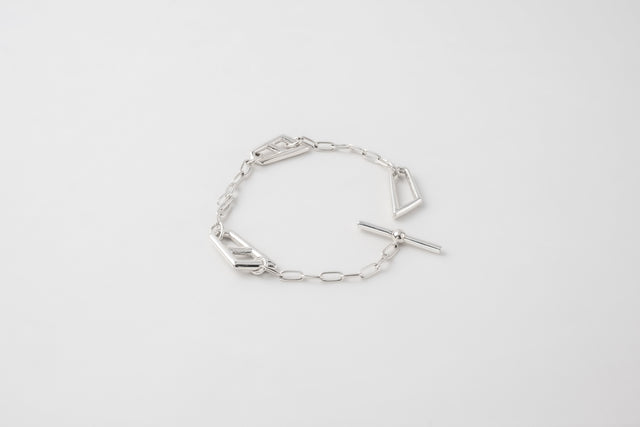
Sterling silver and stainless steel are not the same kind of object. Sterling silver is a precious metal alloy that ages, can be polished, and can be repaired. Stainless steel is an industrial alloy that resists corrosion but cannot be restored once it scratches deeply. Steel survives more abuse in the short term. Silver wins over a decade.
- Sterling silver = 92.5% silver + 7.5% copper. Marked 925.
- Stainless steel jewelry = mostly 316L surgical steel. Iron-chromium-nickel alloy.
- Steel does not tarnish. Silver does — and that is reversible.
- Silver weighs almost twice as much as steel for the same volume.
- Silver can be resized, repaired, recast. Steel cannot.
- Allergy risk: silver near-zero; steel low but real for nickel-sensitive skin.
- For everyday wear under hard conditions: steel is more practical short-term. For heirloom: silver every time.
What each material actually is
Sterling silver is a precious metal alloy. By definition it contains 92.5% pure silver alloyed with 7.5% other metals — almost always copper, occasionally a small amount of germanium in tarnish-resistant variants. Pure silver is too soft for jewellery; the copper provides structural strength while keeping the precious metal classification. The 925 mark is a legal hallmark, not a brand decoration.
Stainless steel is an industrial alloy. Most jewelry-grade steel is 316L — a low-carbon variant of austenitic steel made of iron (around 65–70%), chromium (16–18%), nickel (10–14%), molybdenum (2–3%), and trace amounts of manganese, silicon, and carbon. The 316L grade is what surgical instruments are made from. It does not contain silver. It contains nothing precious by metals-market definition.
This is the first thing to understand. A stainless steel bracelet labelled "silver-coloured" is not silver. The colour resemblance is cosmetic. The material underneath is iron alloy.
Durability: which scratches, dents, bends
Steel wins on hardness. The Mohs scale places stainless steel around 5.5–6.5; sterling silver sits at 2.5–3. Practically, steel resists scratches from daily contact — keys, zippers, desks — far better than silver. Silver picks up faint scratches within days of regular wear; over years these accumulate into a soft patina that some people prefer and some do not.
Silver wins on impact. Steel is hard but brittle in thin sections; a steel bracelet dropped on tile can crack at a weld or shear at a thin link. Silver is softer but ductile — it bends rather than breaks. A silver cuff that gets bent can be flexed back. A steel cuff that bends past its yield point stays bent or snaps.
For chains specifically: steel chains rated for tensile load (the kind sold for industrial purposes adapted to jewellery) survive being yanked harder than silver. But silver chains rarely fail at the link itself — they fail at the clasp, and clasps are replaceable on silver. Steel clasps are usually welded shut.
The hardness gap matters most in the first weeks of ownership. A steel bracelet looks new for months. A silver bracelet starts collecting micro-marks immediately. Whether this is a flaw or a feature depends on the wearer. People who like patina see those first scratches as the start of the bracelet becoming theirs. People who want pristine surfaces year after year see them as wear and reach for steel instead.
For pieces with intentional texture — hammered surfaces, oxidised recesses, deliberate asymmetry — silver's softness becomes an advantage. The hand finishing that defines pieces in collections like CODEX or BRUTALISM relies on silver taking impressions cleanly. Steel does not respond to those tools the same way; it resists them.
Tarnish, oxidation, and what "lasting" means
Stainless steel does not tarnish under normal conditions. The chromium in the alloy forms a thin oxide layer on the surface that prevents further oxidation — this is the "stainless" property. A 316L bracelet looks the same colour after five years of daily wear as it did out of the box (assuming no deep scratches).
Silver tarnishes. Air, sweat, sulphur compounds (food, hot springs, certain cosmetics) react with the surface to form silver sulphide — the dark grey-black layer that builds on neglected silver. This is reversible. A soft cotton cloth restores brightness on minor tarnish; silver dip handles heavy tarnish in 30 seconds; ultrasonic cleaning handles the rest.
Whether tarnish is a problem depends on what you want from a bracelet. If you want a piece that looks identical year after year, stainless steel delivers that with no maintenance. If you want a piece that develops character with wear and that you can return to bright finish at any time, silver delivers that. Neither is objectively better — they are different relationships with the object.
Some silver pieces are deliberately oxidised. The patina is part of the design, not a defect to remove. STRUGA's Living Silver philosophy treats wear, oxidation, and small surface marks as part of how the piece records the wearer over time.
Weight: how each metal feels on the wrist
Sterling silver has a density of 10.49 g/cm³. Stainless steel is around 7.95 g/cm³. The same bracelet design in silver weighs about 32% more than in steel.
This is not subtle. A 4 mm chain bracelet at 18 cm length will weigh roughly 22 g in silver and 16 g in steel. On the wrist, silver feels substantial — the chain stays put rather than riding up the arm. Steel feels lighter, which some people prefer for sleep or sport. Neither is incorrect. They are different physical experiences.
For wider pieces — cuffs, statement chains — the weight gap becomes noticeable. A 30 g silver cuff and the same shape in 22 g steel sit differently on the wrist. The silver registers as a presence. The steel registers as an accessory.
Allergies and skin contact
Sterling silver is one of the most hypoallergenic metals available. The 7.5% copper content is the only meaningful contact allergen, and copper allergies are rare. Pure silver allergies are vanishingly rare; most reported "silver allergies" are reactions to nickel-plated silver-coloured fashion jewellery, not actual sterling.
Stainless steel is generally well-tolerated, but 316L contains 10–14% nickel. Nickel is the most common contact metal allergen — about 17% of women and 3% of men have some sensitivity. The chromium oxide layer locks most of the nickel inside the alloy under normal conditions, but scratched, sweaty, or warm skin contact can release small amounts.
The practical signal: if a bracelet leaves a green or grey mark on the skin under sweat, that is the alloy reacting with skin chemistry. Sterling silver does this minimally — sometimes a faint grey from silver oxide, never green. Stainless steel rarely marks under normal conditions but can release nickel ions in heat or chlorine. Cheap nickel-plated "silver-coloured" jewellery marks heavily and is a separate category from either real silver or real steel.
If you have sensitive skin and are choosing one bracelet to wear daily, sterling silver is the safer bet by a clear margin. Our deeper material comparison covers the full range — silver vs gold, vs titanium, vs steel — for sensitive wearers.
Repair, resize, and recast
This is where the materials diverge most sharply.
Silver is endlessly workable. A jeweller can resize a silver ring or bangle, replace a broken clasp on a silver chain, solder a snapped link, restore a heavily oxidised piece to bright finish, even melt the piece down and recast it as something else entirely. The 925 stamp does not depreciate when the piece is reworked. A silver bracelet that breaks in year seven can become a different silver bracelet in year eight.
Stainless steel is essentially un-repairable at jewellery scale. The welds used in mass production are difficult to reproduce on a workbench. Most jewellers refuse steel repairs because the heat required risks discolouring the chromium oxide layer and ruining the finish. A broken steel bracelet usually means a new bracelet.
This is the deepest functional difference. Silver is a relationship; steel is a product.
The relationship aspect compounds. A silver bracelet worn for ten years carries marks of the decade — softer corners on what was sharp casting, deeper darkness in the recessed areas, a smoother surface where it has rested against the wrist. The same piece refinished by a jeweller comes back bright, and the wear cycle starts again. Owners often choose to leave the patina, because the patina is the record. A steel bracelet at the same age either still looks new or already looks tired. There is no middle state where it has aged gracefully.
The recast option is rare in mass-market jewellery and worth understanding. If a silver bracelet breaks past repair, a workshop can melt it, alloy it back to 925 if needed, and cast a new piece using a fresh wax model. The metal continues. The form changes. This is why family silver gets reworked across generations — the silver itself is the heirloom, not the specific necklace it happens to be cast as right now.
Cost and value over time
Stainless steel jewellery is cheaper at the counter. A 4 mm 316L chain bracelet costs $30–80. A comparable solid sterling chain costs $150–400 depending on link pattern, hand-finishing, and brand.
The value calculation reverses over a decade. Silver retains commodity value — even worn, scratched, broken silver has melt value at roughly the spot price minus refining costs. A 30 g sterling chain represents around $25 of recoverable silver at typical spot prices. Steel has no recovery value beyond scrap rates measured in cents per kilogram.
For pieces meant to be passed on, repaired, or resold, silver compounds in worth as a material asset. Steel does not. The trade-off is that silver costs more upfront and requires occasional polishing.
The five-year economics tell a clearer story than the one-year sticker price. A $50 steel chain replaced every two years costs $250 over a decade and ends with nothing. A $250 silver chain worn the entire decade still has 80% of its silver-content value, can be polished back to bright, and can be passed on or recast into something else. The $250 silver chain is also the better object to wear — it is heavier, repairable, and ages with character.
This calculation flips for purely fashion pieces — bracelets meant to match a season's wardrobe and be retired afterward. For those, steel is honest. The question is which kind of object the wearer actually wants.
How STRUGA treats the material question
STRUGA bracelets are sterling 925 only. The reasoning is practical, not snobbish. Steel cannot be cast in the lost-wax process the studios use; it cannot carry the texture work that defines pieces in the CODEX and Brutalism collections; it cannot be repaired by the masters who finish each piece by hand. Silver fits the production model in Bali and Stavropol; steel does not.
The full bracelet range — chains, bangles, cuffs, charm bracelets — sits on strugadesign.com/collections/bracelets. For commissioned pieces or pairs: Custom Order and Dark Union.
The choice of material also changes the relationship between maker and piece. Lost-wax silver casting is slow and physical. A wax model goes into a plaster shell, the wax melts out, molten silver fills the cavity, the shell breaks open, and a master files the surface, sets stones if needed, oxidises and burnishes by hand. The marks of that work — small variations between two pieces from the same model, slight asymmetry in finish, character in the recessed areas — are part of the silver bracelet. Steel jewellery, by contrast, is mostly stamped, machined, or laser-welded at industrial scale. The result is precise but anonymous.
For STRUGA, the work itself is the value proposition. A bracelet that can record the maker as well as the wearer requires a metal that responds to hand tools. Silver does. Steel does not.
When to choose steel anyway
Some situations favour stainless steel honestly.
Sport and high-impact daily use. If you climb, lift heavy, work with machines, or are otherwise hard on jewellery, steel survives the conditions better. A steel bracelet at $50 worn for two years and scrapped is more practical than a silver one taking the same beating.
Travel pieces. Steel is theft-resistant in the sense that nobody steals it for material value. For visible jewellery in transit, this matters.
Magnetic-clasp accessibility. Some specialty steel bracelets use magnetic closures designed for users with limited hand mobility — silver versions of these exist but are less common.
For everything else — for the bracelet you wear daily for years, that you want to be able to repair, resize, or hand down — sterling silver is the considered choice.
Side-by-side comparison
| Property | Sterling Silver 925 | Stainless Steel 316L |
|---|---|---|
| Hardness (Mohs) | 2.5–3 | 5.5–6.5 |
| Density | 10.49 g/cm³ | 7.95 g/cm³ |
| Tarnish | Yes — reversible | No |
| Hypoallergenic | Yes (very high) | Mostly (nickel content) |
| Repairable | Fully — solder, resize, recast | Effectively no |
| Recoverable value | ~Spot silver price | Negligible |
| Daily abuse resistance | Moderate (scratches) | High |
| Decade-long ownership | Excellent (with care) | Wears out, replace |
| Heirloom potential | Yes | No |
| Typical price (4 mm chain) | $150–400 | $30–80 |
FAQ
Is sterling silver better than stainless steel for bracelets?
For longevity, repair, and value, yes. For raw scratch resistance and zero-maintenance use, no. Silver is the considered choice for a bracelet you want to keep for years; steel is the practical choice for short-term durable wear under hard conditions.
Does stainless steel tarnish like silver?
No. The chromium oxide layer on stainless steel prevents tarnish under normal use. Silver tarnishes — air and sweat react with it to form a dark surface layer — but tarnish on silver is reversible with cotton cloth or silver dip.
Which is heavier — silver or stainless steel?
Sterling silver is about 32% denser than stainless steel. The same bracelet design weighs noticeably more in silver. For some wearers this feels substantial; for others, steel is more comfortable.
Can stainless steel cause skin reactions?
Less commonly than nickel-plated jewellery, but yes — 316L surgical steel contains 10–14% nickel. About 17% of women have some nickel sensitivity. Sterling silver, with only 7.5% copper as its alloy partner, is the safer choice for sensitive skin.Can a silver bracelet be repaired if it breaks?
Yes — that is one of the core advantages. Broken clasps, snapped links, bent cuffs, and even fully damaged pieces can be repaired, resized, or melted down and recast. Stainless steel cannot be repaired economically at jewellery scale.
See the silver bracelets: strugadesign.com/collections/bracelets — sterling 925, made in Bali and Stavropol, repairable for decades. Also see the styles guide for women and men's silver bracelets guide.
About STRUGA. STRUGA is a dark silver jewelry brand founded by Dmitry Strugovshchikov and Ekaterina Strugovshchikova, handcrafted with Balinese and international silversmiths. Every piece is 925 sterling silver, naturally oxidized or hand-patinated. The darkening is part of the design. It is a brutalist object that reacts and changes through contact with the environment and the wearer.