
Silver vs Platinum Jewelry — Which Should You Choose?
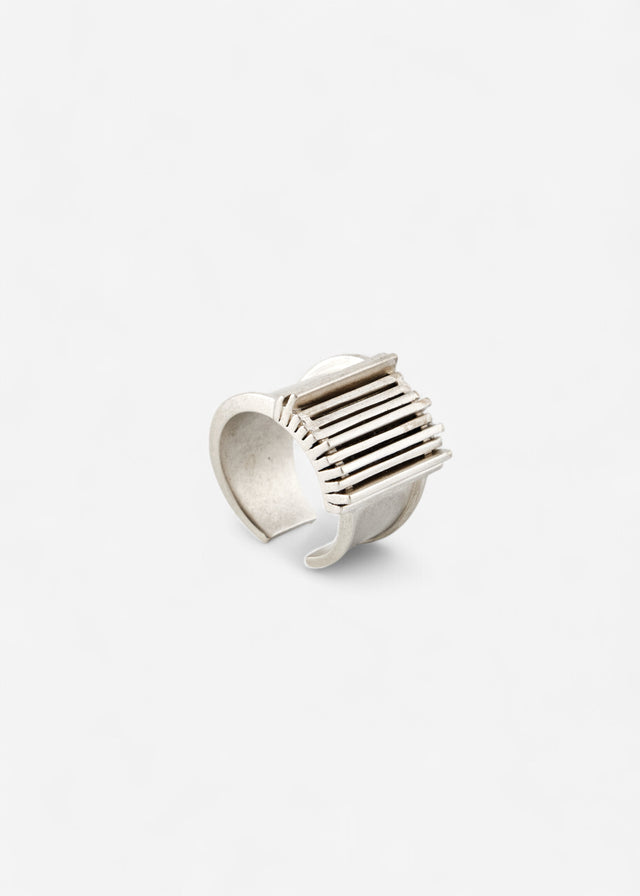
Silver and platinum are both premium white metals, but they are fundamentally different in price, weight, durability, and character. This is an honest comparison from a workshop that works with both — what each gives you, what each costs, what each does over decades, and how to choose between them. The price difference is the obvious one, but the other differences matter just as much.
Platinum vs silver: the short answer
The difference between platinum and silver comes down to three things — density, price, and how the surface behaves over time. Platinum is nearly twice as dense (21.45 vs 10.49 g/cm³), costs roughly 50–80× more per gram, and never tarnishes. Silver is lighter, far more affordable, more workable for sculptural designs, and develops a patina that — left uncoated as Living Silver — becomes part of the design rather than a flaw. For a ring you will never take off and never want to change, platinum's permanence wins. For a statement ring, a daily piece, or anything bold, silver lets you go bigger and lighter for a fraction of the cost. Everything below is the detail behind that — and if you also want gold and white gold in the picture, see our full metal comparison.
Key takeaways
- Platinum costs 50–80× more per gram than silver.
- Platinum is denser (heavier in hand), harder, and tarnish-resistant.
- Silver is lighter, softer, and tarnishes — which becomes a feature in Living Silver design.
- Both are hypoallergenic; both are durable for daily wear at appropriate thickness.
- The right choice depends on what you want from the metal — stable mirror finish (platinum) or surface that records wear (silver).
Price — the obvious difference
Platinum costs 50–80× more than silver per gram. A simple platinum band starts at $800–$1,500. The same design in 925 sterling silver runs $40–$150. For statement pieces and bold designs, silver lets you go bigger without the budget of a small car. The price difference reflects scarcity (silver is roughly 8x more abundant) and refining cost — not quality.
For background, see platinum on Wikipedia.
Weight and feel
Platinum is nearly twice as dense as silver — 21.45 g/cm³ versus 10.49 g/cm³. A platinum ring feels noticeably heavier on the finger. Some wearers love this — it feels substantial. Others find it tiring for everyday wear, especially with larger designs.
Silver's lighter weight means you can wear statement pieces like chunky cuffs and oversized rings comfortably all day. A 25-gram silver ring feels worn-in; a 25-gram platinum ring is the same volume but feels heavier. The trade-off: platinum's density signals «expensive» physically; silver's lightness allows larger designs without fatigue.
Durability and surface behavior
Platinum is harder and more scratch-resistant than silver. It does not tarnish. But platinum scratches don't remove metal — they displace it, creating a soft surface texture jewelers call «platinum bloom.» The metal does not lose mass; it just shifts.
Silver tarnishes when exposed to sulfur compounds in air, sweat and skin chemistry. But here's what most guides won't tell you: Living Silver — uncoated sterling allowed to develop patina — produces a character that many find more interesting than the original mirror polish. The «tarnish» is really a designed feature in this aesthetic. STRUGA built around this approach deliberately.
For wearers who want a stable mirror finish, platinum delivers exactly that. For wearers who want metal that records wear, Living Silver delivers exactly that. Different choices, both valid.
Hypoallergenic properties
Both 925 sterling silver and platinum are hypoallergenic for the great majority of wearers. The 7.5% copper alloy in sterling silver — when the alloy partner is pure copper, no nickel — rarely causes reactions. If you have extreme metal sensitivity, platinum is the safer bet because it is essentially pure (95% platinum + 5% iridium or ruthenium typically). For most wearers, both work.
Design possibilities
Silver is softer and more workable, which actually makes it better for intricate designs. The wax-and-mold casting technique used at STRUGA creates details that would be much more expensive — and sometimes structurally impossible — in platinum. Platinum's hardness limits some sculptural directions; silver's flexibility allows them.
For architectural designs (Brutalism, Blade, Thorn) silver is structurally sufficient and aesthetically right. For rings expected to take heavy daily impact (wedding bands on people in physical professions), platinum's hardness has practical advantages.
Side-by-side comparison
| Property | Sterling silver 925 | Platinum (Pt950) |
|---|---|---|
| Per-gram cost | ~$1 | ~$35–$50 |
| Density | 10.49 g/cm³ | 21.45 g/cm³ |
| Hardness (Mohs) | 2.5 | 3.5 |
| Tarnish behavior | Develops patina | Does not tarnish |
| Hypoallergenic | Yes (with copper-only alloy) | Yes |
| Repairability | Easy (most workshops) | Easier (works at higher temps) |
| Resale value | Modest | Higher (precious metal market) |
| Best for | Statement design, daily wear, dark aesthetic | Investment pieces, fine bands, wear-resistant |
The verdict
Choose platinum for: thin wedding bands you'll never remove, situations where weight equals luxury for you, situations where budget is not a factor, or where you want a metal that genuinely never changes appearance.
Choose silver for: statement jewelry, bold designs, frequent style changes, dark fashion aesthetic, or where you want a metal that ages with you. Most STRUGA pieces are designed around the silver vocabulary because the architectural and brutalist register works better with silver's properties than with platinum's.
STRUGA chose silver deliberately — not as a budget compromise, but because it is the right canvas for architectural jewelry that you actually want to wear every day.
Frequently asked questions
Is platinum actually better than silver?
«Better» depends on what you want. Platinum is harder, denser and tarnish-resistant. Silver is lighter, more workable and ages with wear. Each is better for different purposes.
Will platinum outlast silver?
In structural terms, yes — platinum is harder and resists deformation better. In wear-resistance terms, also yes. But silver is repairable across decades; the «outlast» difference is about how often the piece needs work, not whether it can be maintained.
Why are some silver pieces more expensive than platinum pieces?
Craft cost dominates over metal cost on jewelry. A heavily hand-finished silver piece can cost more than a simple machine-made platinum piece. The metal is not the only variable.
Can platinum tarnish at all?
Practically no, under normal wear. Platinum is essentially inert. It can develop a soft surface texture from scratching but it doesn't develop the dark sulfide layer that silver does.
Is silver lighter on the finger than platinum?
Yes — significantly. A silver ring of the same external dimensions weighs roughly half what a platinum ring does. For wearers who find heavy rings tiring, silver is more comfortable.
Which is better for wedding bands?
Depends on the couple. For couples who want maximum durability and can afford the price, platinum. For couples who want their rings to age visibly with the marriage, silver (Living Silver). For most aesthetic-led couples, silver wins on design freedom; for most tradition-led couples, platinum or gold remain default.
Can I have a piece made in either metal?
STRUGA's standard production is silver. Platinum custom orders are possible but rare and significantly higher-priced — typically 5–8× the silver equivalent. Most platinum custom work goes through specialist platinum-focused workshops rather than silver-focused brands.
Related
- Silver vs gold, white gold & platinum — full metal comparison
- Silver wedding rings vs gold
- Why couples choose silver over gold
- Living Silver philosophy
- Alternative engagement rings guide
- Dark Fashion Jewelry collection
STRUGA's silver choice. 925 sterling silver chosen deliberately for design freedom, comfort in wear, and the Living Silver aging behavior that defines the brand. Platinum and other premium white metals work for different aesthetic and use cases; silver is the right canvas for architectural jewelry built to be worn every day.