
How STRUGA Jewelry Is Made — From Concept to Silver
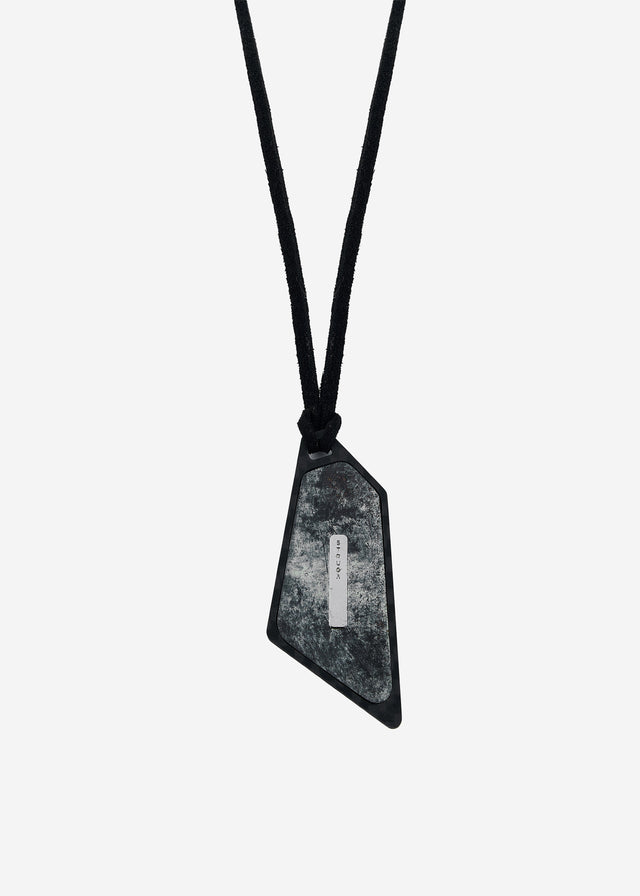
Every STRUGA piece travels the same path from idea to finished silver: a structural concept, a hand-carved or 3D-printed wax model, a silicone mould, casting in 925 sterling, then hand finishing — filing, polishing, optional oxidation, setting of stones or carbon or meteorite inlays. The work happens at our full-cycle production hub in Bali, with consistent standards across every piece. This guide is the complete reference for how STRUGA makes jewelry — the philosophy, the five steps, why hand-finishing matters, how material choices change the process, quality control, and how the same craft applies to wedding rings through STRUGA's dark union and bespoke single pieces through STRUGA custom order.
Key takeaways
- Five steps: concept (sketch / 3D model) → wax model (hand-carved or 3D-printed) → silicone mould → casting in 925 silver → hand finishing (filing, polishing, optional oxidation, setting of inlays).
- Bali hub, full-cycle: rooted in thousand-year Balinese silver tradition. Same standards across every piece, same materials, same Living Silver philosophy. Not «Bali plus assembly» — full casting and hand-finishing on the island, end to end.
- Hand-finished, not assembly-line: every piece passes through human hands at the finishing stage. That's where the microscopic asymmetry, file marks, and unique surface come from — and what makes Living Silver patina later read with depth.
- Material exceptions: carbon-fiber inlays in the Graphite palette (six tones) and Seymchan meteorite slices add a fitting step after casting; raw stones (tourmaline, aquamarine, heliodor, natural quartz) are seated by hand.
- Wedding rings follow the same five steps with paired design and individual sizing through dark union — paired rings. Bespoke single pieces follow the same path through Custom Order. Both lead times 3–6 weeks.
- STRUGA worlds: CODEX, RITUAL, LAB, DARK UNION, ISLAND ARTIFACTS. Eleven design families: Blade, Thorn, Signature Asymmetric, Signature Heart, Brutalism, Mosaic, Carbon, Amulet, Fused, Experimental, Dark Union.
Why STRUGA makes jewelry the way it does
STRUGA pieces don't begin with a whim. They begin with a structural question: what happens if we connect these elements this way? What if a form wraps around a finger instead of hanging from an ear? What if a raw stone is caged in thorns instead of held in conventional prongs? The design must solve two problems at once — visual impact and physical comfort — and a piece that fails on either side doesn't go into production.
Behind that approach is a specific philosophy about material. We work in 925 sterling silver without rhodium plating, so the surface stays alive and develops Living Silver patina over time. We choose carbon, meteorite, and raw stones because they bring something the silver alone can't — engineering precision, deep-time geology, untouched crystal geometry. And we hand-finish each piece because conveyor work erases exactly the variation that makes the patina read with depth later.
For broader context on where STRUGA sits in the dark silver landscape and what makes the brand different from the alternatives a buyer is likely comparing, see our brands like Chrome Hearts guide. The short version: design language inherited from architectural minimalism and industrial brutalism, materials no other brand on the comparison list runs simultaneously, and a Living Silver philosophy that treats time on the metal as a feature rather than a defect.
How STRUGA jewelry is made — the five-step process at a glance
Every STRUGA piece travels the same path from concept to finished silver. Five steps, each with a defined purpose:
- Step 1 — Concept and structural design. A piece begins as a structural idea, not an ornament. Sketches resolve into proportions before any material is touched. Time: 1–3 weeks per design.
- Step 2 — Wax model. The design is hand-carved in wax or 3D-printed in castable resin. The model captures every surface intent — including the texture that will read after oxidation. Time: 2–5 days per model.
- Step 3 — Silicone mould. A flexible silicone mould is taken from the master model. Future wax replicas come from this mould — identical proportion, hand-finished individually. Time: 1–2 days per mould.
- Step 4 — Lost-wax casting in 925 silver. A wax replica is invested in plaster, burned out, and replaced with molten 925 sterling silver. The result is a raw silver casting that holds the model's geometry. Time: 1 day for casting batch.
- Step 5 — Hand finishing. Filing, sanding, polishing, optional oxidation, stone or carbon or meteorite inlay setting. This is where each piece stops being identical and starts carrying the maker's hand. Time: 3–8 hours per piece.
Total turn-around for a stock piece: 2–3 weeks. Custom Order pieces add concept-and-mould time at the start — 4–8 weeks end-to-end.
The five-step path from idea to finished piece
Every STRUGA piece travels the same five-step path. It's the standard casting and hand-finishing process used by serious silversmiths worldwide, applied identically in both production hubs.
1. Concept. Sketches, 3D models, physical experiments. Some designs come together in an hour; the early Thorn family took months of iteration before the geometry worked both visually and physically on a finger. The concept stage answers the structural questions — proportion, weight distribution, where the hand contacts the piece, how the mass balances. A design that doesn't pass the concept stage doesn't move forward.
2. Wax model. The concept becomes physical as a wax figure of the future piece. Two paths: a master carver hand-cuts the model in solid wax, file by file — best for organic forms and for pieces in the Thorn, Amulet, and Experimental families; or a designer builds the model in 3D software and a wax printer prints it physically — best for symmetric, geometric pieces in Blade, Signature Asymmetric, Brutalism. Both roads end with the same artifact: a wax replica of the future piece, accurate to the tenth of a millimetre.
3. Silicone mould. The wax model becomes the master from which all production copies will be drawn. A liquid silicone is poured around the wax in a frame; once it cures it forms a flexible negative that holds every detail — solder seams, file marks, the texture of the wax itself. New wax copies will later be poured into this mould, one by one, for production.
4. Casting in 925 silver. A new wax copy is pulled from the silicone mould and embedded in a casting shell — a heat-resistant plaster-like material that can withstand molten metal. The shell is heated; the wax inside burns out and escapes as vapour, leaving a hollow void in the exact shape of the piece. Molten 925 sterling silver — 92.5% pure silver alloyed with 7.5% copper, the universal jewelry standard explained in our 925 sterling silver guide — is poured or vacuum-cast into the void. As it cools the silver takes the form of the original wax. The shell is broken away. A raw silver blank emerges.
5. Hand finishing. The blank is cleaned of casting residue, filed where edges need refining, sanded to the desired surface texture, polished where the design calls for shine, oxidised where the design calls for darkness. If the piece carries an inlay — a panel of forged carbon in one of the six Graphite tones, a slice of Seymchan meteorite, a raw tourmaline or aquamarine — that is set by hand at this stage. Clasps are assembled, jump rings closed, chains linked, ear posts soldered. Every piece passes through this stage by hand. This is where the tiny differences appear that show the piece was never made on a conveyor.
Why hand-finishing matters
Industrial silver jewelry skips this stage. Pieces come out of the mould, get tumble-polished with abrasive media, and ship. The result is uniform brightness across the entire surface — every ring identical to every other ring, every cuff a clone of the next.
STRUGA does the opposite. A finisher works each piece individually with hand tools: a fine file at an angle the polishing tumbler can't reach, a hand-pulled abrasive across a Brutalism texture, a soft-cloth burnish on a high point of a Blade band. The finisher decides where the piece should be glossy, where matte, where intentionally roughened. Two pieces from the same mould, finished by the same hand, will not be identical — they will be siblings.
That variation matters for two reasons.
First, it's the design. The contrast between a polished high edge and a darker recess is part of how the piece reads. A tumble-polished ring loses that contrast — everything becomes one uniform tone of bright silver.
Second, it sets up Living Silver patina. When the surface has texture — file marks in some places, polish in others, oxidised hollows where the design called for darkness — the patina that develops over months of wear has somewhere to settle. High points lighten with contact. Recesses stay dark. The piece becomes a topographic map of how it's been worn. A surface that's been over-uniformised by machine finishing patinas flatly and uninterestingly. A hand-finished surface patinas with depth.
The full picture of how Living Silver behaves over years is in our silver patina guide.
How material choices shape the process
The five-step path is the same for every piece in pure silver. Materials beyond silver add a fitting step after casting and adjust how the finishing happens.
Pure 925 sterling. Standard process, no inlay. Most of CODEX, classic Blade bands, Signature Heart pieces, basic Signature Asymmetric work. Finishing is direct: file, polish, optionally oxidise, done.
Carbon-fiber inlay. The silver is cast first, with a precisely measured channel for the inlay; a forged carbon panel — cut and shaped to fit — is bonded into the channel using jewelry-grade structural adhesive, then trimmed flush by hand. The choice of Graphite tone affects only the colour: Classic (deep graphite black with readable weave), Bloody (wine-red undertone), Arctic (smoky white), Winter (cold grey-blue), Fused Graphite (iridescent, shifting under light), Toxic (acid-green vein). Carbon pieces live mostly in RITUAL and the dedicated Carbon family. Pure-carbon pieces — full necklaces and bracelets without silver, suspended on suede cord — sit in LAB. Full background on the materials in our carbon fiber and meteorite jewelry guide.
Seymchan meteorite slice. A thin section of Seymchan — a pallasite meteorite found in 1967 in the Kolyma region — is acid-etched to reveal the Widmanstätten pattern, then set into a silver bezel by hand. The pattern is an iron-nickel crystal lattice that formed in deep space as the parent asteroid cooled at roughly one degree per million years; no two slices are identical. Setting a meteorite slice is a deliberate, slow operation: the surface can't be heat-treated like silver, so the bezel is closed cold around it. Most Seymchan pieces sit in LAB and the Blade family. Inventory in the meteorite collection.
Raw stones. Tourmaline, aquamarine, heliodor, natural quartz — set in the same workshop session by the same hand. Raw stones aren't faceted; they're seated in their natural geometry, often visibly off-axis or asymmetric. Black schorl tourmaline appears in the Thorn / E-0528 amulet model; coloured species and aquamarine in the Classic / E-0530 model and RITUAL. Setting a raw stone takes more time than setting a faceted one because the bezel has to be shaped to the individual stone.
Production at the Bali hub
STRUGA jewelry is made at our full-cycle production hub in Bali — every step from wax model through casting in 925 silver to hand finishing happens on the island.
Why Bali. The hub is rooted in the thousand-year tradition of Balinese silver work — silversmiths trained inside a continuous craft lineage that has cast, hammered, and finished silver since the 9th century. The advantage is depth of skill in hand-finishing and bezel-setting; the cultural context understands variation, patina, and time on metal as features, not defects.
Full cycle, not «Bali plus assembly». Some brands split the process — design and casting in one country, finishing somewhere else. STRUGA doesn't. Wax modelling, mould-making, casting in 925 silver, hand finishing, quality control, hallmarking — all on the island, end to end. Every product in the catalog passes through the same hub to the same standards.
STRUGA process vs CNC vs mass-cast — what changes piece by piece
Three production methods dominate silver jewelry. The choice of method is the first thing you can feel in a finished piece:
| Aspect | STRUGA — lost-wax + hand finish | CNC machining | Mass casting (no hand finish) |
|---|---|---|---|
| Master model | Wax model or 3D-printed resin | Digital model, milled directly | Cast from existing mould only |
| Per-piece labour | 3–8 hours hand finishing | 0–30 minutes touch-up | Polishing only, batch-grade |
| Surface character | Subtle micro-asymmetry, file marks, oxidation reads | Geometric precision, machine-perfect | Uniform, no maker signal |
| How it ages | Patina pulls naturally along worn surfaces | Sharp edges hold polish, no patina story | Plating wears, base metal shows through |
| Customisation | Possible at any stage — Custom Order, Dark Union | File-based, requires CAD update | Not possible without new mould |
| Typical price floor | $80 entry, scales with weight | $200+ depending on tooling | $30–$150 mass market |
STRUGA's choice — lost-wax with hand finishing — is what makes Living Silver a coherent philosophy. CNC and mass casting both fight the metal's own behaviour; the STRUGA process works with it.
Quality control and the 925 hallmark
Every piece is inspected before it enters inventory. The inspection covers four things.
1. Casting integrity. No porosity, no incomplete fills, no shrinkage cracks where the silver cooled unevenly. A piece with casting defects is rejected and re-cast.
2. Finish quality. Edges where they should be sharp; edges rounded where they should be soft; surfaces consistent with the design intent (matte, polished, oxidised, mixed). A poorly-finished piece goes back to the bench, not to inventory.
3. Fit assembly. Clasps close cleanly. Jump rings stay closed under tension. Chain links don't catch. Ear posts are straight, at the correct angle, soldered solidly. Inlays — carbon panels, meteorite slices, raw stones — sit firmly in their bezels with no movement.
4. Hallmark. Every piece carries the 925 hallmark, applied to a hidden inner surface (inside of a band, back of a pendant, inside of a clasp). The hallmark certifies the silver content as 92.5% pure — the universal sterling silver standard explained in detail in our 925 sterling silver buyer's guide. Some pieces also carry the STRUGA brand mark.
Product photography is done in-house with consistent lighting so the colour and texture buyers see online accurately match the piece they receive. We don't retouch surface details out of photographs — if the piece carries hand-file marks at a particular angle, those marks are visible in the listing image too.
How the process applies to wedding rings — Dark Union
Wedding rings follow the same five-step path with two additions: paired design and individual sizing.
The service is Dark Union. A couple describes what they want; we send back two paired sketches within a week, anchored on one of the existing design families (most commonly Blade, Brutalism, or Signature Asymmetric); we revise based on feedback; we size each finger individually; we carve a separate wax model for each ring of the pair; we cast both in the same workshop session in 925 silver; we finish them as a pair so the surfaces match in tone; we ship them together. Lead time 3–6 weeks. Lifetime free re-oxidation included on every Dark Union pair.
The reason the same process works for wedding rings is that wedding rings are exactly the kind of piece for which Living Silver makes most sense — worn 24/7, contacting skin, accumulating a patina that becomes a record of the marriage. A rhodium-plated ring would freeze on day one and chip at the edges within a few years. A Living Silver ring evolves continuously and can be reset to year-zero with a quick re-oxidation whenever the wearer wants. Full breakdown in our dark wedding rings guide.
Living Silver philosophy in finishing
The decision not to rhodium-plate runs through every finishing decision we make. A plated piece would be sealed under a hard layer of rhodium that doesn't react with skin or air — bright forever, no patina, no evolution. STRUGA leaves the silver exposed.
That choice changes how we finish. We don't chase a mirror polish; we leave hand-marks visible because they give the patina texture to settle into. We pre-oxidise pieces in RITUAL and Thorn not as a workaround but as part of the design language, because the contrast between dark recesses and lighter high points is what those families look like at intended day-zero state. We finish bright pieces in CODEX and Signature Heart with a deliberately readable surface so the patina that develops in months one through twenty-four reads with depth.
The complete Living Silver explanation — including the chemistry of why oxidation works the way it does and how patina behaves over the first five years of wear — is in our silver patina guide.
Custom Order vs ready stock
Three ways to acquire a STRUGA piece.
Ready stock. Browse the catalog, order, ship. Every piece in the catalog is hand-made; ready stock means there's at least one finished piece sitting in inventory. Most pieces in CODEX, RITUAL, and ISLAND ARTIFACTS ship within a few days. Made-to-order time on the rest is typically 2–4 weeks.
Dark Union. The wedding ring service. Paired-ring design built specifically for couples. Designed-from-conversation, individually sized, lifetime free re-oxidation. Lead time 3–6 weeks. Dark Union page.
Custom Order. The single-piece bespoke service. Any individual jewelry, no requirement for a partner ring. Same workshop, same materials, same Living Silver philosophy as Dark Union, but the design is fully open — not anchored to a paired set. Some couples use both: Dark Union for the wedding pair, Custom Order for an additional engagement or anniversary piece. Custom Order page.
Both Dark Union and Custom Order go through the same five-step path. The difference is only in the design framework — paired vs single — and in the conversation-led design phase that precedes the standard process.
FAQ
How long does it take to make a STRUGA piece?
For ready-stock pieces in inventory: orders ship within a few days. For made-to-order pieces (most catalog items not in stock at the moment): 2–4 weeks. For Dark Union wedding rings or Custom Order bespoke pieces: 3–6 weeks from approved design to delivery, with rush production sometimes possible in 2 weeks for simple bands without inlay.
Where is STRUGA jewelry made?
At our full-cycle production hub in Bali. The hub covers every step from wax modelling through casting in 925 silver to hand finishing — same standards across every piece, same Living Silver philosophy.
Is STRUGA jewelry really handmade?
Yes. Every piece is cast in 925 silver one at a time (not batch-stamped) and then hand-finished — filed, sanded, polished, optionally oxidised, and inlay-set by hand. The microscopic asymmetry, the file marks, the slight variation between two pieces from the same mould — those are the visible signs of hand craftsmanship and they're how you tell the difference from machine-tumbled work.
What's the lead time for a custom piece?
3–6 weeks for both Dark Union (wedding rings) and Custom Order (single bespoke pieces). Breakdown: about 1 week for design proposal and revision, 2–4 weeks for wax modelling plus casting plus finishing, then shipping. Rush production in 2 weeks is occasionally possible for simple bands without inlay — ask before booking.
How do you control quality?
Every piece is inspected on four criteria before entering inventory: casting integrity (no porosity or cracks), finish quality (surfaces consistent with design intent), assembly fit (clasps close cleanly, jump rings stay shut, inlays sit firmly), and hallmark application (925 stamp on a hidden surface). A piece that fails on any criterion goes back to the bench, not to the listing.
Can I see the workshop?
STRUGA doesn't run public workshop visits. The production hub is a working space, not a show floor. To see and handle pieces in person before commissioning custom work, our two retail partners on Bali — Hedonist Store in Seminyak and Barefoot Aristocracy in Canggu — carry curated selections from CODEX and RITUAL.
Why isn't STRUGA jewelry cheaper given the materials?
The price reflects hand-finishing time, not raw material cost. A finished ring in 925 silver carries less than $5 of metal but several hours of skilled bench work. Pieces with carbon, meteorite, or raw stone inlays add the cost of those materials plus additional setting time. Compared to mass-produced silver jewelry the price is higher; compared to mainline gold or platinum jewelry of equivalent design complexity it's significantly lower. Context on where STRUGA fits among comparable brands in our brands like Chrome Hearts guide.
What's the difference between Dark Union and Custom Order?
Dark Union is paired-ring design built specifically for couples — two rings designed as a conversation, individually sized, with lifetime free re-oxidation. Custom Order is single-piece bespoke work — any individual jewelry, no requirement for a partner ring. Same workshop, same materials, same Living Silver philosophy. Some couples use both.
Related styling: For couples and individuals styling these pieces in everyday wear, see our dark fashion jewelry style guide 2026.
About STRUGA. STRUGA is a dark silver jewelry brand founded by Dmitry Strugovshchikov and Ekaterina Strugovshchikova, handcrafted with Balinese and international silversmiths. Every piece is 925 sterling silver, naturally oxidized or hand-patinated. The darkening is part of the design. It is a brutalist object that reacts and changes through contact with the environment and the wearer.
Continue from STRUGA catalog: