
Living Silver vs Rhodium Plated — Which Is Better for Daily Wear?
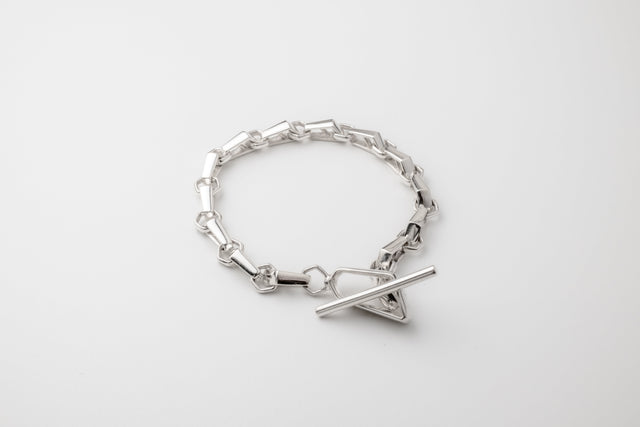
When you buy sterling silver jewelry, you are actually choosing between two fundamentally different products: silver coated with rhodium, and silver left in its natural state. STRUGA calls the second approach Living Silver. The difference is not cosmetic — it changes how the piece ages, how it feels in contact with skin, and what kind of relationship you can have with the metal across years of wear. This guide makes the trade-off explicit.
Key takeaways
- Rhodium-plated silver: bright finish, tarnish-resistant for 12–24 months, then plating wears off and exposes silver underneath.
- Living Silver: develops patina with wear, no maintenance coatings, ages uniquely with the wearer.
- Plated pieces require periodic re-plating; Living Silver only needs occasional polishing if you want to refresh contrast.
- For daily wear, Living Silver is more durable long-term — there is no coating to fail.
- Choose by what you want from the metal: stable mirror finish (rhodium) or surface that records the wear (Living).
Two approaches to silver jewelry
Most commercial silver jewelry is rhodium-plated. The plating sits as a microscopic layer between the silver and the air, preventing tarnish and creating the bright chrome-like finish that most people associate with «silver jewelry.» STRUGA chose the opposite approach: leave the silver uncoated, let it react with the world, let it become a record of how it has been worn. We call this Living Silver.
Neither approach is wrong. Each answers a different question about what jewelry should be. The trade-off is real and worth understanding before buying.
Rhodium-plated silver — what it is and what it does
Rhodium is a precious metal in the platinum group, hypoallergenic and almost completely resistant to tarnish. A rhodium plating layer is typically 0.5–2 microns thick — invisibly thin, but enough to keep the silver underneath from reacting with sulfur in the air. The plating is applied through electroplating in a workshop after the piece is finished.
Pros
- Bright white finish from day one. Mirror-clean appearance, identical to the day of purchase for as long as the plating lasts.
- Tarnish-resistant. The silver underneath cannot react with the air through the plating layer.
- Familiar «jewelry store» look. The bright chrome appearance most consumers expect from sterling silver.
- Hypoallergenic surface. Rhodium itself is hypoallergenic, useful if the underlying alloy contains questionable elements.
Cons
- Coating wears off. Typically 6–24 months depending on wear pattern. High-contact areas (knuckles on rings, contact points on bracelets) wear first.
- Re-plating required. $15–$50 per piece, every 1–3 years for active wear. Adds up over decades.
- You're not touching the silver. Skin contact is with rhodium, not silver. The metal beneath stays sealed from the wearer.
- Worn-off areas look patchy. When the plating wears unevenly, the piece develops a blotchy appearance until re-plated.
- Hides the underlying alloy. If the underlying silver is low-quality or contains nickel, the plating temporarily hides it. Once worn through, the underlying alloy takes over.
Living Silver — what it is and what it does
Living Silver is uncoated 925 sterling. The piece leaves the workshop with the cool grey of polished sterling and begins reacting with the world immediately. Sulfur in air, sweat and skin chemistry produce a thin layer of silver sulfide on the surface. Over weeks to months, this develops into a unique patina — darker in recessed areas, brighter at contact points, mapping the wear of the piece.
Pros
- Develops unique character over time. No two Living Silver pieces age identically. The patina is a fingerprint of how the piece has been worn.
- No maintenance coatings needed ever. No re-plating bills. The metal does its own surface work.
- Authentic skin-to-silver contact. You touch the actual metal, not a coating.
- Easy to refresh selectively. A polishing cloth on highlight areas restores contrast without the full reset of re-plating.
- Repairs are simpler. No plating to remove and reapply when refinishing.
- Better long-term durability. No coating that can fail; no patchy worn areas.
Cons
- Will develop patina. If you want the piece to look identical to day one for a year, this is not your finish.
- Initial brightness fades within weeks of daily wear. Most wearers notice visible patina by week 4–6 of daily contact.
- Requires occasional polishing cloth use if you want to maintain bright contrast. 5 minutes once a month.
- Does not match conventional «silver jewelry» appearance. Some social contexts expect bright silver; Living Silver reads as deliberately darker.
For daily wear specifically
Living Silver actually performs better for daily wear because there is no coating to damage. Rhodium-plated pieces show wear unevenly — bright on protected surfaces, exposed silver on contact points. Living Silver ages uniformly and beautifully — what wears wears the metal itself, which then continues to develop character.
The math: a Living Silver ring at year 5 looks like a Living Silver ring with 5 years of character. A rhodium-plated ring at year 5 has been re-plated 2–3 times and looks identical to the day of purchase. Different design philosophies; both can last decades; the cost over decades is similar (re-plating fees vs. zero coating fees).
Choosing between them — practical guide
| If you want... | Choose |
|---|---|
| Stable bright finish, no surprises | Rhodium-plated |
| Piece that ages with wear | Living Silver |
| Conventional «jewelry-store» look | Rhodium-plated |
| Dark, architectural aesthetic | Living Silver / oxidized |
| Minimum maintenance | Living Silver (no re-plating) |
| Identical look across years | Rhodium-plated (with re-plating) |
| Skin contact with real metal | Living Silver |
| Hypoallergenic for nickel-sensitive | Either, if alloy is verified copper-only |
Frequently asked questions
Can I rhodium-plate a Living Silver piece?
Technically yes — any plating service can apply rhodium to existing silver. But this changes the design. STRUGA pieces are designed around the unplated finish; plating them defeats the design intent. Better to choose plated pieces if that is what you want.
Can I strip rhodium plating to get to the silver underneath?
Yes — silver-stripping solutions remove rhodium chemically. The underlying silver is then exposed and can be polished or oxidized as desired. Some wearers do this when they decide they prefer Living Silver after years of plated pieces.
Why do most commercial brands plate?
Predictable shelf appearance. A plated piece looks the same on display as it does at purchase as it does six months later (until the plating wears). For retail consistency, plating is convenient. For long-term wear, the trade-off is different.
Is rhodium plating bad?
No — it's a legitimate finish. It just answers a different question. If you want stable bright silver without thinking about it, rhodium plating delivers. If you want metal that ages with you, Living Silver delivers. Different needs, different finishes.
Does Living Silver tarnish faster than plated silver?
Yes, by design. Living Silver begins developing patina within weeks. Plated silver stays unchanged for 12–24 months. The «faster tarnish» is the point of Living Silver, not a defect.
Can a Living Silver piece be polished completely back to bright?
Yes — full polishing returns the piece to its as-new bright state. STRUGA offers this as part of refinishing. Some wearers do it annually; others let the patina accumulate for years.
What if my Living Silver piece tarnishes too much?
Use a polishing cloth on the areas you want brighter. Or send to STRUGA for a full refresh. The «too much» threshold is personal — there is no objective definition.
Related
- The Living Silver philosophy
- Oxidized silver explained
- Why silver tarnishes — the chemistry
- How to care for sterling silver
- Sterling silver 925 complete guide
- Oxidized silver collection
STRUGA's Living Silver. Every STRUGA piece is uncoated 925 sterling — no rhodium, no protective layer. The metal ages with the wearer. Polishing cloth refreshes contrast; full refinishing is available as part of lifetime service. The choice signals whether you want stable silver or living silver.