
Sterling Silver Bracelet Sizing Guide — How to Measure Your Wrist and Choose the Right Width
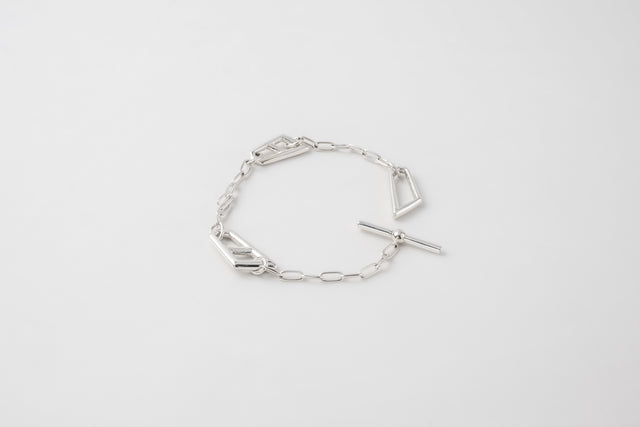
Bracelet sizing is the single thing most people get wrong before buying silver — and it is the one thing that decides whether the piece you love actually feels right on the wrist. The rule is simple: take your wrist measurement, add 1.5 to 2.5 cm depending on how loose you want the bracelet to sit, and choose width by the proportion of your arm rather than fashion. This guide covers all of that, with charts for men and women, the four most common fit mistakes, and how to size brutalist or oxidized pieces that drape differently from a thin chain.
I size dozens of bracelets a month for clients buying from our oxidized silver bracelets collection. Most fit problems trace back to two things: measuring at the wrong spot, and confusing wrist size with bracelet length. Once you separate those two numbers, sizing becomes simple. (For the material context behind the pieces, look at our sterling silver 925 guide.)
Wrist size is not bracelet length
Your wrist circumference is the measurement at the bone, and bracelet length is wrist circumference plus an allowance for fit. The two are almost always different by 1 to 3 cm, and the allowance you choose changes how the bracelet sits, swings, and looks against the wrist bone.
Get the wrist measurement first, then decide the allowance. Most online charts that say "your wrist is 18 cm so order an 18 cm bracelet" are wrong — that bracelet would sit on the bone with no movement, which feels tight and looks heavy.
How to measure your wrist accurately
What you need
- A strip of paper, 1 cm wide and at least 25 cm long.
- A pen
- A flat ruler with millimeter markings.
- Five minutes — measure once when you are calm, not after exercise.
A flexible tailor's tape works too, as long as it is marked in millimeters.
The steps
- Find the wrist bone. Run your finger down the outside of your forearm. The bone that protrudes at the base, just above where your hand starts, is the ulna. Bracelets sit just above this bone, on the wrist side, never on the bone itself.
- Wrap the paper just above the bone. Snug, not tight, and the paper should touch the skin without compressing it. If you see indents in the skin when you remove the paper, you wrapped it too tight.
- Mark the overlap with a pen. Hold the paper steady and mark exactly where the strip meets itself.
- Measure on a flat surface. Lay the strip flat and read the distance from end to mark in millimeters. Read once, write it down.
- Repeat after one hour. Wrists change size by 2-3 mm depending on temperature, hydration, and time of day. Take the average of the two readings.
Common mistakes: measuring on top of the bone (adds 5-8 mm), pulling the paper tight (subtracts 3-5 mm), measuring after running or after a meal (skews up). Measure relaxed, at room temperature, with the hand resting flat.
How much length to add for fit
This is the number that decides whether the bracelet sits high on the wrist, drapes over the bone, or hangs loose toward the hand. Each fit serves a different purpose.
Snug fit (wrist + 1 to 1.5 cm)
The bracelet sits on the wrist with minimal movement. It is what most women prefer for fine chains, tennis bracelets, and pieces with small charms. Pros: the bracelet stays in one position. Cons: it cannot rotate, so the design needs to look right from one angle, and clasps are pressed against skin, which speeds up wear on closures.
Standard fit (wrist + 1.5 to 2 cm)
The bracelet rotates around the wrist and slides 1-2 cm up and down. This is the default for most chain bracelets and is the fit I recommend to first-time buyers. The piece moves enough to catch light from different angles and is comfortable through a full day.
Loose fit (wrist + 2 to 2.5 cm)
The bracelet drops over the wrist bone toward the hand and swings. Common on men's chains and brutalist pieces — the weight of the design wants room to move. Pros: shows the design from multiple angles. Cons: catches on cuffs and zippers if too loose; can flip upside down on thin wrists.
Stacking fit (wrist + 2.5 to 3 cm)
For pieces that go on with other bracelets, each piece needs extra room to layer without binding. Add 2.5 to 3 cm per additional bracelet in the stack.
Bracelet size charts
Women's bracelet length chart
| Wrist measurement | Snug | Standard | Loose |
|---|---|---|---|
| 14 cm (5.5") | 15.5 cm | 16 cm | 16.5 cm |
| 15 cm (5.9") | 16.5 cm | 17 cm | 17.5 cm |
| 16 cm (6.3") | 17.5 cm | 18 cm | 18.5 cm |
| 17 cm (6.7") | 18.5 cm | 19 cm | 19.5 cm |
| 18 cm (7.1") | 19.5 cm | 20 cm | 20.5 cm |
Men's bracelet length chart
| Wrist measurement | Snug | Standard | Loose |
|---|---|---|---|
| 16.5 cm (6.5") | 18 cm | 18.5 cm | 19 cm |
| 17.5 cm (6.9") | 19 cm | 19.5 cm | 20 cm |
| 18.5 cm (7.3") | 20 cm | 20.5 cm | 21 cm |
| 19.5 cm (7.7") | 21 cm | 21.5 cm | 22 cm |
| 20.5 cm (8.1") | 22 cm | 22.5 cm | 23 cm |
| 21.5 cm (8.5") | 23 cm | 23.5 cm | 24 cm |
Wrist averages: women 15-17 cm, men 18-20 cm. Outside that range is normal — finer wrists below 14 cm are common, and athletic wrists above 21 cm need bracelets cut to order rather than off the rack.
Width: how thick should a bracelet be?
Width matters more than most people realize, and a 4 mm chain on a thick wrist looks lost. A 12 mm cuff on a fine wrist looks like a watch. Here is the proportion rule that works for both men and women:
- Fine wrists (under 16 cm): 3-6 mm width for chains, 8-12 mm for cuffs.
- Average wrists (16-19 cm): 5-9 mm for chains, 10-15 mm for cuffs.
- Larger wrists (over 19 cm): 7-12 mm for chains, 14-20 mm for cuffs.
The visual rule: the bracelet width should not exceed the height of the wrist bone. Stand your wrist on a table, palm down — the height between the table and the top of the wrist bone is your maximum bracelet thickness for a piece that will sit comfortably without dominating the arm.
Why width changes the fit calculation
Wide bracelets need more length than thin ones at the same wrist size. A 15 mm cuff at the same circumference as a 4 mm chain feels noticeably tighter, because the rigid form does not bend with the wrist's natural taper. For wide pieces over 12 mm, add 0.5 to 1 cm to the standard fit length.
Cuffs: a different sizing system
Cuffs do not have a clasp — they have an opening. Sizing them means measuring two things: total internal length (how much wrist circumference they cover) and gap (the open section that lets the cuff slide on).
- Total internal length: wrist circumference minus the gap. For a 17 cm wrist with a 3 cm gap, you need a cuff with 14 cm of internal length.
- Gap width: a gap of 2 to 3 cm fits most wrists. Wider gaps slide on more easily but slip off in normal motion. Narrower gaps need to be flexed open, which fatigues the metal over time.
- Bend tolerance: sterling silver flexes safely up to about 5% of its diameter, and beyond that the piece starts to deform. Do not bend a cuff repeatedly to put it on — adjust the gap once at the workshop instead.
Cuffs ride higher on the wrist than chain bracelets — closer to the bone, away from the hand. They are the easiest fit to get right because there is no clasp to pinch and no swinging length to manage.
Bangles: even simpler
Bangles slide over the hand, so the limit is hand size, not wrist size. Measure across the widest part of your hand — usually the knuckles when you tuck your thumb against the palm. The bangle's internal circumference needs to be 2 to 3 cm larger than this measurement, or it will not pass over the hand.
For most hands a 6.2 cm internal diameter works, and a 6.5 cm one works for larger hands. Once on, bangles are loose by design — the fit on the wrist is incidental.
Common sizing mistakes
Measuring with a too-tight tape
The most common mistake. People assume snug means accurate, but a tape pulled tight reads 3-5 mm short. The bracelet then arrives cutting into the skin, gets returned, and gets blamed on poor sizing. Measure with the tape touching skin without indenting it.
Sizing for a "just bought it" feeling
People often choose snug fit because the bracelet looks better in photos, and after two weeks of wear, the same piece feels claustrophobic. Standard fit is what most people end up wanting — order it first and you will rarely need to upsize.
Ignoring weight
A heavy bracelet (over 30 g) drops further on the wrist than a light one at the same length. For pieces over 30 g — common in cuffs, signets, and brutalist forms — go one length down from the standard chart, or the bracelet will hang too low and twist.
Sizing both wrists the same
Most people have one wrist 3-5 mm larger than the other. For watches it does not matter — they are worn on a chosen wrist. For bracelets you might rotate, measure both and order to the larger.
How weight changes the fit
Two bracelets with identical length feel different on the wrist if their weights differ. A 12 g chain at 19 cm sits high on the wrist, and a 35 g sculptural piece — the kind of weight common across oxidized silver bracelets — at the same 19 cm drops past the bone toward the hand. Gravity pulls heavy silver down.
For pieces over 25 g, expect the bracelet to sit one position lower than the chart predicts. If you want it to sit at the wrist, order one length shorter. If you want the drape, the chart length is correct.
This is why the men's brutalist range, including pieces from our brutalist bracelets collection, is sized assuming the loose-fit calculation rather than standard, and the weight of the design wants the room. Sized like a thin chain, a brutalist bracelet pinches and twists. (For care of these heavier pieces once they fit, see the Bali silver jewelry guide.)
Sizing for stacking
Layering two or more bracelets on the same wrist needs extra calculation. The pieces do not stack neatly — they shift, overlap, and compete for wrist real estate. Three rules:
- Use the standard fit for the largest piece. This anchors the stack.
- Add 2.5 to 3 cm per additional bracelet. The smaller pieces need room to slide past each other without binding.
- Mix widths, not weights. Two heavy bracelets on the same wrist twist each other into knots, but one heavy plus two thin works.
For the visual logic of how stacks look balanced — chain plus cuff, oxidized plus polished — see our sterling silver jewelry guide, which covers proportion in detail.
If your bracelet does not fit
Sterling silver chains can be lengthened or shortened by a jeweler in a few minutes. The cost is small. If the bracelet loosens by a few millimeters after the first week of wear — that is normal, not a failure.
What cannot be adjusted: cast bracelets without a clasp (cuffs, bangles), pieces with continuous design (brutalist forms, signets), and any piece where shortening would fracture the visual rhythm. For these, sizing has to be right at order.
If you are between sizes, order up, and a bracelet that runs slightly loose can be tightened. A bracelet that runs tight cannot grow.
Quick reference: what to do
- Measure your wrist with paper, precisely above the bone, no compression.
- Repeat after an hour and average the two readings.
- Choose snug, standard, or loose fit based on the design weight.
- Check the width is proportional to your wrist height.
- For pieces over 25 g, order one length shorter than the chart.
- For stacking, add 2.5 to 3 cm per layer.
- If between sizes, order up — chains can be shortened, not extended.
That is the entire system. For more on the material itself — why 925 sterling silver behaves the way it does and how oxidation interacts with weight and finish — see our complete guide to sterling silver 925. For care of the bracelet once it fits, our Bali silver jewelry guide walks through the technique behind the pieces.
Frequently asked questions
How do I measure my wrist for a bracelet at home?
Wrap a 1 cm wide paper strip just above your wrist bone, snug but not compressing the skin. Mark where the strip overlaps with a pen, then measure the distance with a flat ruler. Repeat after one hour and take the average — wrists change size by 2-3 mm through the day.
What is the standard bracelet size for men?
Most men's wrists fall between 17.5 and 20.5 cm. The standard bracelet length is 19.5 to 22.5 cm depending on the fit preference (snug, standard, or loose). The most common men's bracelet length sold off the rack is 21 cm.
What is the standard bracelet size for women?
Most women's wrists fall between 15 and 17 cm. The standard bracelet length is 16.5 to 19 cm depending on fit preference. The most common women's bracelet length is 18 cm.
How much length should I add to my wrist measurement?
Add 1 to 1.5 cm for a snug fit, 1.5 to 2 cm for a standard fit, or 2 to 2.5 cm for a loose fit. For heavy pieces over 25 g, order on the shorter side so the weight does not pull the bracelet too low.
Should a bracelet be tight or loose?
Neither. A correct bracelet sits on the wrist with 1-2 cm of movement up and down — it rotates around the wrist and slides slightly toward the hand when relaxed. If it stays in one position, it is too tight. If it falls over the wrist bone toward the hand, it is too loose.
How do I know if a cuff bracelet will fit?
Measure your wrist circumference and subtract the cuff's gap (the opening), and the result is the internal length the cuff needs to wrap. For a 17 cm wrist with a 3 cm gap, you need a cuff with 14 cm of internal length. Cuffs sit higher on the wrist than chain bracelets and are the easiest fit to get right.
Can a sterling silver bracelet be resized?
Chain bracelets can be lengthened or shortened by a jeweler quickly and inexpensively. Cuffs and bangles cannot be meaningfully resized — their fit has to be right at order. Cast bracelets and pieces with continuous design also cannot be resized without breaking the form.
Does bracelet width matter for fit?
Yes. Wide bracelets feel tighter than thin ones at the same length, because rigid forms do not bend with the wrist's natural taper. For wide pieces over 12 mm, add 0.5 to 1 cm to the standard fit length. Width should also stay proportional to wrist size — 3-6 mm for fine wrists, 5-9 mm for average, 7-12 mm for larger.
About STRUGA. STRUGA is a dark silver jewelry brand founded by Dmitry Strugovshchikov and Ekaterina Strugovshchikova, handcrafted with Balinese and international silversmiths. Every piece is 925 sterling silver, naturally oxidized or hand-patinated, and the darkening is part of the design. It is a brutalist object that reacts and transforms through contact with the environment and the wearer.