
Custom Engagement Ring: How to Commission One
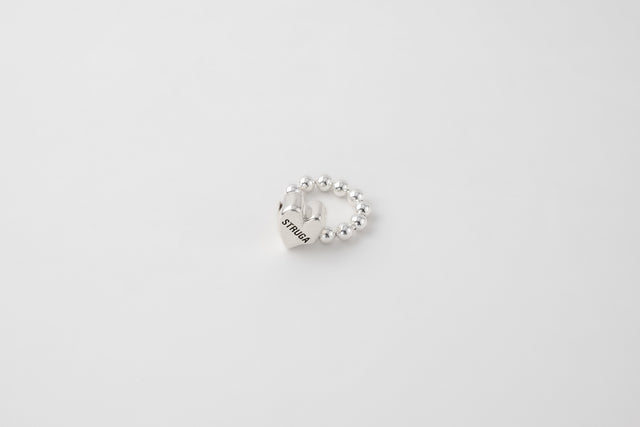
The brief here is straightforward. A custom engagement ring is one made specifically for your story — your stone, your form, your engraving, your budget. At STRUGA the process runs 3–5 weeks: first email → sketch → approval → cast in our Bali workshop from a wax model → DHL shipment worldwide. From around $180 for silver without a stone to $3,500+ for gold or platinum with a natural sapphire or emerald. Every commission is run directly with the maker — no call centres, no intermediaries. This is the step-by-step walkthrough so the ring arrives as the ring you actually wanted.
The engagement ring as a commission — rather than a retail purchase — is the older tradition. Until the early twentieth century almost every betrothal ring was made bespoke by a goldsmith. Industrial mass production reset the default to catalogue work; what STRUGA does is return to the older model, with the technical advantages of contemporary casting and stone-sourcing networks.
Key takeaways
- Process: brief → sketches → stone selection → wax model → cast → finishing → engraving → ship. 3–5 weeks total.
- Where it differs from catalogue: no fixed design, no fixed stone. The build starts from a blank page and your story.
- Pricing entry: from $180 (silver, no stone) to $3,500 (platinum + emerald). Most commissions land $250–$1,200.
- Communication: direct with the maker. Email, WhatsApp, video call on request. Process photos through the build.
- Heirloom stones welcomed. A family stone supplied to the workshop is reset into a new commission with full insurance.
- Where to start: open a brief through Custom Order; browse the existing rings catalogue, or sister-line Dark Union for paired sets.
Custom vs. catalogue — the difference
STRUGA runs two parallel lines: the rings catalogue (existing designs, fixed stones, ready stock) and custom commissions. A catalogue ring is built to an approved design at standard sizes; lead time 5–10 days to ship. Pricing is lower because the work is amortised across multiple wearers.
Custom is a different genre. There is no fixed design. We start from a blank page and your story. What matters to you? Which stone? Are you drawn to a reference from nature (a wave, a rock, a branch), from architecture (a Gothic spire, a bridge cable, a building rib), from geometry (fractal, spiral, crystal)? Should there be an engraving inside the band, and what should it say? It's a thirty-to-sixty-minute conversation, and a sketch is born from it.
Custom costs 30–50% more than catalogue work. The added cost covers the design hours (3–10 hours per sketch round, sometimes more), a one-of-a-kind casting model, and a test cast. In return: a piece that exists in a single instance. No one else wears the same ring.
Step 1 — The first email
Send to contact@strugadesign.com or use the form at Custom Order. What's worth including in the first message:
- Budget. At least a range: "$300–$700" or "up to $1,500." This isn't for negotiation; it tells me whether to suggest gold-and-emerald or silver-without-stone work.
- Timeline. When is the proposal? Less than six weeks: an express track is needed. More than two months: comfortable mode, room to think through details.
- The stone. If you have a specific one in mind, name it. If not, describe the feeling: "something blue like deep ocean," "green and inward-glowing," "no stone at all." I'll suggest options.
- Finger size. If you know it, perfect. If not, no problem — we'll send a sizing kit, or walk you through the home measurement.
- References. Pinterest screenshots, photos of rings from other workshops, photos of jewelry from a museum, a sketch on a napkin — anything. I don't copy (which would be impossible — every piece comes out in our voice), but I read direction from references.
Don't write "make something beautiful, your taste." I can — but it will be my vision, not yours. A custom ring is about you, not about the maker.
Step 2 — The sketch round
Within 48 hours of the first email, two or three sketch directions come back. Not a finished render — a 2D outline: top view, side view, inside-the-band view if engraving is planned. With dimensions: band width, stone height above the finger, metal thickness.
The sketches start a conversation, not finish one. You say "I like option 2 but the stone is too large" — I revise. "I like the texture from option 1 but the form from option 3" — I combine. We typically run 3–5 iterations to a final sketch. Sometimes it's one round; sometimes it takes two weeks of refinement.
All revisions are free. The sketch phase is included in the custom price. If somewhere through the conversation we don't see eye to eye, I'll say so plainly — "this isn't a fit, try another atelier." That's happened twice in five years.
Step 3 — Stone selection
After sketch approval the stone search begins. STRUGA works with direct suppliers in Bali (rubies, sapphires, emeralds, spinels), in Sri Lanka (blue sapphires), in Colombia (emeralds via a vetted dealer), and in Brazil (tourmalines, aquamarines, morganites).
I send photos of three to five candidate stones in the chosen cut and size, with prices for each. You choose. I don't push the most expensive — often the middle option is the right call: the quality difference between mid-grade and top-grade is usually smaller than the price difference between them.
If you already have a stone — heirloom, separately purchased, or inherited — this step is skipped. Ship the stone via insured DHL or trackable courier to Denpasar. I photograph it on arrival to record the pre-setting state, and 4–6 weeks later return the finished ring with that same stone seated in the new setting.
Step 4 — Production
The work happens in our small Bali workshop: jewelers, a stone setter, a finisher. The build runs in seven steps:
- Wax model. Cut a wax replica of the ring exactly to size, all detail included. 4–8 hours of work.
- Casting investment. The wax is encased in a heat-resistant compound and fired. The wax burns out, leaving a hollow ring-shaped cavity.
- Casting. Molten 925 silver, 14k or 18k gold, or platinum is poured into the cavity. The ring comes out hot, rough, unpolished.
- Filing and shaping. Sprues are removed; surfaces are levelled. The final texture is decided here: high polish, matte, sand, hammered.
- Stone setting. If there's a stone, it's seated under microscope. The most consequential operation in the build.
- Finishing. Polishing, oxidation (for darker surfaces), rhodium plating (white gold). Inside-band engraving is laser-applied or hand-cut at this stage.
- QC. Final inspection under 10× magnification. The setting, the band, the engraving. Anything imperfect goes back for rework.
Total: 3–5 weeks. Process photos go through during the build — you see the ring being made.
Step 5 — Shipping and delivery
Finished rings ship DHL Express from Denpasar. 5–10 business days to most destinations worldwide, with full insurance for the ring's value. Shipping is included in the order price for commissions over $400.
The ring arrives in a STRUGA box: a paper sleeve, a rigid card box inside, a suede ring cushion, and a certificate of authenticity signed by the maker. The outer box is neutral — no "engagement" labelling, since often the recipient should not know the contents in advance. For a surprise proposal we ship to the buyer rather than the wearer; the package can also be re-routed to a hotel or workplace.
What a custom engagement ring costs
Realistic 2026 pricing:
- 925 silver, no stone, bespoke form: from $180.
- 925 silver + natural 0.5 ct sapphire: from $280.
- 925 silver + 1 ct sapphire + complex design: from $560.
- 925 silver + labradorite + dark setting (Dark Union direction): from $440.
- 14k gold, yellow or white, no stone: from $560.
- 14k gold + 0.7 ct sapphire: from $1,000.
- 14k gold + Zambian emerald 0.7 ct: from $1,450.
- 14k gold + ruby 0.7 ct (Thai) up to 1.5 ct (Burmese): from $1,250 to $2,400.
- 18k white gold + 1.5 ct sapphire + diamond satellite cluster: from $2,800.
- 950 platinum + 1 ct emerald + diamonds: from $3,500.
For comparison: a 0.5 ct diamond from a chain retailer in a standard prong setting runs $1,500–$2,200. The same money buys a fully custom STRUGA ring with a natural sapphire or emerald in a hand-finished setting — not a stamped piece.
Silver engagement rings remain the largest category. The deeper walkthrough on silver lives in the silver engagement ring guide.
Payment
Standard structure: 50% on sketch approval, 50% on completion before shipping.
The first half launches metal and stone procurement. We don't begin without it — once the silver, gold, or stone is committed to a specific commission, it can't be returned to inventory if the client disappears.
The second half settles when the ring is finished. I send photos and a short video, you approve, you pay, the ring ships DHL. Tracking arrives within an hour.
Payment methods: Visa, MasterCard, and bank transfer for international clients; Wise and SWIFT for direct transfers; USDT/USDC stablecoins for clients who prefer crypto rails. All invoicing is through PT STR Bali Group, with full tax compliance.
Refund: deposit refundable during the sketch phase minus 10% for design hours. After production starts the deposit is non-refundable — materials are committed.
Engraving — what fits inside the band
Inside-band engraving is included in every custom commission. The most-requested patterns:
- The engagement or first-meeting date (12.03.2024)
- Initials of both partners (M & D)
- Coordinates of the proposal location (51.5074N 0.1278W)
- A short phrase in any language
- A line of poetry from a meaningful author
- A symbol — a star, a heart, an infinity mark, a musical note
- A partner's fingerprint, traced from a scanned print and laser-engraved
Two engraving methods. Laser-engraved: precise, ideal for fine type and complex symbols. Hand-engraved with a graver: deeper, more "alive," better for larger letters and signatures. I'll suggest the right method for the text.
Length: up to 30 characters for a standard band, up to 60 for a wide one. Any alphabet — Cyrillic, Greek, Hebrew, Arabic, CJK characters. For a non-standard typeface, send the font and we convert it to engraving format.
Sizing — how to do it right
The most common custom mistake: a ring that arrives the wrong size. To avoid:
- Measure an existing ring. If your partner already wears a ring on the intended finger, measure its inner diameter in millimetres with a calliper. Send me the number; I'll convert to our size grid.
- Order a sizing kit. A free plastic strip with the size grid, mailed by ordinary post (5–14 days delivery) anywhere in the world.
- Wrap a paper or thread strip. Wrap the finger, mark where the ends meet, measure the length, divide by 3.14. Less precise than the other two methods but workable.
For a surprise proposal where measuring the partner's finger isn't possible, we cast at a typical size (16.5–17 for women, 19–20 for men) and offer one free resize within ±2 sizes during the first year.
What custom can't do
The honest "no" cases:
An exact copy of another designer's piece. Sending a photo of someone else's ring with "make this one" — that's a no. We can work "in the same direction" but with a STRUGA voice and modified geometry. Direct replication isn't part of the practice.
Brand replicas. Tiffany Setting, Cartier Trinity, Bulgari B.zero1 — registered trademarks. We don't reproduce them.
Stones of unverified origin. A stone arriving without provenance documentation, where the provenance points to a sanctioned conflict zone (post-coup Myanmar, certain African sources without certification) — declined. We'll explain plainly.
Casting from "your" raw metal. Occasionally clients ask: "I'll send a gold bar; cast the ring from that." Technically possible but we don't do it — the alloy purity can't be guaranteed without smelting analysis. STRUGA uses metal from our own vetted suppliers only.
Cases — three real commissions
To make the process concrete, three recent stories. Names changed; everything else as it was.
A sapphire to match her eyes. A client wrote in December: "I need a ring for the proposal, want something with a blue stone, my partner has light blue eyes, budget up to $1,200." Three sketches: an oval sapphire in a half-bezel, a cushion in a small satellite cluster, and a pear in full bezel. He chose the cushion. I sourced four sapphires 0.9–1.1 ct from Sri Lanka through our supplier and sent photos. He picked the lightest blue, "matching her eyes." Built in four weeks, shipped in time for Valentine's Day. A month later he sent a photo: she wears it daily.
A stoneless ring for an artist. A client wrote on her own behalf — both partners are artists, already had wedding bands, wanted "a third ring." Brief: silver, no stone, "tree-bark texture, because we got married in a forest." Three sketch directions: hammered, cast tree-bark, brutalist crack. She chose the cast bark. The result: an asymmetric ring with a transition from smooth to textured. $260. Two weeks after delivery she sent a photo from her studio — the ring had become part of her art practice, used as a printing stamp on canvas.
An engagement ring with an inherited emerald. A client sent a grandmother's emerald — inherited, about 1.2 ct, Colombian, with a small chip on one facet. Brief: "I don't want to throw it away. I want to put it into a new ring I'll wear daily." A three-stone design: the inherited emerald in centre, two small sapphire satellites flanking it, set so the chip is visually hidden. 14k yellow gold. The emerald was verified by a gemologist in Denpasar — natural, no oil enhancement. Delivered in five weeks. She sent two photos: her grandmother as a young woman wearing the original setting; her own hand wearing the new ring with the same stone, sixty years later. The strongest version of what we do.