
How to Stack and Layer Silver Jewelry — A Minimalist Guide
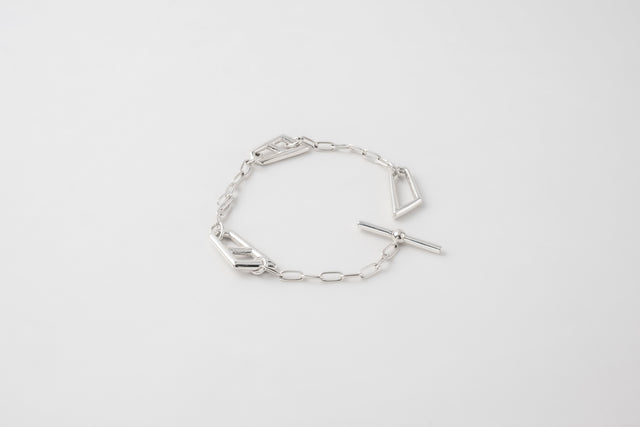
Stacking and layering silver jewelry is more rule-bound than people think. Done right, multiple pieces create a coherent statement greater than any single piece would. Done wrong, the pieces compete for attention and the wearer reads as over-accessorized rather than considered. This guide covers the rules — how scale, material, weight distribution, and texture interact — and the specific combinations that work for different aesthetics and body areas.
Key takeaways
- Vary the scale — different sizes within the stack create visual interest.
- Stay within one metal — all silver, all oxidized, all bright. Mixed metals usually fight.
- Distribute weight across the body — don't cluster heavy pieces in one area.
- Limit to 1–2 statement pieces; the rest should support, not compete.
- Asymmetry often reads stronger than symmetric stacks.
The rules of stacking
Stacking is a craft with a few guiding principles. Most «rules» turn out to be heuristics — guidance for the typical case, with deliberate exceptions in specific aesthetic contexts. The following four rules apply to most contemporary stacking, particularly in the dark/architectural register where STRUGA pieces typically live.
Rule 1 — vary the scale
Combine pieces of different sizes. A heavy bracelet plus a thin ring. A statement earring on one side plus a minimal stud on the other. Contrast in scale creates the visual interest that uniform stacks lack. When every piece is the same size, the stack reads as repetitive rather than considered.
Practical application: pick one «anchor» piece (the heaviest), then surround it with smaller supporting pieces. The anchor takes the visual weight; the supporters add complexity without competing.
Rule 2 — consistent material
Stick to one metal. All silver. All oxidized. Mixing silver with gold dilutes the impact of both. The all-silver commitment is what makes a dark/architectural aesthetic work. Mixed-metal stacks have their place — bohemian and casual contexts — but rarely fit the deliberate, structured look that contemporary STRUGA-style stacking aims for.
Within the silver family, finishes can vary. Bright polished silver next to oxidized silver next to Living Silver creates texture variation while maintaining material unity. Different colors of metal (silver + gold + rose gold) usually do not work together at this level of intentionality.
Rule 3 — distribute weight
Don't cluster everything at one point. If you are wearing a heavy bracelet, keep your rings minimal. If your earrings are the statement, go lighter on the wrists. The wardrobe is the wearer; the body has multiple zones; jewelry should occupy them in proportion.
- Wrists: 1 statement piece per wrist, optionally a thin chain bracelet alongside.
- Hands: 1–2 rings per hand at most for daily wear; 3+ reads as deliberately stylized.
- Ears: 1 statement earring + 1 minimal stud reads stronger than two equally-weighted earrings.
- Neck: 1–2 chains maximum; layering chains is its own subgenre with its own rules.
Rule 4 — asymmetry over symmetry
Symmetric stacks (matching rings on both hands, identical earrings, balanced bracelets) read as composed but predictable. Asymmetric stacks (one heavy bracelet, one thin one; mono earring; one ring on one hand only) read as deliberate and contemporary. The Rick Owens/architectural aesthetic specifically privileges asymmetry; the more traditional stacking schools privilege symmetry. Choose by aesthetic.
Combinations that work
| Look | Pieces | Best for |
|---|---|---|
| Minimal dark | 1 ring + 1 ear cuff or single stud | Daily wear, professional contexts |
| Statement | Heavy bracelet + small studs | Evening, social events, deliberate looks |
| Full stack | 2–3 rings + bracelet + mono earring | Strong subcultural or fashion-forward contexts |
| Neck focus | Choker or pendant + pin earrings, no bracelets | Neckline-revealing tops, hot weather |
| Asymmetric | All jewelry on one side (one ear, one hand) | Architectural fashion, Rick Owens vocabulary |
| Wrists only | 1 heavy + 1 thin bracelet, no rings | Long-sleeve dominant wardrobes, masculine looks |
How to start a stack
- Pick the anchor piece first. The heaviest, most distinctive piece in the stack. Build the rest around it.
- Add support pieces in descending weight. Each subsequent piece should be lighter than the anchor. The anchor stays dominant.
- Test for distance reading. Stand back from a mirror or photo. Does the eye focus on the anchor, or does the stack read as visual noise? If the latter, remove pieces until the focus returns.
- Let pieces age together. Living Silver pieces in the same stack develop coordinated patina from being worn together. The stack becomes more cohesive over months.
- Edit ruthlessly. The hardest part of stacking is removing pieces. If a piece does not contribute to the overall reading, take it off.
Common mistakes
- Over-stacking. 5+ rings per hand, 4+ bracelets per wrist — this reads as collection display, not styled outfit.
- Equal-weight stacking. Every piece the same size and weight; no anchor; no hierarchy.
- Mixed metals without intent. Two random silvers and one gold piece in the same stack rarely look intentional.
- Ignoring the wardrobe. Heavy stacks under long-sleeve coats are invisible; light stacks under loud printed shirts are lost.
- Stacking pieces from different design languages. Gothic ornament + architectural minimal in the same stack tends to fight.
Frequently asked questions
How many rings should I wear per hand?
1–2 for daily wear, 3 for considered styled looks, 4+ for deliberate fashion-forward statements. Going past 3 requires confidence that the look is coherent rather than over-decorated.
Can I stack different finishes (oxidized + bright)?
Yes — within the same metal family. Oxidized + bright silver + Living Silver creates texture variation that uniform stacks lack. Stay within silver.
How do I stack with stones?
One stone-set piece per area max. Multiple stones in the same stack tend to compete, especially with strong colors (raw tourmaline, aquamarine). Plain bands and stone-set pieces work well together.
Is stacking better for women or men?
Both, but the conventions differ. Women's stacks tend to be more layered and varied; men's tend to be 1–2 pieces per area, heavier per piece. Either approach can be aesthetic-correct.
Should rings on the same finger be the same width?
Different widths usually look more deliberate. Two thin bands stacked = casual; one wide + one thin = considered.
How tight should stacked rings sit together?
Touching but not pinching. Stacks that pinch the finger between rings cause discomfort and uneven wear on the silver. Allow 1–2mm of space at rest.
Can I stack pieces from different brands?
Yes if they share design language. STRUGA pieces stack well with Werkstatt:München, Parts of Four, and similar architectural brands. Less well with brands from the gothic-ornamental tradition.
Related
- Dark fashion style guide
- Silver bracelets — weight and how to wear
- Dark minimal jewelry — everyday guide
- Minimalist silver collection
- Statement pieces
STRUGA stacking philosophy. Architectural pieces designed to anchor a stack rather than disappear into one. Living Silver pieces in the same stack develop coordinated patina from being worn together. The stack becomes more cohesive over months.