
How Bali Jewelry Is Made: From Silver to Sculpture
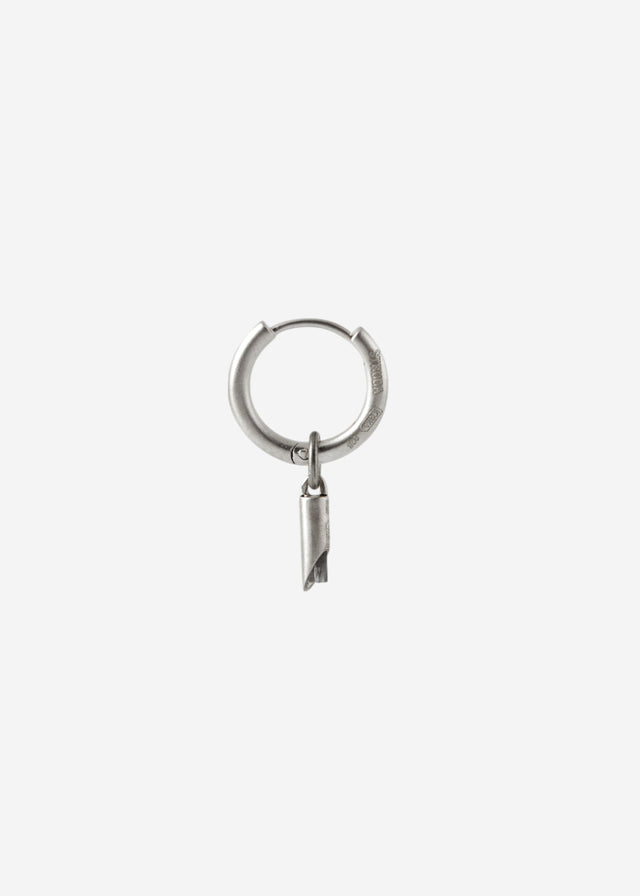
From Sketch to Silver: The Journey of a Handmade Piece
Every piece of Bali jewelry begins as an idea and ends as an object you can hold in your hand. Between those two points lies a process that has not fundamentally changed in centuries. Here is what actually happens when a piece of jewelry is made by hand in a Bali workshop.
Step 1: Design and Wax Carving
The process starts with a concept. At STRUGA, designs originate as sketches exploring form, proportion, and wearability. Once finalized, the design needs to become three-dimensional.
A skilled carver takes a block of jeweler's wax and sculpts the piece at actual size. Every curve, edge, texture, and detail must be precise in the wax model, because the finished silver piece will be an exact replica. A complex design can take days of carving to complete. The wax model is the blueprint. If it is right, everything that follows will be right.
Step 2: Mold Making
Once the wax model is approved, a rubber or silicone mold is created around it. This mold captures every detail of the original carving and allows multiple wax copies to be made. The mold-making process requires careful attention to where the mold will split, how wax will be injected, and where air channels need to go.
Step 3: Lost-Wax Casting
This is the ancient technique at the heart of Bali jewelry production. A wax copy is attached to a wax tree, encased in investment material, and placed in a kiln. As the kiln heats, the wax melts away, leaving a perfect negative cavity. Molten sterling silver is then poured into the cavity. When the plaster is broken away, a rough silver replica remains.
The temperature, timing, and silver purity at this stage are critical. Experienced casters can read the metal's behavior through years of practice.
Step 4: Cleaning and Assembly
Fresh from the mold, a cast piece is rough and covered in residue. Artisans use files, sandpaper, and rotary tools to remove casting marks, smooth surfaces, and sharpen edges. For pieces with multiple components, this is where soldering joins everything together.
Step 5: Surface Treatment
At STRUGA, most pieces receive an oxidized treatment that darkens the silver, filling recesses with black while leaving raised surfaces lighter. This creates depth, contrast, and the signature dark aesthetic. Other finishes include matte brushing, high polish, and sandblasting. Some pieces combine multiple finishes to maximize visual depth.
Step 6: Stone Setting
For pieces incorporating gemstones, a stone setter creates precise bezel settings. Natural gemstones are each unique in shape and size, so unlike factory jewelry with calibrated stones, each STRUGA setting is a custom job. The setter adjusts the bezel to fit the individual stone, making every finished piece slightly different.
Step 7: Final Quality Check
Weight, dimensions, clasp function, stone security, surface quality, and overall appearance are all checked. Pieces that do not meet standards go back for correction or are melted down and recast.
The Human Element
From start to finish, a single STRUGA piece passes through four to six pairs of hands. The wax carver, the caster, the cleaner, the finisher, the stone setter, and the quality inspector each contribute their skill. Total production time for a complex piece can be several days to over a week.
When you hold a piece of handmade Bali silver, you are holding hours of focused human effort. That is not something you can manufacture at scale.
See the craft in person: explore STRUGA's handmade collections. Shop now
Continue Reading
What separates Bali handmade from factory production
The differences between handmade Bali silver and factory-produced silver jewelry are visible if you know what to look at. Six specific markers separate the two:
- Surface variation. Two factory-made pieces of the same model are visually identical. Two Bali-handmade pieces of the same design have subtle differences — slightly different file marks, slightly different patina patterns, slightly different micro-asymmetries. The variation is the maker's signature.
- Edge treatment. Factory pieces have machined edges, often with sharp 90-degree transitions. Bali handmade pieces have softened edges where the artisan worked the surface, giving the piece a more sculptural feel in the hand.
- Inside surfaces. The inside of a band or the back of a pendant is where the difference shows clearly. Factory pieces have smooth machined interiors. Bali handmade pieces show file marks, hand-sanded textures, and sometimes deliberate finishing texture on the interior.
- Solder joints. Factory soldering uses precision automated machines. Bali soldering uses small torches and hand placement of solder. Look at the joint under magnification — the factory joint is geometrically perfect, the handmade joint shows the maker's working pattern.
- Stone setting. Factory stones are set in standardized bezels designed for calibrated stones. Bali stone-setting adapts to each individual stone — the bezel is filed back or built up to fit the specific crystal. This is most visible on raw-stone pieces where the stone itself is irregular.
- Weight distribution. Bali handmade pieces concentrate weight where the design intends; factory pieces distribute weight more evenly because the production process averages out specific design intent. A handmade brutalism ring feels more deliberate in the hand than a factory equivalent.
How long does the full process take per piece?
End-to-end timing varies significantly by complexity. Realistic ranges:
- Simple band (Brutalism, plain design): 3–5 days total, with 4–8 hours of hand work spread across that span.
- Complex ring (Blade, Thorn, signature with surface texture): 5–7 days, with 10–15 hours of hand work.
- Amulet with stone setting: 7–10 days, including stone selection time and setting work. 12–20 hours of hand work.
- Multi-link bracelet: 10–14 days. Each link is cast and finished individually, then assembled. 15–25 hours of hand work.
- Custom Order or Dark Union pair: 3–5 weeks total. Includes design conversation, sample fitting, production, finishing.
The numbers explain why mass production exists at $15 price points and why hand-made pieces start at $80 minimum. The labor cost of a hand-built ring exceeds the entire retail price of a stamped one. The two are not the same product wearing different prices — they are different products with different lifetimes, different surfaces, and different relationships with the wearer.
Frequently asked questions
Are the wax models reused?
No. Each casting destroys the wax model in the burnout. Every piece is cast from a fresh wax. The molds (rubber or silicone) are reusable for producing multiple wax copies, but the wax itself is single-use.
How much of the work is automated?
The kiln (burnout cycle) and the polishing wheel are powered. Everything else — wax preparation, mold-making, casting setup, hand filing, hand polishing, oxidation, stone setting — is hand work. The automation that exists is in support of hand work, not in place of it.
Why does Bali silver tarnish faster than commercial silver?
Most Bali silver is sold uncoated, without rhodium plating. The unplated finish develops patina visibly within weeks. This is by design in the Bali tradition — the metal is meant to age. STRUGA's Living Silver philosophy belongs to this tradition.
Can I see a piece being made?
Workshop visits are not part of the public-facing brand for production reasons (real workshops need to actually produce). STRUGA pieces are visible at Hedonist Store and Barefoot Aristocracy in Bali — concept-store environments where you can see and handle the finished pieces in good light.
What happens if a piece fails quality check?
Pieces that don't meet standards either go back through finishing, or are melted down and recast from fresh wax. The metal is recovered; the work hours are not. This is part of why hand-made silver costs what it costs.
About STRUGA. STRUGA is a dark silver jewelry brand founded by Dmitry Strugovshchikov and Ekaterina Strugovshchikova, handcrafted with Balinese and international silversmiths. Every piece is 925 sterling silver, naturally oxidized or hand-patinated. The darkening is part of the design. It is a brutalist object that reacts and changes through contact with the environment and the wearer.