
Celuk Village — The Heart of Bali Silver Craft
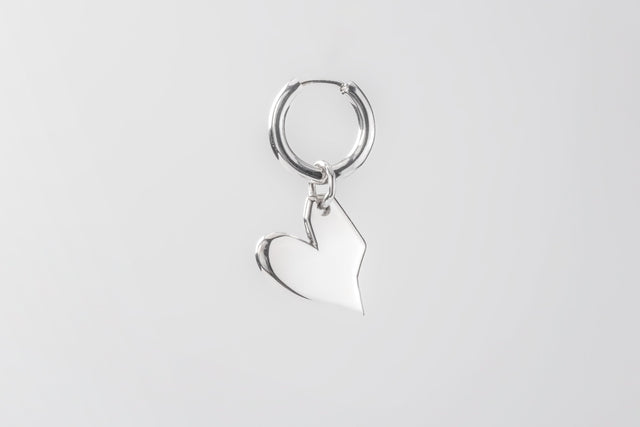
Celuk is a small village in central Bali, in the Gianyar regency. Its families have been working with silver since the 9th century, and today it holds the island's main silver craft. The jewelry you see on the shelves of Bali and in the collections of global brands most often starts here — in the workshops of Celuk, in the hands of makers who inherited the craft from their fathers and grandfathers.
Key takeaways
- Celuk is Bali's silver capital — a village twenty minutes north of Ubud.
- The craft has lived here for over a thousand years, rooted in the Hindu-Buddhist tradition that arrived from Java.
- This is not a museum and not a tourist attraction — it is a working industry that supports thousands of families.
- Workshops are open to visitors: you can walk in, watch the work, and buy a piece at the source.
- STRUGA is a new Bali brand with its own dark, experimental design language — from minimalist rings to dark ritual pieces.
Where is Celuk?
Celuk lies in central Bali, in the Gianyar regency — about twenty minutes north of Ubud and thirty minutes northeast of Denpasar. The road from the tourist zones passes rice terraces, temple gates, and small craft workshops. From the south of the island — Seminyak, Canggu, Kuta — it is about an hour.
From outside, the village looks like any other on Bali: white walls of family compounds, statues at entrances, rooster cages along the roadside. Its character opens once you step through the gates, and almost every courtyard is a workshop. Almost every family has a bench, a torch, and a set of tools passed down through generations.
How did silver come to Celuk?
Silver work arrived on Bali with Hindu-Buddhist influence — introduced from Java around the 9th century. Temple offerings, aristocratic ornaments, and ritual objects needed metal and skill, and the island quickly grew its own school. Celuk became its center.
The tradition here has always been a family matter, not a guild. Technique passed from father to son, from mother to daughter — like language, like cooking, like care of the rice paddy. Ten or more generations in one house is ordinary in Celuk. The age of the maker and the age of the craft are not separated here: both go hand in hand.
The twentieth century brought several waves of demand. The 1970s and 80s valued bohemian aesthetics — woven wire, ornate forms, layered pendants. The 2000s brought a minimalist wave: thin lines, clean rings, quiet chains, and today, Celuk has another edge — dark, avant-garde, brutalist. This is perhaps the most interesting thing happening here in the last half-century.
How does the village work today?
Celuk is not a museum and not a tourist park, but a working industry that feeds thousands of families. In the morning you hear the characteristic sounds: hammers on silver, the hiss of torches, the click of tools. In the courtyards, wax is melted, blanks are polished, stones are set.
Learning here is not school-like but observational. A child grows up watching adults work — for years, before ever picking up a tool. Stone setting, one of the most delicate operations, is usually mastered only after several years of general practice. An excellent Celuk maker is someone who has been working with silver since the age of fifteen or so.
Social accountability is another feature. In a village where everyone knows everyone, a maker's name is attached to their work. If someone cuts corners, all of Celuk knows within a day. That kind of social pressure creates quality control a factory line cannot match.
What can you see in Celuk if you visit?
The village runs on simple rules: workshops are open, guests are welcome, no one is in a hurry. You can walk the main street, step into a few courtyards, watch the process from the inside. Most workshops take commissions on the spot — from simple rings to complex ritual pieces. Turnaround ranges from a few hours to a few days depending on complexity.
Worth doing in Celuk in a day:
- Visit a few workshops and watch how silver is worked — from casting to final finishing.
- Ask to try on a piece that caught your eye — on Bali this is a normal request.
- Confirm that the item was actually made in that workshop — honest places will answer directly.
- Look for the 925 hallmark — the only formal guarantee of metal composition.
If you want to pick up a gift at once, it is easier to visit one of the Bali concept stores in Seminyak or Canggu, where pieces from different makers and brands are curated together. STRUGA pieces, for instance, live at Hedonist Store and Barefoot Aristocracy.
STRUGA and Bali
STRUGA is made in Bali — on the island whose silver heritage Celuk has carried for centuries — but its design language is entirely its own. Five worlds organise the catalogue, each a permanent design territory:
- CODEX — the brand's DNA: signature links, blade geometry, asymmetric forms, heart motifs.
- RITUAL — the dark territory: crosses, thorns, meteorite, oxidized carbon.
- LAB — the experimental edge: pills, mushrooms, carabiners, hardware-as-jewelry.
- DARK UNION — alternative wedding and engagement rings.
- ISLAND ARTIFACTS — collector pieces and gifts.
For bespoke work STRUGA offers two services: Dark Union — wedding and matching rings, 3–6 weeks; Custom Order — any other individual forms, including engravings and variations on existing collections.
The Living Silver philosophy — 925 with no rhodium coating, left to develop its own patina — is STRUGA's own. The metal is left bare, so its character emerges with time. More about Bali silver and STRUGA's philosophy →
Where to buy STRUGA
Three paths:
1. strugadesign.com. The main catalog, with shipping across Bali and worldwide.
2. In Bali. STRUGA pieces live at Hedonist Store and Barefoot Aristocracy — concept stores we work with. Come in, try on, take home.
3. Made to order. Dark Union (wedding and matching rings) or Custom Order (any other forms).
Frequently asked questions
How do I get to Celuk from Ubud and Denpasar?
From Ubud — about 20 minutes south by scooter or taxi; from Denpasar — around 30 minutes northeast. The road passes through the rice fields of Gianyar regency. Public transit does not serve the village, but taxis and Grab are available.
When is the best time to visit Celuk?
Workshops mostly work from morning to early evening, roughly 9:00 to 17:00. Better to come before midday — makers are fresher, light is better, displays are fuller. Some workshops close on Sundays.
Can I commission a piece in the village?
Yes — most workshops accept orders on the spot. Simple forms can be done in a few hours, complex ones in a few days. The agreement is usually verbal, with a small deposit. If you are unsure about a workshop — take a contact and think it over for a day.
How is Celuk silver different from silver in tourist shops?
Silver in tourist shops in Kuta or Seminyak often comes from Celuk or from similar workshops on Java and Lombok. The difference is in the markup — and in the fact that they do not show you how the piece was made. In Celuk, you see the process, and you pay directly to the person who made it.
Does STRUGA make jewelry in Celuk?
No — STRUGA is made in its own Bali workshop, with its own design language. We don't disclose the exact location, as most serious jewellery brands don't. Celuk is the island's historic silver village, but STRUGA does not produce there.
Can I buy STRUGA pieces in Bali without ordering online?
Yes. Our jewelry is available at Hedonist Store and Barefoot Aristocracy — two Balinese concept stores. Come in, try on, take home.
Want a new Bali silver piece with a design language of its own? Explore the STRUGA collection or read the full Bali silver guide.
About STRUGA. STRUGA is a dark silver jewelry brand founded by Dmitry Strugovshchikov and Ekaterina Strugovshchikova, handcrafted with Balinese and international silversmiths. Every piece is 925 sterling silver, naturally oxidized or hand-patinated, and the darkening is part of the design. It is a brutalist object that reacts and transforms through contact with the environment and the wearer.